
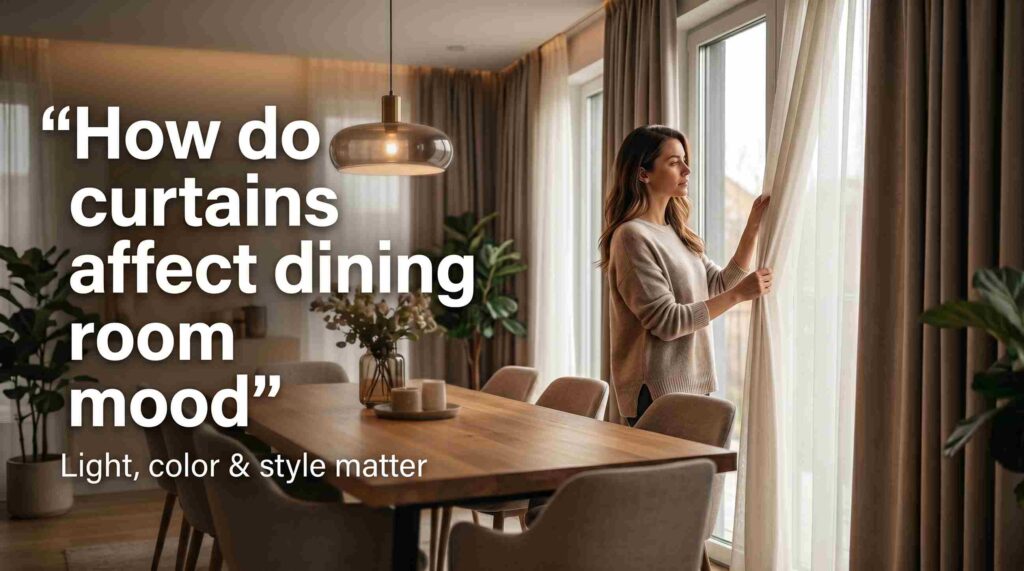
The dining room is more than just a place to eat—it’s an emotional and social space where family moments and guest interactions naturally happen. The problem is that many homeowners overlook how much curtains can influence this environment, focusing only on furniture and lighting instead. In this guide, you’ll learn how curtains affect dining room mood and discover practical ways to choose the right curtains that perfectly match your desired atmosphere, style, and comfort level.
How Do Curtains Affect Dining Room Mood?
Curtains affect your dining room mood by controlling natural light, changing how colours appear, shaping the room’s atmosphere, and improving overall comfort. Light fabrics create a bright, airy, and relaxed feel, while heavier or darker curtains make the space feel warm, cosy, and more formal.
Curtains play a big role in how your dining room feels the moment you walk in. They don’t just decorate the space—they actively control the visual and emotional vibe of the room.
- Natural light control: Adjusts brightness, making the room feel open or dim and intimate
- Colour perception: Changes how wall paint and décor tones look in different lighting
- Room atmosphere: Helps set a casual, elegant, or formal dining mood
- Comfort level: Makes the space feel more inviting and pleasant for meals and gatherings
Light, sheer, or linen-style curtains let sunlight flow in, giving the room a fresh, airy, and easygoing atmosphere that feels perfect for daytime meals or casual family dining.
On the other hand, thicker or darker curtains reduce light and create a more enclosed feel. This adds warmth, privacy, and a slightly formal vibe—ideal for evening dinners or hosting guests.
In short, the right curtains don’t just change how your dining room looks—they completely shape how it feels and how people experience the space.
Why Curtains Matter More in Dining Rooms Than Other Spaces
Curtains matter more in dining rooms because this space is directly tied to social interaction, emotional comfort, and shared experiences. Unlike other rooms, dining areas rely heavily on mood, lighting, and privacy to shape how people connect, talk, and enjoy meals together.
Dining rooms are not just functional spaces—they’re social zones where families and guests gather. That’s why curtains have a bigger emotional impact here compared to bedrooms or living rooms.
How dining mood affects conversations & gatherings
The mood of a dining room directly influences how people interact. A well-balanced atmosphere makes conversations flow naturally, while harsh lighting or an uncomfortable setup can make the space feel less inviting.
- Warm, soft lighting encourages relaxed conversations.
- Bright or harsh environments can feel rushed or uncomfortable.
- Cosy setups make guests stay longer and engage more
Role of ambiance in meals and guest experience
Ambiance plays a huge role in how food and company are experienced. Curtains help set that emotional background that shapes the entire dining experience.
- Soft curtains create a calm, welcoming dining vibe.
- Elegant drapes add a sense of occasion for guests.
- Balanced light makes meals feel more enjoyable and relaxed.
Why lighting and privacy matter more in dining areas
Dining rooms need a careful balance of openness and privacy. Curtains help control both natural light and outside visibility, which is more important here than in most other spaces.
- Light control prevents glare during daytime meals.
- Privacy creates comfort during family or guest dining
- Adjustable curtains help switch between casual and formal moods.
Curtain Colour Psychology in Dining Rooms

Curtain colours directly influence the dining room mood by triggering emotional and psychological responses. Warm tones feel inviting and appetite-friendly; cool tones create a calm and elegant vibe, while light and dark shades change how open or intimate the space feels.
Colour choice is one of the fastest ways to control the atmosphere in a dining room.
Warm colours (red, beige, gold) → inviting, appetite-friendly
Warm tones create a cosy, welcoming environment that naturally supports dining and conversation.
- Red tones stimulate appetite and energy.
- Beige adds softness and balance
- Gold gives a rich, warm dining feel.
- Best for family dinners and social gatherings
Cool colours (blue, grey) → calm, elegant dining
Cool shades bring a modern and relaxed atmosphere to the dining space.
- Blue creates a calm, clean vibe.
- Grey adds sophistication and balance
- Best for minimal, modern dining rooms
- Works well for quiet or formal meals
Dark curtains → intimate vs heavy feeling.
Dark colours can completely change the mood depending on lighting.
- Create a private, intimate dining experience
- Can feel luxurious in large spaces
- May feel heavy in small or low-light rooms
- Best for evening or formal dining setups
Light curtains → open, fresh atmosphere
Light tones keep the dining room bright and visually spacious.
- Make rooms feel larger and airier
- Reflect natural light beautifully
- Create a fresh, casual dining mood
- Ideal for daytime and small dining areas
💡 Upgrade Insight (SEO Opportunity):
- Warm colours are best for family + social dining
- Cool colours are best for modern + calm dining
- Dark colours are best for formal + intimate dinners
- Light colours are best for bright + casual everyday dining.
👉 Real-life example:
A family dinner at home feels more welcoming with warm beige curtains, while a formal dinner party feels more elegant with dark velvet drapes.
Light Control – The #1 Factor That Changes Dining Room Mood

Light control is the most important factor in shaping dining room mood because it decides how bright, warm, or intimate the space feels. Curtains manage natural light throughout the day, which directly affects comfort, energy, and the overall dining experience.
Natural light vs. artificial light interaction
The dining room mood is created by the balance between sunlight and indoor lighting. Curtains help control this balance in a smart way.
- Natural light creates a fresh, open, and uplifting mood.
- Artificial light adds warmth and consistency at night
- Curtains filter sunlight to avoid harsh glare.
- The right setup improves overall dining room ambiance and atmosphere control.
Sheer curtains vs blackout curtains
Different curtain types create completely different lighting effects in the dining space.
- Sheer curtains: soften sunlight and create a light, airy dining feel
- Blackout curtains: block light for a more private, controlled, and cosy environment
- Sheer = casual daytime dining
- Blackout = formal or intimate evening dining
Bright dining vs cosy evening dining
Lighting changes the emotional tone of meals throughout the day.
- Bright dining spaces feel energetic, open, and refreshing.
- Dim or warm lighting creates a relaxed and intimate dinner mood.
- Curtains help shift the room between these two experiences easily.
Day vs Night Mood Transformation
Curtains play a key role in transforming dining room mood from day to night by adjusting how light enters and spreads in the space.
Morning: fresh, energetic vibe
- Soft sunlight creates a positive and active atmosphere.
- Light curtains enhance brightness without harsh glare.
- Perfect for breakfast and casual daytime meals
Evening: warm, intimate atmosphere
- Reduced natural light creates a cosy dining environment
- Warm artificial lighting feels more relaxing
- Heavier curtains enhance privacy and comfort.
Curtains + lighting combinations (high SEO value)
- Sheer curtains + daylight → fresh, open dining mood
- Linen curtains + warm bulbs → balanced everyday dining feel
- Dark curtains + soft lighting → intimate dinner setting
How Curtain Fabric & Texture Influence Mood
Curtain fabric and texture influence mood by controlling light, softness, and sound in a dining space. Light fabrics like sheer create an airy and relaxed feel, while heavier materials like velvet add warmth, privacy, and a more formal atmosphere.
Sheer → Airy & Open
Sheer curtains create a soft, lightweight dining atmosphere by allowing natural light to flow freely.
- Make the room feel bright and spacious
- Create a relaxed, casual dining vibe
- Ideal for small or daytime dining areas
Linen → Relaxed & Natural
Linen adds an organic and balanced feel to the space.
- Creates a calm, earthy look
- Works well in modern and farmhouse styles
- Supports a comfortable, everyday dining mood
Velvet → Luxurious & Formal
Velvet introduces depth, richness, and elegance.
- Creates a formal, high-end dining atmosphere
- Absorbs light for a cosy, intimate feel
- Best for evening dining or hosting guests
Layered Curtains → Depth & Flexibility
Layering fabrics adds visual richness and control.
- Combines sheer and heavy fabrics
- Adds dimension and luxury
- Allows mood changes from day to night
Sensory Impact (Why It Matters)
Curtain fabric and texture play a key role in shaping dining room mood by influencing sound, comfort, and how light behaves in the space. These elements work together to create the overall emotional feel of the room.
Sound Control → Better Conversations
Soft curtain fabrics help reduce noise and echo in the dining room, making the environment quieter and more comfortable for talking and sharing meals.
- Soft fabrics reduce echo and background noise.
- Create a calmer and more private dining atmosphere
- Improve clarity of conversations during meals and gatherings
Texture Feel → Psychological Comfort
The texture of curtains affects how the space feels emotionally. Softer materials create a more relaxed and welcoming vibe, while firmer textures feel more structured and formal.
- Soft textures feel warm, cosy, and inviting
- Smooth fabrics create a relaxed dining experience.
- Stiffer materials give a formal and controlled look.
Light Reflection → Mood Shift
Fabric finish controls how light spreads in the dining room, which directly impacts mood and visual comfort.
- Matte fabrics soften and balance natural or artificial light
- Create a calm, neutral, and comfortable atmosphere
- Shiny fabrics reflect more light for a brighter, dramatic effect.
Curtain Style & Length – Subtle but Powerful Mood Changes

Curtain style and length may seem like small design choices, but they have a powerful impact on dining room mood by changing how elegant, open, or cosy the space feels. These visual details shape the overall atmosphere more than most homeowners realise.
Curtains are not just decorative elements—they guide how the dining room is visually perceived and emotionally experienced. Even small changes in style or length can completely shift the mood of the space.
Floor-length vs short curtains
Curtain length directly affects how spacious and stylish a dining room appears. Floor-length curtains create a more elegant and elevated look, while shorter curtains feel casual and practical.
- Floor-length curtains make the room feel taller and more formal.
- Short curtains create a simple, relaxed, and functional vibe.
- Long styles are often preferred for dining rooms to enhance elegance.
Minimalist vs dramatic designs
Curtain design style sets the emotional tone of the dining space. Minimalist styles keep things clean and modern, while dramatic designs add visual richness and personality.
- Minimalist curtains create a calm, clean, and uncluttered feel.
- Dramatic styles add depth, luxury, and strong visual impact.
- Simple designs work best for modern, everyday dining spaces.
Modern vs traditional dining rooms
Curtain choices should match the overall dining room style because they reinforce the theme and mood of the space.
- Modern dining rooms prefer neutral tones and simple curtain styles.
- Traditional spaces use heavier fabrics and detailed designs for a classic feel.
- Matching style with décor creates a balanced and cohesive mood.
In short, curtain style and length quietly shape the dining room atmosphere by influencing elegance, comfort, and design harmony.
How Curtains Change Room Perception
Curtains change room perception by influencing how large, tall, or balanced a space appears. The right curtain length, placement, and fabric can make a room look bigger, ceilings feel higher, and windows appear more proportionate without altering the actual structure.
Make a room feel bigger or smaller.
Curtain colour, fabric, and placement can influence how spacious a dining room feels. Light and airy curtains expand visual space, while heavy or dark curtains can make the room feel more compact and cosy.
- Light-coloured curtains make the room feel open and spacious.
- Dark or heavy fabrics create a more enclosed, intimate feel.
- Minimal designs reduce visual clutter and increase openness.
Ceiling height illusion
Curtain placement and length can create the illusion of higher or lower ceilings. This is a powerful design trick used in many modern dining spaces.
- Floor-to-ceiling curtains make ceilings appear taller.
- Hanging curtains higher than the window frame adds vertical depth.
- Short curtains make the ceiling feel lower and more casual.
Window size enhancement
Curtains can also change how large or balanced a window looks in the dining room. Proper styling enhances natural light and improves visual symmetry.
- Wide curtain rods make windows look larger than they are.
- Sheer fabrics highlight natural light and expand window presence.
- Layered curtains add depth and frame the window more elegantly.
Using curtains strategically can visually transform a dining room without renovation. For example, a small dining space with floor-to-ceiling light curtains instantly feels taller, brighter, and more open, while darker layered curtains create a cosy and intimate dining atmosphere.
Choosing Curtains Based on Dining Mood

Choosing curtains based on dining mood means matching fabric, colour, and style with the emotional atmosphere you want to create. The right curtains can make your dining room feel cosy, formal, or bright and casual depending on your lifestyle and lighting.
Instead of picking curtains just for looks, homeowners should focus on how they want the dining space to feel during everyday meals and gatherings.
For cosy family dinners → warm tones + soft fabric
If your goal is a warm and comfortable family dining environment, go for soft fabrics and warm colour tones that naturally create a relaxed atmosphere.
- Warm colors like beige, cream, or soft gold feel inviting
- Soft fabrics like linen or cotton add comfort and warmth.
- Perfect for daily family meals and casual gatherings
- Creates a friendly, relaxed dining mood
For formal dining → dark, heavy curtains
For a more elegant and upscale dining experience, heavier fabrics and deeper tones work best. They create a strong sense of formality and privacy.
- Dark shades like navy, charcoal, or deep brown feel luxurious.
- Velvet or heavy drapery adds richness and depth
- Ideal for hosting guests or special dinners
- Enhances a sophisticated dining atmosphere
For bright casual space → sheer/light curtains
If you want a fresh, open, and airy dining room, light fabrics with soft colours are the best choice.
- Sheer or lightweight fabrics allow natural light flow.
- Light colours make the space feel bigger and brighter.
- Perfect for small dining rooms or daytime meals
- Creates a relaxed, everyday casual vibe
Step-by-Step Curtain Selection System
A simple method to choose the right curtains is to follow a structured approach based on lighting, mood, fabric, and colour.
Analyse room lighting
Start by observing how much natural light your dining room gets throughout the day.
- Bright rooms need softer or filtered curtains.
- Dark rooms need lighter fabrics to reflect more light.
Define the desired mood.
Decide the emotional feel you want in the dining space.
- Cosy and warm for family use
- Formal and elegant for guests
- Bright and casual for everyday dining
Choose fabric
Select fabric based on comfort, texture, and mood impact.
- Sheer → light and airy
- Linen → natural and relaxed
- Velvet → rich and formal
Select colour
Pick colours that match your dining mood and interior style.
- Warm tones → inviting and cosy
- Cool tones → calm and modern
- Dark tones → intimate and luxurious
The best curtain choice is not just about decoration—it’s about creating the right dining experience. When lighting, fabric, and colour work together, the dining room naturally reflects the exact mood you want.
Common Curtain Mistakes That Ruin Dining Room Mood
Common curtain mistakes that ruin a dining room mood include blocking too much natural light, choosing colours that are too dark, ignoring room size, and mismatching curtains with the existing décor. Avoiding these mistakes helps create a brighter, more balanced, and inviting dining space.
Blocking Too Much Natural Light
Curtains that block excessive natural light can make a dining room feel dark, smaller, and less welcoming.
Natural light plays a major role in creating a warm and comfortable dining atmosphere. Heavy blackout curtains or poorly positioned window treatments can reduce daylight, making the space feel flat and closed in. Unless complete privacy is necessary, choose light-filtering or layered curtains that soften sunlight while keeping the room bright.
Choosing Overly Dark Colours
Very dark curtain colours can make a dining room feel heavier and less inviting, especially in smaller or low-light spaces.
Although dark shades add elegance, they also absorb natural light. In dining rooms with limited sunlight, deep colours can create a closed and cramped feeling. Lighter neutrals or warm earth tones usually maintain a more open and welcoming atmosphere while still looking stylish.
Ignoring Room Size
Curtain size, length, and fabric should always match the proportions of the dining room.
Large, heavy curtains can dominate a small dining room, while short or lightweight panels may appear undersized in more spacious settings. Choosing curtains that match the room’s scale creates better visual balance and improves the overall appearance.
Mismatching Curtains With Décor
Curtains should complement your furniture, wall colours, and overall interior style instead of competing with them.
When curtain colours, patterns, or fabrics clash with the rest of the room, the dining space loses its visual harmony. Coordinating curtains with existing décor creates a cohesive, polished look that feels intentional and professionally designed.
Key Takeaway
The best dining room curtains balance natural light, colour, proportion, and décor. Avoiding these common mistakes helps create a space that feels brighter, more comfortable, and visually cohesive while enhancing the overall dining experience.
Real Dining Room Transformations (Before & After Ideas)

Real dining room transformations show how simple curtain changes can completely upgrade mood, lighting, and space perception. By adjusting fabric, colour, and layering, you can turn a dull or cramped dining area into a bright, stylish, and emotionally balanced space.
Small dining room → brighter curtains
In small dining rooms, using light-coloured and sheer curtains can instantly improve the feeling of space. These curtains allow more natural light to enter, making the room look larger, cleaner, and more open.
Before: The room feels tight, dim, and less inviting.
After: The space looks airy, bright, and visually expanded.
Dark room → light-enhancing fabrics
Dark dining rooms often suffer from poor lighting and a closed-in feeling. Switching to light-reflecting fabrics like sheer or linen curtains helps maximise available sunlight.
Before: The room feels heavy and low-energy.
After: The space becomes brighter, fresher, and more welcoming.
Formal dining → layered curtains
For formal dining spaces, layered curtains (sheer + heavy fabric) create depth, elegance, and flexibility in mood control. This setup allows homeowners to adjust lighting based on occasion.
Before: The room feels plain or one-dimensional.
After: The space looks rich, elegant, and professionally designed.
Conclusion
In conclusion, how curtains affect dining room mood is mainly through their control of light, colour influence, fabric texture, and overall room atmosphere. The right curtains can make your dining space feel bright and open or warm, cosy, and more intimate depending on the style you choose. By carefully selecting colours, materials, and layering, homeowners can easily transform the dining experience without major renovations and create a space that truly matches their lifestyle and mood preferences.
1. Can curtains help create a cozy dining room atmosphere?
Yes, curtains can make a dining room feel cosy by controlling light and adding soft texture to the space. Warm colours and heavier fabrics create a more intimate and comfortable dining atmosphere, especially in the evening.
2. What colour curtains brighten a dining room?
Light colours like white, cream, beige, and soft pastels brighten a dining room by reflecting natural light. These shades make the space feel larger, fresher, and more open, especially in smaller or low-light rooms.
3. Are sheer curtains good for dining rooms?
Yes, sheer curtains are great for dining rooms because they allow natural light to flow while keeping the space soft and airy. They create a relaxed, modern vibe that works well for casual dining areas.
4. Should dining room curtains match walls?
Not exactly, but they should complement wall colours for a balanced look. Matching tones creates harmony, while slight contrast adds depth and makes the dining room more visually interesting.
5. Do dark curtains make a room depressing?
Not always. Dark curtains can create a stylish and intimate dining mood when used correctly. However, in small or poorly lit rooms, they may feel heavy or reduce brightness, so balance with lighting is important.

I’m Attaur Rahman, founder of DecorReviewHub. I test and review curtains and home decor products to help homeowners make the right choice for every room. All my guides are based on real use and honest comparisons.