
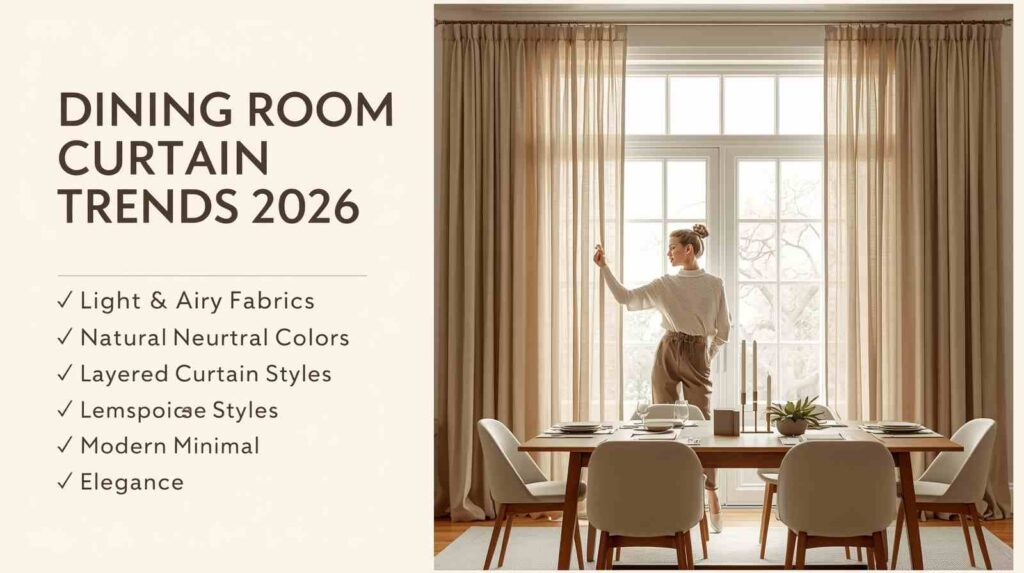
Most trend articles fail homeowners because they only show pretty curtain ideas without explaining how those choices actually perform in real dining spaces. In practice, curtains directly affect natural light, privacy, comfort, and even how large or small a room feels, yet many guides ignore these real-life factors. That’s why a surface-level list of styles is not enough when making decisions for your home.
In 2026, dining room design is shifting toward practical aesthetics, especially in the USA, where homeowners are prioritising function-driven interiors. This guide focuses on dining room curtain trends 2026, along with real-world insights into modern dining room curtains in the USA and evolving dining room window treatment trends. Instead of just showcasing styles, it explains what actually works in daily use—covering light control, material performance, sustainability, and long-term value—so you can make confident, informed, and future-proof decisions.
What Are the Top Dining Room Curtain Trends for 2026?
The top dining room curtain trends for 2026 focus on balancing style with functionality. Homeowners are choosing light-filtering curtains, earthy neutral colours, layered sheer and blackout combinations, sustainable fabrics like linen, clean minimalist designs, and smart energy-efficient curtain systems to improve both comfort and everyday usability.
Natural Light–Focused Curtains
Modern dining rooms prioritise natural light and openness. Sheer and light-filtering curtains help maintain brightness while still offering soft privacy.
- Ideal for daytime dining
- Reduces harsh sunlight glare
- Makes small dining spaces feel larger
Earthy & Neutral Colour Palettes
Colours in 2026 are shifting toward warm, calming tones that create a welcoming dining atmosphere.
- Beige, taupe, olive green, and soft whites
- Easy to match with most dining room décor
- Enhances a relaxed, social environment
Layered Sheer + Blackout Combinations
Layering is a practical trend that combines style with flexibility.
- Sheer curtains for daytime light
- Blackout or heavier panels for evening privacy
- Better control over lighting and ambiance
Sustainable & Natural Fabrics
Eco-conscious materials are gaining popularity, especially in U.S. homes.
- Linen curtains for breathability and texture
- Cotton blends for durability
- Long-lasting, low-impact fabric choices
Minimalist & Tailored Styles
Clean, structured designs are replacing overly decorative curtains.
- Simple panels and pinch pleat styles
- Neutral tones with subtle textures
- Works well in both modern and formal dining rooms
Smart & Energy-Efficient Curtain Systems
Functionality is becoming just as important as design.
- Motorised curtains for convenience
- Thermal and insulated fabrics for energy savings
Improved light and temperature control
Dining room curtain trends in 2026 are no longer just about looks—they focus on light control, comfort, sustainability, and real-life usability, making them both stylish and practical for everyday dining spaces.
What’s Changing in Dining Room Curtain Trends for 2026 (Beyond Aesthetics)

In 2026, dining room curtain trends are shifting from decorative choices to functional, comfort-focused solutions. Homeowners now prioritize light control, privacy balance, sustainable fabrics, and flexible styling that adapts to real dining needs throughout the day and evening.
Shift Toward Functional Aesthetics
Modern dining room curtains are no longer chosen just for decoration—they are selected based on how well they improve everyday living. The focus is now on beauty combined with usability, especially in spaces where lighting, comfort, and atmosphere matter during meals.
- Balance between style and practical use
- Designed for real dining room lighting conditions
- Supports both casual and formal dining experiences
- Enhances comfort without sacrificing interior design appeal
👉 This shift reflects growing demand for modern dining room window treatments that serve a functional purpose, not just visual appeal.
Natural Light vs Privacy Balance
One of the biggest changes in 2026 is how homeowners manage daytime brightness and evening privacy in dining spaces. Curtains are now expected to adapt to different times of the day.
- Daytime: let in maximum natural light for a bright open feel
- Evening: ensure privacy during family dinners or with guests
- Reduce glare on dining tables and surfaces
- Improve visual comfort during meals
👉 This balance is driving demand for light-filtering curtains and layered window treatments that give full control over ambiance.
Sustainability & Eco-Conscious Choices
Eco-friendly design is now a major factor in dining room curtain selection. Homeowners are moving toward materials that are both durable and environmentally responsible.
- Organic fabrics such as natural linen and cotton
- Long-lasting textiles that reduce replacement frequency
- Sustainable production and low-impact materials
- Better breathability and natural texture
👉 These choices align with broader home decor trends in 2026 in the USA, where sustainability is becoming a core design principle, not a niche preference.
Minimalist vs Layered Styling Evolution
Curtain styling in 2026 is no longer one-directional—it depends on space, lighting, and lifestyle needs. Both minimalist and layered approaches are evolving based on practical use.
- Minimalist styling: best for small or modern dining rooms where simplicity enhances space and light
- Layered styling: ideal for larger or formal dining areas needing flexibility in privacy and lighting
- Minimal designs reduce visual clutter
- Layered combinations offer better control over ambiance.
👉 The key trend is intent-based styling, where curtain choices depend on how the dining room is actually used, not just how it looks.
Trending Curtain Colours for Dining Rooms in 2026

In 2026, trending dining room curtain colours include earthy tones like beige and olive, soft neutrals such as white and ivory, and selective bold shades like navy and charcoal. These colours are chosen to improve mood, balance natural light, and create a comfortable, visually harmonious dining environment.
Earthy & Nature-Inspired Tones
Earthy colours are becoming a dominant choice in modern dining rooms because they create a warm, grounded, and natural atmosphere that supports relaxed dining experiences.
- Popular shades: beige, olive green, terracotta
- Create a calming and balanced interior feel
- Blend easily with wood, stone, and natural textures
- Ideal for everyday family dining environments
👉 These tones are widely used in modern dining room curtains USA designs because they bring a sense of stability and comfort without overpowering the space.
Soft Neutrals & Layered Whites
Soft neutrals continue to lead 2026 trends due to their ability to enhance brightness and make dining areas feel more open and airy.
- Includes sheer white, off-white, and ivory tones
- Maximises natural light reflection in dining spaces
- Works especially well in small or medium dining rooms
- Creates a clean, minimal, and timeless aesthetic
👉 These shades are highly effective for light-filtering curtains and help maintain a fresh, uncluttered dining environment.
Bold Accent Colours (Strategic Use Only)
Bold colours are not used widely but are applied strategically to create visual focus and design depth in dining rooms.
- Key shades: navy blue, charcoal grey, deep tones
- Best used in larger or formal dining spaces
- Adds contrast without overwhelming the room
- Works as a focal design element in neutral interiors
👉 In 2026, bold curtain colours are used more as statement accents rather than full-room dominance, supporting balanced interior design trends.
How Curtain Colours Affect Dining Mood
Curtain colours now play a psychological role in shaping how people experience dining spaces, especially during meals and gatherings.
- Appetite psychology: warm earthy tones can create a more inviting and comfortable dining atmosphere.
- Social atmosphere: soft neutrals encourage calm conversation and openness.
- Lighting interaction: colour choice directly affects how natural and artificial light is reflected in the room
👉 This makes curtain colour selection not just a design choice but a key factor in interior design dining room trends 2026, where mood, comfort, and functionality work together.
Popular Curtain Fabrics & Materials (What Actually Works in Dining Rooms)
The most popular dining room curtain fabrics in 2026 are linen, cotton, and polyester. These materials are preferred for their balance of breathability, durability, easy maintenance, and visual texture, making them practical for everyday dining use while supporting both modern and traditional interior styles.
Linen vs Cotton vs Polyester Curtains
The most common fabric choices in dining rooms are linen, cotton, and polyester, each offering different levels of comfort, maintenance, and durability depending on lifestyle needs.
- Breathability: Linen and cotton allow better airflow, while polyester is less breathable but more controlled.
- Maintenance: Polyester is easiest to clean, cotton is moderate, and linen requires more careful handling.
- Durability: Polyester lasts longer with less wear, while linen offers natural strength and cotton provides balanced performance.
👉 These fabric options are widely used in modern dining room curtains in the USA because they allow homeowners to choose based on daily usage and maintenance preference.
Lightweight vs Heavy Drapes
Fabric weight plays a major role in how a dining room feels, affecting both airflow and insulation as well as the overall dining atmosphere.
- Airflow vs insulation: Lightweight fabrics support ventilation and natural light, while heavy drapes improve insulation and privacy.
- Formal vs casual dining: Light curtains suit casual, everyday dining spaces, while heavier fabrics enhance formal or luxury dining settings.
👉 Choosing between lightweight and heavy drapes depends on how the dining room is used throughout the day and evening.
Sustainable & Eco-Friendly Fabric Trends
Sustainability is becoming a key factor in fabric selection as homeowners move toward environmentally responsible interior design choices.
- Recycled materials: Fabrics made from reused fibres reduce environmental impact
- Organic fibres: Natural cotton and linen grown without harmful chemicals are gaining popularity
- Long-lasting materials reduce replacement frequency and support eco-friendly living.
👉 These choices align with broader home decor trends in 2026 in the USA, where sustainability and durability are prioritised together.
Texture Trends That Add Depth Without Clutter
Texture is now being used as a subtle design element to add depth and character without making the dining space feel visually heavy.
- Woven fabrics: Add natural detail and softness to window treatments
- Matte vs glossy finishes: Matte textures create a calm, modern feel, while subtle sheen adds a touch of elegance.
👉 Texture-driven fabrics help enhance interior design dining room trends, especially in minimalist and modern dining spaces where simplicity is essential.
Curtain Styles Dominating Dining Rooms in 2026 (And When to Use Them)

In 2026, dining room curtain styles include sheer panels for bright spaces, layered sheer and blackout curtains for light and privacy control, pinch pleat designs for formal settings, and minimalist panels for modern homes. Each style is chosen based on room lighting, privacy needs, and dining formality.
Sheer Curtains for Bright Dining Spaces
Sheer curtains are designed to enhance natural light while maintaining a soft visual barrier, making them ideal for bright and open dining environments.
- Best for maximising daylight in dining areas
- Works especially well in small or compact rooms
- Creates an airy, open, and relaxed atmosphere
- Suitable for everyday casual dining setups
👉 Sheer styles are commonly used in light-focused dining room window treatments where brightness and openness are the main design goals.
Sheer + Blackout Layered Curtains for Full Control
Layered curtains combine functionality and flexibility, allowing homeowners to adjust lighting and privacy based on time of day.
- A sheer layer supports soft daytime lighting
- A blackout layer ensures nighttime privacy
- Offers flexible control for different dining occasions
- Adds depth and dimension to window design
👉 This setup is ideal for households needing both natural light during the day and privacy at night.
Pinch Pleat & Tailored Curtains for Formal Spaces
Structured curtain styles like pinch pleats are preferred in dining rooms where a refined, elegant, and organised look is required.
- Best suited for formal dining environments
- Creates a polished and symmetrical appearance
- Enhances traditional and luxury interior designs
- Adds visual structure and sophistication
👉 These styles align with elegant dining room interior design trends focused on formality and detail.
Minimalist Panels & Rod Pocket Curtains for Modern Homes
Minimalist curtain designs focus on simplicity, making them ideal for modern dining spaces that prioritise clean visuals and functionality.
- Perfect for modern and contemporary interiors
- Offers a clean and uncluttered window look
- Easy to maintain and install
- Works well in everyday dining spaces
👉 These styles reflect modern dining room curtains USA trends, where simplicity and practicality are key priorities.
Curtain Length & Hanging Trends
In 2026, dining room curtain length and hanging style are used as design tools to visually increase room height, widen window appearance, and improve light perception. Homeowners focus on floor-length or puddled drapes, higher curtain placement, and extended rod width to create balanced, spacious, and well-proportioned dining interiors.
Floor-Length vs. Puddle Curtains (When to Choose Each)
Floor-length curtains lightly touch the floor, creating a clean, structured, and practical look ideal for modern and everyday dining rooms. They are easy to maintain and support a neat visual line.
Puddle curtains extend beyond the floor for a dramatic, luxurious effect suited to formal dining spaces. They add elegance but require more upkeep as fabric gathers on the ground.
Best use:
- Modern / casual dining → Floor-length
- Formal / traditional dining → Puddle style
How High to Hang Curtains in Dining Rooms
Hanging curtains above the window frame, closer to the ceiling, creates the illusion of taller ceilings and a more open dining area. This technique is especially effective in small dining rooms where perceived height improves spatial comfort.
Higher placement turns windows into vertical design features that enhance architectural balance without renovations.
Curtain Rod Placement & Width Strategy
Installing the curtain rod slightly wider than the window lets the fabric gather neatly on the sides when drawn open. This reveals more glass, increases natural light flow, and makes windows appear larger.
Correct rod width ensures curtains frame the window instead of covering it, improving symmetry, proportion, and visual harmony in the dining room.
Smart & Functional Curtain Trends in 2026
In 2026, dining room curtains are designed for smart control, energy efficiency, and adaptive light management. Homeowners prefer motorised operation, thermal insulation, and flexible privacy solutions that improve comfort, reduce energy use, and make daily dining spaces easier to manage.
Motorised & Smart Curtains in Modern Homes
Motorised curtains are increasingly used in dining rooms with large windows and open layouts. They operate via remotes, mobile apps, or smart home systems, removing the need for manual adjustment.
- Effortless control for wide or hard-to-reach windows
- Quick light adjustment throughout the day
- Seamless integration with modern home setups
- Ideal for tech-enabled, comfort-focused interiors
These curtains support convenience where lighting needs change frequently during meals and gatherings.
Energy-Efficient & Thermal Curtains
Thermal and energy-efficient curtains help regulate indoor temperature by reducing heat transfer through windows.
- Reduce heat loss in winter and block excess heat in summer
- Improve insulation and indoor comfort during meals
- Lower reliance on heating and cooling systems
- Support long-term energy savings and sustainability
They are a practical choice for homeowners focused on efficiency and year-round comfort.
Light Control & Privacy Optimisation
Modern curtain designs balance natural brightness in the day with privacy in the evening.
- Light fabrics enhance daytime dining ambiance.
- Dense materials ensure nighttime privacy.
- Adaptable performance for family meals and social events
- Maintains comfort without compromising style
This flexibility makes curtains a functional tool for managing both atmosphere and usability in dining spaces.
Dining Room Curtain Trends by Interior Style
In 2026, dining room curtain trends vary based on interior design style, room size, and overall décor theme. Homeowners choose curtains that match the mood of the space—whether modern, farmhouse, luxury, or compact dining rooms—focusing on balance between aesthetics, light control, and functionality.
Modern Dining Rooms
Modern dining rooms prioritise simplicity, clean lines, and minimal décor. Curtains in this style are designed to blend seamlessly rather than stand out.
- Neutral colours like beige, grey, and soft white
- Lightweight, uncluttered designs for a clean look
- Minimal hardware such as slim or hidden rods
- Focus on simplicity and visual balance
This style supports a minimal dining room curtain approach that enhances openness and elegance.
Farmhouse Dining Spaces
Farmhouse dining rooms emphasise warmth, comfort, and natural textures. Curtain choices focus on creating a cosy and inviting environment.
- Linen and natural fabric textures
- Soft tones like cream, off-white, and earthy shades
- Relaxed, casual draping styles
- Natural and rustic visual appeal
This style reflects a rustic dining room curtain design that feels warm and welcoming.
Luxury & Formal Dining Rooms
Luxury dining spaces require rich textures and elegant curtain designs that enhance depth and sophistication.
- Velvet and heavy fabric curtains
- Layered drapes for a premium look
- Enhanced privacy and light control
- Deep, rich colour tones for visual impact
This style is ideal for high-end dining room interiors where elegance is the priority.
🪟 Small Dining Rooms
Small dining spaces need curtain designs that maximise light and create a feeling of openness.
- Sheer or semi-sheer fabrics for brightness
- Light colours to reflect natural light
- Higher curtain placement to increase visual height
- Wider rod placement for a spacious effect
These techniques help create a more open and visually balanced dining environment.
In 2026, dining room curtain trends by interior style include modern minimal designs with neutral tones; farmhouse styles using natural linen and warm colours; luxury spaces featuring velvet layered drapes; and small rooms optimised with sheer fabrics and space-enhancing curtain placement techniques for a brighter, more open look.
Common Dining Room Curtain Mistakes to Avoid in 2026

In 2026, most dining room curtain mistakes happen when homeowners choose style over function. The best designs balance appearance, light control, and practicality. Steering clear of typical curtain mistakes can quickly enhance your dining room’s comfort, natural light, and overall visual appeal.
Wrong Curtain Length
One of the most common mistakes is selecting the incorrect curtain length. Curtains that are too short can make the room look unfinished, while overly long ones may feel messy or impractical for daily use.
Proper floor alignment is essential to maintain a clean and balanced dining room appearance.
Over-Layering Curtains
Adding too many layers can make the dining space feel heavy and visually crowded. While layering can improve light control, excessive fabric reduces openness and disrupts modern design flow.
A balanced approach ensures functionality without overwhelming the room’s aesthetic.
Blocking Natural Light
Natural light is a key element in dining room design, yet many curtain choices unintentionally block it. Heavy or overly opaque fabrics can make the space feel dark and less inviting.
Light-friendly fabrics are essential to maintain brightness and a comfortable dining atmosphere.
Mismatching Fabric with Room Function
Using the wrong fabric type for the dining room’s purpose can reduce both comfort and usability. For example, heavy formal fabrics in casual spaces or overly sheer materials in private dining areas can create imbalance.
Fabric selection should always match how the room is actually used.
Choosing Trends Over Practicality
Following trends without considering daily needs often leads to poor long-term results. A curtain style that looks modern may not always suit lighting, privacy, or maintenance requirements.
Practicality should always come first to ensure lasting performance and satisfaction.
How to Choose the Right Curtain Trend for Your Dining Room
Choosing the right dining room curtain trend in 2026 depends on practical factors like space, lighting, and daily usage. Instead of focusing only on design, the best results come from matching curtains with room structure and lifestyle needs.
Based on Room Size & Layout
Room size directly affects how curtains should be styled. The goal is to maintain balance without making the space feel crowded or empty.
- Small rooms work best with light, sheer fabrics.
- Large dining areas can handle layered or heavier curtains.
- Open layouts need simple, clean curtain styles.
- Compact layouts benefit from space-enhancing designs.
👉 Proper selection improves visual space balance and comfort.
Based on Window Size & Placement
Window dimensions and positioning influence how curtains frame the dining space. The right setup enhances proportion and symmetry.
- Wide windows look better with extended curtain rods.
- Tall windows suit floor-length designs
- Small windows need minimal, light curtain styles.
- Off-centre windows require balanced framing techniques
👉 This helps achieve better window proportion and room harmony.
Based on Lighting Direction
Natural light direction plays a key role in curtain selection, especially in dining rooms where ambience matters during meals.
- South-facing rooms may need light-filtering fabrics.
- North-facing rooms benefit from brighter, sheer curtains.
- Strong sunlight areas require UV-blocking materials.
- Low-light rooms should avoid heavy, dark fabrics.
👉 This ensures optimal light control and dining comfort.
Based on Lifestyle (Family vs Formal Use)
Curtain choice should match how the dining room is actually used on a daily basis.
- Family dining spaces need durable, easy-care fabrics.
- Formal dining rooms suit elegant, structured curtains.
- Frequent-use areas require low-maintenance designs.
- Occasional-use rooms can focus more on decorative styles.
👉 Matching lifestyle ensures long-term practicality and satisfaction.
Budget vs Luxury Curtain Trends (What’s Worth It in 2026)
In 2026, dining room curtain decisions are based on long-term value, durability, and design impact rather than just price. Homeowners compare budget-friendly options and luxury curtains by focusing on fabric quality, lifespan, maintenance, and how well they enhance the dining room’s overall aesthetic.
Affordable Curtain Options That Look Premium
Budget curtains can still look elegant when chosen with the right materials, colours, and styling techniques.
- Linen-blend and polyester fabrics can create a high-end look at low cost.
- Neutral tones like beige, white, and soft grey enhance visual appeal.
- Simple, minimal designs often look more premium than heavy patterns.
- A proper hanging style improves overall room elegance
👉 With smart selection, affordable dining room curtains can achieve a luxury-inspired appearance.
When to Invest in High-End Curtains
Luxury curtains are ideal when durability, premium texture, and strong visual impact are priorities.
- Best suited for formal or luxury dining rooms
- Ideal for large windows or statement interiors
- Premium fabrics, like velvet, add depth and richness.
- Better stitching improves long-term durability
👉 High-end curtains are worth it when aesthetics and long-lasting performance matter most.
Cost vs Long-Term Value
The real decision is not just price but overall long-term performance and maintenance.
- Budget curtains may require frequent replacement.
- Mid-range options often provide the best balance of cost and quality.
- Luxury curtains last longer with a better finish and structure
- Maintenance needs directly affect overall value.
👉 Choosing based on long-term usability ensures better investment and satisfaction over time.
Outdated Dining Room Curtain Trends to Avoid in 2026

Dining room design is shifting toward lighter, cleaner, and more functional curtain styles. Many older curtain choices are now considered outdated because they reduce natural light, make spaces feel smaller, and disrupt modern interior balance. Avoiding these mistakes helps create a brighter and more updated dining room look.
Overly Heavy Drapes
Heavy curtains are becoming less popular in modern dining rooms because they block natural light and make spaces feel closed off.
- Reduce brightness and airflow
- Make dining areas feel smaller and heavier
- Suit traditional styles more than modern homes
- Replace with lighter, breathable fabrics
👉 Light fabrics are now preferred for a more open and comfortable dining atmosphere.
Dark, Light-Blocking Fabrics in Small Rooms
Very dark or opaque curtains can negatively impact small dining spaces by reducing light and visual openness.
- Absorb natural light and reduce brightness
- Make compact rooms feel tighter
- Reduce warmth and visual depth
- Light-filtering fabrics work better
👉 Soft, light-reflecting materials are better for small dining rooms.
Short-Length Curtains
Curtains that stop above the floor are now considered outdated in most modern dining spaces.
- Break the visual flow of the room
- Make ceilings appear lower
- Reduce elegance and balance
- Floor-length styles create a cleaner look.
👉 Floor-grazing curtains improve proportion and modern appeal.
Outdated Patterns
Heavy, busy, or traditional patterns are being replaced with simpler and more refined designs.
- Overly bold florals feel visually cluttered.
- Old decorative prints look less modern.
- Simple textures blend better with interiors
- Minimal designs create timeless appeal
👉 Clean, subtle patterns support a more modern dining room aesthetic.
Real-Life Dining Room Curtain Styling Ideas
Dining room curtain styling depends on space size, lighting conditions, and how the room is used daily. Bright rooms often use sheer fabrics, small spaces need light tones for openness, formal dining areas suit structured or layered curtains, and casual spaces work best with simple, low-maintenance designs.
Bright Dining Rooms
- Sheer or light-filtering curtains
- Enhances natural sunlight
- Keeps space airy and open
👉 Best for modern, well-lit dining areas
Small Dining Areas
- Light-coloured, minimal fabrics
- Creates visual openness
- Avoid heavy or dark materials
👉 Helps make compact rooms feel larger
Formal Dining Spaces
- Pinch pleats or layered curtains
- Adds elegance and structure
- Works well with luxury interiors
👉 Ideal for sophisticated dining setups
Casual Everyday Dining
- Linen blends or rod pocket panels
- Simple and low-maintenance
- Relaxed, practical appearance
👉 Best for daily family use
Conclusion
Dining room curtain trends in 2026 are all about balancing style with real functionality. Instead of focusing only on decoration, homeowners are choosing designs that improve natural light, enhance comfort, and suit daily living needs. From sheer fabrics and layered combinations to smart, energy-efficient solutions, every trend is moving toward practicality, sustainability, and modern simplicity. The best results come from selecting curtains that match room size, lighting conditions, and lifestyle, ensuring a dining space that feels both stylish and highly usable throughout 2026 and beyond.
1. What curtains are best for dining rooms in 2026?
In 2026, the best dining room curtains are lightweight, functional, and light-enhancing. Sheer fabrics, linen blends, and layered curtain systems are most popular because they balance natural light, privacy, and modern interior style.
2. Should dining room curtains be sheer or blackout?
It depends on usage. Sheer curtains are ideal for daytime brightness and an open feel, while blackout curtains work better for privacy and evening dining. Many homes now use a layered combination for full flexibility.
3. What colour curtains make a dining room look bigger?
Light and neutral colours such as white, beige, ivory, and soft grey make a dining room look larger. These shades reflect natural light and create a more open, airy visual effect.
4. How high should curtains be hung in a dining room?
Curtains should be hung closer to the ceiling rather than just above the window frame. This placement creates the illusion of higher ceilings and makes the dining room feel taller and more spacious.
5. Are heavy curtains outdated in 2026?
Yes, in most modern dining room designs, heavy curtains are less common. They are being replaced by lighter, breathable fabrics that allow more natural light and create a cleaner, more open interior style.

I’m Attaur Rahman, founder of DecorReviewHub. I test and review curtains and home decor products to help homeowners make the right choice for every room. All my guides are based on real use and honest comparisons.