
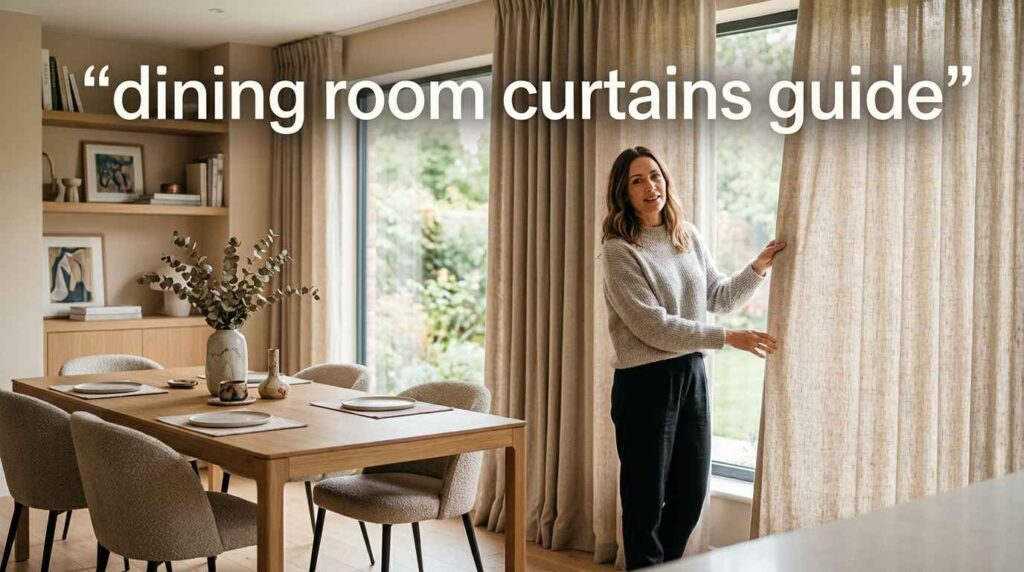
The best dining room curtains depend on three things—your room’s formality level, how you control light during meals, and ceiling height. For most dining rooms, floor-length linen or polyester panels in a warm neutral work across every style. Formal dining rooms do better with pinch-pleat drapes in velvet or jacquard. Evening-focused spaces benefit from room-darkening panels on west-facing windows.
Dining room curtains set the emotional tone for every meal, every dinner party, and every quiet breakfast in that space. Get them wrong and the room feels off. Get them right, and the atmosphere shifts from bright and open during daytime meals to warm and intimate during evening gatherings—without changing a thing.
This dining room curtains guide covers every decision: fabric types, curtain length, color selection, header styles, room size, and honest product picks for every dining aesthetic and budget.
Why Dining Room Curtains Work Differently Than Every Other Room
Most curtain advice treats every room the same. Dining rooms are different, and understanding why changes every decision you make.
The Dining Room Serves Two Opposite Functions
Daytime meals need natural light. Evening dinners need warmth, privacy, and controlled ambiance. The right curtains handle both without compromise.
Hard Surfaces Create Echo Problems
Dining rooms have more hard surfaces than almost any other room—tables, wooden chairs, tile floors, glass cabinets. These surfaces reflect sound rather than absorbing it.
Fabric curtains absorb ambient echo. Heavy drapes noticeably reduce acoustic harshness during meals—especially in open-plan dining spaces where sound travels further.
Light Direction Matters More Here
- South-facing: Intense afternoon sun creates glare and fades furniture. A UV-resistant or room-darkening lining is a practical necessity—not optional.
- North-facing: Cooler, diffused light all day. Sheer or semi-sheer panels work well here.
- West-facing: Direct evening sun during peak dinner hours. A room-darkening curtain here is one of the most impactful changes you can make.
The Chandelier Connection
Warm-toned fabrics—cream, ivory, burgundy, and deep gold—enhance warm incandescent bulb glow. Cool-toned fabrics pull the warmth out of the room at night, leaving the dining space feeling flat and visually disconnected.
Match curtain color to chandelier finish. Brass and antique bronze: warm neutrals and jewel tones. Matte black and chrome: cool neutrals and crisp whites.
Types of Dining Room Curtains

Dining room curtains come in several types, each designed for a different purpose and interior style. Formal drapes create an elegant look; blackout curtains provide maximum privacy and light control; sheer curtains let in natural light; linen panels offer a relaxed everyday feel; velvet drapes add warmth and luxury, while patterned curtains bring colour and visual interest. Choosing the right curtain type depends on your dining room’s lighting, privacy needs, and décor style.
Formal Drapes and Floor-Length Panels
Formality is determined by two things: header style and fabric weight. Pinch pleat, goblet pleat, and pencil pleat headers create structured, tailored folds. Paired with heavyweight velvet, jacquard weave, faux silk, or dupioni, the result belongs in a traditionally furnished dining room.
Fullness matters here. Formal drapes need 2x to 2.5x fabric width—twice the window width minimum. This creates rich, deep folds when closed and a full architectural gather when open.
Best for: Traditional, classic, and transitional dining rooms with high ceilings (9 feet and above).
Not ideal for casual everyday dining rooms, breakfast nooks, or open-plan spaces.
Blackout Curtains for Dining Room
West-facing dining rooms receive direct evening sun during peak dinner hours. Without light control, glare makes comfortable evening dining nearly impossible.
Two options to know:
- True blackout (99–100% light block): Triple weave construction — three layers of tightly woven polyester. No separate lining needed.
- Room darkening (85–99% light block): Uses a 140 GSM blackout interlining. Allows a small amount of light around edges. Appears lighter throughout the day — ideal option for most dining spaces.
Blackout curtains also provide thermal insulation and noise reduction — useful in urban dining rooms facing busy streets.
Best for: West-facing windows, evening-focused dining spaces, street-facing urban dining rooms.
Sheer Curtains for Dining Room
Sheers—voile, linen-look sheer, embroidered organza—maximize natural light while adding a soft visual layer. They work best as part of a layered setup: a sheer inner panel stays closed during the day, and a heavier outer drape closes in the evening.
In 2026, jacquard sheer panels and textured linen-look sheers are replacing flat plain voile. The texture adds visual interest even when backlit.
Best for: North-facing rooms, daytime casual dining, modern and Scandinavian aesthetics.
Linen and Semi-Sheer Panels
Linen is the most versatile option for everyday dining rooms—elegant enough for transitional spaces and relaxed enough for casual farmhouse settings.
Most “linen” curtains are a linen-polyester blend or faux linen polyester. These blends are machine washable, dimensionally stable, and more practical for dining rooms where curtains get bumped by chairs or exposed to cooking aromas.
Weight: 130–160 GSM hangs well and drapes naturally. Below 120 GSM looks limp and inexpensive.
Best for: Farmhouse, transitional, coastal, and everyday casual dining rooms.
Velvet Drapes for Dining Rooms
Velvet creates the most dramatic ambiance transformation of any fabric—and it is a top 2026 dining room trend.
Deep jewel tones—burgundy, navy, forest green, and plum—work specifically well here because warm dark tones are psychologically linked to appetite stimulation and social comfort. A dining room with burgundy velvet drapes and warm lighting feels like a restaurant you want to stay in.
Velvet also provides the highest acoustic absorption of any curtain fabric—reducing echo from hard dining surfaces more effectively than any other option.
Trade-off: dry cleaning required. Best suited to formal dining rooms used for dinner parties rather than everyday family meals.
Best for: Formal dining rooms, evening-focused spaces, high ceilings, cold climates.
Patterned and Geometric Curtains
A pattern works as a focal point—best when surrounding furniture and walls are neutral. The rule: if furniture is patterned, choose solid curtains. If furniture is solid, a patterned curtain adds the dimension the room needs.
In 2026, classic floral jacquard, watercolor botanical designs, and retro-inspired prints are leading patterned choices for dining rooms.
Best Fabrics for Dining Room Curtains
Fabric determines formality level, light control, maintenance requirements, and long-term durability.
Fabric Comparison Table
| Fabric | Formality | Light Control | Easy Care | Price | Best Dining Style |
|---|---|---|---|---|---|
| Velvet | High | 85–95% | Dry clean | $$$ | Formal, evening dining |
| Faux Silk / Dupioni | High | Medium | Dry clean | $$$ | Traditional, transitional |
| Jacquard Weave | High | Medium | Hand wash | $$$ | Classic, formal |
| Natural Linen | Medium | 30–50% | Hand wash | $$ | Farmhouse, casual elegant |
| Polyester Linen-look | Medium | 30–50% | Machine wash | $ | Everyday, transitional |
| Cotton | Low–Medium | 20–40% | Machine wash | $$ | Casual, farmhouse |
| Sheer Voile | Low | 5–15% | Machine wash | $ | Layered setups, airy |
GSM Weight Guide for Dining Room Curtains
- Under 120 GSM — Too light. It looks limp, lacks visual presence, and has minimal privacy.
- 130–160 GSM — Right for linen, semi-sheer, and cotton panels. Good natural drape.
- 180–200 GSM — Standard for everyday polyester. Holds shape through washing.
- 220–250 GSM — Premium weight. Velvet, heavy jacquard, quality blackout. Best acoustic absorption.
Header Styles and Formality Level
| Header Style | Formality | Visual Look | Best For |
|---|---|---|---|
| Pinch Pleat | High | Structured, tailored folds | Formal, traditional dining |
| Goblet Pleat | High | Elegant, architectural | Luxury formal dining |
| Pencil Pleat | Medium–High | Full, classic gather | Transitional dining |
| Eyelet / Grommet (40mm) | Medium | Modern, casual | Contemporary dining |
| Rod Pocket | Low–Medium | Relaxed casual gather | Farmhouse, cottage |
| Back Tab | Medium | Clean, minimal | Modern, Scandinavian |
| Ripple Fold | Medium | Sleek, wave-like folds | Modern, minimalist |
2026 note: Pinch pleat and pencil pleat headers are trending upward. Standard grommet headers are being replaced by more tailored styles in dining rooms.
Dining Room Curtain Length Guide

Curtain length is where most dining room window treatments go wrong. The fix is simple once you understand the rules.
Floor-Length — The Default Choice
Floor-length curtains are correct for the vast majority of dining rooms. Measure the rod from the floor and subtract half an inch. This creates a clean hem that just clears the floor.
- Standard 9-foot ceilings: 96-inch panels
- 10-foot ceilings: 108-inch panels
Hang the rod 4 to 6 inches above the window frame — not directly on the frame. This adds perceived ceiling height and makes the window appear taller.
Puddle Length — Formal and Dramatic Spaces
Puddle length extends 3 to 6 inches beyond the floor, creating soft fabric folds at the base. Best for formal dining rooms used primarily for dinner parties.
In 2026, an intentional 4 to 6-inch puddle in velvet or heavyweight linen is specifically trending for its “luxe lived-in” effect.
Practical note: puddle fabric collects dust faster. In homes with pets or children, standard floor length is the smarter choice.
Sill and Apron Length — Specific Situations Only
These shorter lengths work only in:
- Over a radiator where floor-length fabric blocks heat
- Breakfast alcove featuring custom bench seating beside the window
- Kitchen pass-through window in an open-plan dining space
In any standard dining room, sill or apron length looks unfinished and visually shortens the room.
How to Measure Dining Room Windows
- Step 1 — Rod placement: 4 to 6 inches above window frame. Ceiling-mount for maximum height illusion.
- Step 2 — Rod width: 6 inches beyond window frame on each side.
- Step 3 — Curtain width: Rod width × 1.5 (standard) or × 2 (formal). Divide by panel count.
- Step 4 — Curtain length: Rod bracket to floor, minus half an inch. Add 3–6 inches for a puddle.
Dining Room Curtain Color Guide
Color affects perceived room size, meal atmosphere, and how comfortable guests feel at the table.
Color Psychology in Dining Spaces
- Warm tones (burgundy, terracotta, deep gold, brick red): appetite-stimulating, socially warm—dominant in hospitality design for this reason.
- Cool tones (navy, slate gray, sage green): sophisticated, calm—works in modern restaurant-style dining rooms.
- Neutral tones (greige, ivory, warm white, taupe): most versatile — works in all lighting conditions and coordinates with almost any furniture.
2026 Color Trends
- Cloud Dancer white — soft chalky white with warm undertones. Airy without the coldness of stark white.
- Terra tints—warm clay, terracotta, and soft olive green. Organic and earthy, it pairs naturally with wood furniture and stone tile.
- Deep jewel tones—plum, divine Damson, deep burgundy, and forest green. For candlelit evening dining ambiance.
How to Match Curtain Color to Your Dining Room
- Match undertone, not exact color. Warm-undertone walls need warm-undertone curtains. Exact color matching flattens the room.
- Coordinate with the chandelier finish. Brass/antique bronze: warm neutrals and jewel tones. Matte black/chrome: cooler neutrals.
- Use dining chair fabric as the anchor. Pull one tone from the upholstered chairs into the curtain choice.
- When in doubt: greige. Gray-beige reads warm in incandescent light and cool in daylight. Coordinates with nearly every furniture color.
How Curtains Affect Dining Room Mood and Ambiance
The right dining room curtain does not just look good—it changes how every meal in that room feels. Light control, fabric color, acoustic softness, and chandelier coordination all play a role. Here is how curtains affect dining room mood and what to choose for the atmosphere you want.
Light Control and Meal Experience
Sheer panels create bright, open energy for casual daytime dining. Blackout or room-darkening panels create enclosed, warm intimacy for evening meals—especially with warm overhead lighting or candles.
A layered setup (sheer inner + heavier outer) handles both without compromise. This is the standard approach in hospitality design.
Acoustic Comfort at the Dining Table
Hard surfaces in dining rooms—tile floors, glass tables, wooden chairs—reflect sound and create echoes. Fabric curtains absorb it. Heavy velvet or thick polyester drapes make conversation noticeably more comfortable during meals.
Fabric Color and Appetite Psychology
Warm saturated tones—burgundy, warm gold, and terracotta—are linked to appetite stimulation and social warmth. Neutral warm tones (cream, ivory, and greige) consistently outperform cool neutrals in spaces designed for welcoming, comfortable dining.
Chandelier and Curtain Coordination
Warm-toned curtain fabric reflects warm lighting back into the room—enhancing the candle-like quality of incandescent bulbs. Cool-toned fabric absorbs warm light, making the room feel dimmer and less inviting in the evening.
Dining Room Curtain Styling Tips

Choosing the right curtain is only half the work. How you style it — layering, hardware, tiebacks, and furniture coordination — determines whether the finished room looks intentional or incomplete. These four styling decisions make the biggest difference.
Layering for Maximum Versatility
Inner layer: Sheer or semi-sheer in white, ivory, or a natural linen look. Diffuses daytime light and basic privacy.
Outer layer: Heavier drape in chosen fabric and color. Open during the day, closed in the evening.
Requires a double curtain rod—a front rod for the outer drape and a rear rod for the sheer. The versatility it adds is worth the investment.
Tieback and Holdback Placement
- One-third from bottom: Long, elegant line — best for formal dining rooms.
- Midpoint: Symmetrical silhouette — transitional and contemporary rooms.
Tieback types by style: fabric tieback (traditional), rope tieback (coastal/farmhouse), metal holdback in brass, matte black, or chrome (modern/architectural).
Curtain Rod and Hardware Coordination
- Brass or antique bronze: Warm, traditional. Pairs with velvet, jacquard, and linen.
- Matte black: Modern, industrial. Pairs with linen-look polyester and solid neutrals.
- Chrome or brushed nickel: Clean, transitional. Pairs with sheers and cool neutrals.
Standard rod diameter: 1 to 1.25 inches. Heavy velvet or jacquard benefits from a 1.5-inch rod for structural support.
Matching Curtains to Dining Room Furniture
Match curtain weight and formality to furniture weight and formality. Heavy velvet drapes fit solid wood tables and upholstered chairs. Light linen panels fit farmhouse wood tables and rattan chairs. Mismatching these creates visual tension the room cannot resolve.
Dining Room Curtains for Different Room Sizes
Not every dining room is the same size, and curtain choice should reflect that. Small rooms need light colors and ceiling-mount rods. Large rooms can handle bold patterns and heavy drapes. Here is the right approach for each size.
Small Dining Room (Under 10×10 Feet)
- Light colors only — warm white, cream, ivory, pale sage.
- Sheer or semi-sheer panels to maximize perceived space.
- Ceiling-mount rod for maximum height illusion.
- Extend rod 8 to 10 inches beyond window frame on each side.
- Avoid large-scale patterns—subtle texture only.
Medium Dining Room (10×12 to 12×14 feet)
- Full flexibility — any fabric, length, or header style works proportionally.
- 1.5x fullness for everyday panels, 2x for a formal gathered look.
- Medium-scale patterns work without overwhelming the space.
Large or Open-Plan Dining Room
- 2x to 2.5x curtain fullness — creates dramatic fabric volume appropriate to the scale.
- Bold patterns and statement colors work here.
- In open-plan spaces: coordinate curtains between dining and living zones — same color family, different fabric weights.
Dining Room Curtains by Design Style
The right curtain style depends entirely on your dining room’s design direction. Velvet drapes belong in a formal, traditional room—not a coastal farmhouse. Linen panels work in a Scandinavian space — not a maximalist boho dining room. Here is the right match for every style.
Traditional and Formal Dining Room
Pinch pleat or goblet pleat in velvet, jacquard, or faux silk. Deep jewel tones or classic ivory. Puddle or floor-length. Brass hardware. At least 2x fabric fullness—at 1.5x even quality fabric looks thin in formal settings.
Modern and Contemporary Dining Room
Ripple fold or back tab in linen-look polyester or cotton. Warm white, warm grey, taupe, or charcoal. Strictly floor-length. Matte black or brushed nickel rod. 2026 direction: textured weave (herringbone, fine basketweave) in warm neutrals rather than flat, plain panels.
Farmhouse and Rustic Dining Room
Rod pocket or back tab in natural linen or cotton canvas. Cream, ticking stripe, or sage green. Wooden rings on a bronze or matte black rod. Rope or fabric tiebacks. Standard 1.5x fullness—the farmhouse aesthetic moves away from heavy gathered drapes.
Bohemian and Eclectic Dining Room
Pattern-forward: botanical prints, global textiles, classic floral jacquard. Warm earthy tones—terracotta, mustard, burnt orange, and deep teal. Layer the patterned outer panel over the plain white sheer. Add tassel trim or fringe edge for a finished look.
Coastal and Airy Dining Room
Sheer or semi-sheer linen in white, soft blue, seafoam, or sand. Simple grommet or rod pocket header. Rope tiebacks or none. Keep fabric light, color soft, and movement natural—curtains should feel like they belong near water.
Best Dining Room Curtains — Our Top Picks for 2026
PRIMROSE Velvet Curtains 96 Inch—Best Formal Drapes for the Dining Room

At 280 GSM, the PRIMROSE velvet panels rank among the densest consumer-level curtains on the market — visibly bulkier than regular polyester drapes and more comparable in weight to professional hospitality-grade fabric. The 100% polyester velvet construction delivers 75–90% light reduction (deeper colors block more) along with meaningful thermal insulation against both summer heat and winter cold. Two hanging styles per panel — rod pocket for dense, gathered folds and back tab for neat, structured pleats — give you genuine flexibility depending on the formality level you want. The 52×96 inch size is the right choice for 9 to 10-foot ceiling dining rooms where standard 84-inch panels leave an awkward gap above the floor.
The taupe colorway reads as a warm neutral across different lighting conditions—warmer under incandescent bulbs and cooler in natural daylight—which makes it one of the more versatile options in the PRIMROSE range for dining rooms with mixed lighting setups. UV ray blocking protects dining furniture, flooring, and artwork from sun damage on south- or west-facing windows. Machine washable on low temperature with no tumble drying keeps long-term care manageable despite the premium velvet fabric.
100% Blackout Shield Curtains, 84 Inch — The Best Blackout Option for the Dining Room

The 100% Blackout Shield panels earn their name—triple-layer physical blackout construction blocks sunlight completely, with no light bleed around edges that room-darkening alternatives typically allow. The textured polyester fabric has a subtle surface variation that reads as more intentional than flat blackout panels, giving west-facing or street-facing dining rooms both full light control and a finished aesthetic. Five hanging options — back tab, hook belt, rod pocket, clip ring, and track system — cover virtually every dining room rod setup, and the 3-inch rod pocket accommodates oversized decorative rods common in formal dining rooms. The 50×84-inch sizing suits standard 8- to 9-foot-ceiling dining rooms where floor-length coverage is the priority.
Noise reduction and thermal insulation are both genuine functional benefits here—relevant for urban dining rooms facing busy streets or open-plan spaces where sound and temperature management matter. The cream colorway diffuses warm light naturally, making it a strong choice for dining rooms where evening ambiance requires both darkness control and a warm, welcoming feel when panels are partially open. Cold-water machine washing and wrinkle-resistant material help keep upkeep easy during everyday household use.
MYSKY HOME 84-Inch Linen Curtains — Best Semi-Sheer Linen Option

The MYSKY HOME linen panels use a 10% linen, 90% polyester blend—the ratio that reliably delivers the organic texture and relaxed drape of natural linen without the dimensional instability and delicate washing requirements that pure linen demands. The semi-sheer construction softens direct sunlight without blocking it, making these the most functional choice for north-facing dining rooms or casual dining spaces where natural light is the primary design asset. The cross-woven texture reads as genuinely elevated compared to flat, plain polyester panels at this price point—the surface catches light at different angles throughout the day, adding visual depth that solid-color, lightweight curtains typically lack.
Back tab and rod pocket hanging options suit farmhouse, boho, and transitional dining rooms where a casual, relaxed header style is appropriate—the back tab creates a cleaner fold and the rod pocket a softer, gathered appearance. Each 50×84-inch panel pair fits most standard dining room windows, providing proper fullness using the ideal 1.5× width measurement. The natural linen colorway coordinates with wood dining furniture, rattan chairs, jute rugs, and the organic material palette that defines farmhouse and cottagecore dining aesthetics in 2026. Machine washable in cold water.
THAIGEE Faux Linen Blackout Curtains, 84 Inch — The Best Linen-Look Blackout Option.

The THAIGEE panels solve a specific problem that most dining room buyers face: wanting the organic, textured aesthetic of linen alongside genuine blackout light control — without having to layer two separate curtain systems. The triple-layer physical blackout construction achieves 100% light blocking without a chemical coating, which eliminates the stiffness and odour that coated blackout fabrics often develop over time. The faux linen surface has subtle thread variation and natural texture that reads as authentically linen-like — noticeably more refined than the flat polyester surface of standard blackout panels. Five hanging options (back tab, hook belt, rod pocket, clip ring, track system) with included plastic hooks cover every dining room installation type.
Each panel measures 52×84 inches, so a pair delivers 104 inches of combined width—suitable for most standard dining room windows with 1.5x to 2x fullness based on window dimensions. The thermal insulation layer keeps dining rooms cooler in summer and warmer in winter, which reduces energy cost and also protects flooring and furniture from UV damage on sun-exposed windows. The linen colourway works across modern, farmhouse, boho, and neutral dining room aesthetics – one of the more versatile neutral options in the blackout curtain category. Cold machine wash only, tumble dry on low.
LAMIT Linen Curtains 84 Inch — Best Budget Linen-Look Curtains

The LAMIT linen panels deliver the cross-woven linen texture and fluid vertical drape that make linen-look curtains popular in dining rooms—at a price point that makes replacing or upgrading them seasonally practical. The grommet header with 8 silver metal grommets per panel fits rods up to 1.6 inches — standard for most dining room decorative rods — and slides smoothly without the catching or sticking that lower-quality plastic grommets develop over time. The fabric is denser and thicker than standard lightweight linen-look panels, providing genuine privacy alongside light filtering rather than the near-transparent effect that budget semi-sheer options typically produce.
At 52×84 inches per panel (104 inches total for two panels), the sizing suits standard dining room windows at 1.5x fullness. The natural beige colorway is a warm, versatile neutral that coordinates with cream walls, wood furniture, and stone or tile flooring — the material palette most common in farmhouse and transitional dining rooms. Available in over 15 colors including sage green, terracotta, taupe, and ivory, the range covers most 2026 dining room color directions without requiring a specialty order. Machine washable, no bleach.
Common Mistakes When Choosing Dining Room Curtains
Most dining room curtain mistakes happen before anything is even ordered—wrong length, wrong width, or wrong fabric for the room’s formality level. These seven mistakes are the most common and the easiest to avoid once you know what to look for.
Mistake 1: Curtains Hovering Above the Floor
The most common and most damaging mistake. It shortens the perceived window height, lowers the apparent ceiling, and makes expensive curtains look cheap.
Fix: Always measure rod-to-floor. Standard lengths (84″, 96″, 108″) rarely match actual measurements.
Mistake 2: Curtain Width Too Narrow
Panels that barely cover the window frame look flat and unintentional.
Fix: Total fabric width = rod width × 1.5 minimum. Divide by panel count for individual panel width.
Mistake 3: Wrong Fabric Weight for Formality Level
Heavy velvet in a casual breakfast nook. Thin sheers in a formal dining room. Both read as wrong immediately.
Fix: A 130 GSM linen panel in a formal room needs lining to add body—or it will always look out of place.
Mistake 4: Matching Curtain Color Exactly to Wall Color
Exact color matching makes both the window and wall disappear into each other.
Fix: Match undertone, not exact color. Warm white walls → cream curtains. Warm grey walls → greige curtains.
Mistake 5: Ignoring Window Direction
South-facing: fabric fades within 12 to 18 months without UV-resistant lining.
West-facing: evening sun glare during dinner hours without room-darkening capability.
Mistake 6: Rod Placed Too Low
Rod directly above the frame cuts off the window visually and lowers the apparent ceiling.
Fix: 4 to 6 inches above the frame minimum. Ceiling mount where the frame-to-ceiling gap is 6 inches or less.
Mistake 7: Overlooking the Acoustic Benefit
Heavy fabric curtains reduce echo from hard dining surfaces — a real improvement to everyday conversation comfort that costs nothing extra. Velvet and heavy jacquard absorb the most. Even standard linen panels make a noticeable difference.
Conclusion
Three decisions matter most. Fabric and header style set the formality level—match these to your dining room’s aesthetic, and everything follows. Length is non-negotiable: floor-length, always. Color should serve the atmosphere you want—warm and intimate, bright and casual, or somewhere between.
When in doubt, floor-length linen-look polyester in warm white, cream, or greige works in almost every dining room at every formality level with almost any furniture. It is the universal starting point that rarely goes wrong.
FAQs
1. Which curtains work best for a dining room?
For formal dining, pinch-pleat drapes in velvet, jacquard, or faux silk. For everyday casual dining: linen or polyester linen look in a warm neutral. For maximum flexibility, a sheer inner layer plus a heavier outer drape handles both daytime brightness and evening intimacy.
2. Should dining room curtains touch the floor?
Yes — always. Half an inch above the floor for a clean, tailored look. 3 to 6 inches beyond the floor for puddle length in formal spaces. Sill-length works only over radiators or built-in bench seating.
3. What color curtains work best in a dining room?
Warm neutrals—greige, ivory, taupe, and warm white—are the most universally reliable. For intimacy: warm dark tones like burgundy, navy, or forest green. Match to wall undertone and chandelier finish—not to the exact wall color.
4. Can I use blackout curtains in a dining room?
Yes—and for west-facing dining rooms, it’s strongly recommended. Room darkening (85–99%) works better than true blackout for dining rooms—it controls glare while allowing ambient light during the day.
5. Should living room and dining room curtains coordinate?
In open-plan spaces: coordinate rather than match exactly—the same color family or the same fabric in different weights. In separate rooms, they do not need to match at all.
Affiliate Disclusore
This guide contains affiliate links. We may earn a commission if you purchase through our links, at no extra cost to you.

I’m Attaur Rahman, founder of DecorReviewHub. I test and review curtains and home decor products to help homeowners make the right choice for every room. All my guides are based on real use and honest comparisons.