
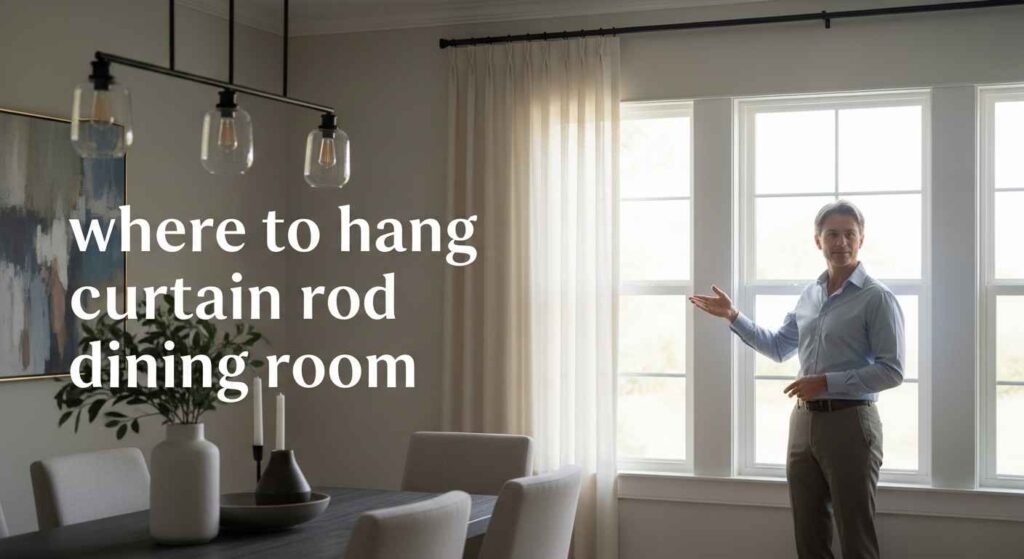
Choosing the right place to hang the curtain rod in the dining room is an important design decision that directly affects how spacious, balanced, and elegant your dining area feels. The ideal position is not fixed because it depends on ceiling height, window dimensions, curtain length, and the overall interior style of the room. However, interior design standards usually recommend placing the rod 4 to 6 inches above the window frame, extending it wider than the window for better light control, or mounting it closer to the ceiling to create a taller and more refined appearance. In this guide, you will get practical, experience-based advice on dining room curtain rod placement and the best curtain rod height for dining rooms, focused on real room scenarios rather than generic rules, so you can confidently achieve a well-balanced, professional-looking result.
Where Should a Curtain Rod Be Hung in a Dining Room?
A curtain rod should usually be hung 4 to 6 inches above the window trim and 8 to 12 inches wider than the window frame. This dining room curtain rod placement creates balanced proportions, allows more natural light, and makes the window look larger. For most homes, this is the best starting point when deciding where to place a curtain rod in a dining room.
Standard Placement Rule for Most Dining Rooms
For a clean and timeless look, install the curtain rod slightly above the window frame rather than directly on top of it. Extending the rod beyond the frame also gives curtains enough space to stack back when opened.
- Height: 4–6 inches above window trim
- Width: 4–6 inches past each side (8–12 inches total)
- Best for: Standard ceiling heights and average-size windows
This setup keeps the dining room visually balanced and helps curtains frame the window properly.
When to Hang the Rod Higher
Hang the rod higher when the room needs extra height or the window looks small. Raising the rod draws the eye upward and makes the dining room feel taller and more open.
Best situations for higher placement:
- Low ceilings
- Small or short windows
- Rooms needing more visual height
- Modern or elegant dining room styles
In these cases, place the rod closer to the ceiling while leaving enough space for brackets and curtain movement.
When to Keep It Near the Frame
Keeping the curtain rod closer to the window frame works better when architectural details or room proportions should stay the focus. It also suits smaller dining spaces where oversized curtains may feel heavy.
Best situations for near-frame placement:
- Decorative moulding or crown trim above the window
- Windows that are already tall
- Compact dining rooms
- Traditional room layouts
This method creates a neat and practical finish without overwhelming the wall space.
How High Should a Curtain Rod Be in a Dining Room?

A curtain rod in a dining room should usually be hung 4 to 6 inches above the window frame, but the ideal height depends on your ceiling height and window proportions. Higher placement can make the room feel taller, while standard placement keeps the space balanced and practical. Choosing the best curtain rod height for a dining room helps improve both style and natural light.
Standard Ceiling Heights (8 ft)
For most homes with 8-foot ceilings, place the curtain rod 4 to 6 inches above the window frame. This creates a classic, balanced look without making the curtains feel too high or disconnected from the window.
Best for:
- Standard dining rooms
- Average-size windows
- Traditional or transitional interiors
This is the safest and most common curtain height for everyday spaces.
Medium Ceilings (9 ft)
With 9-foot ceilings, the rod can be placed 6 to 10 inches above the frame to take advantage of the extra wall space. This makes the dining room feel taller and gives curtains a more elegant, custom look.
Best for:
- Open dining areas
- Modern interiors
- Rooms needing more visual height
Keep the curtains full-length for the best effect.
Tall Ceilings (10 ft+)
For ceilings 10 feet or higher, hang the curtain rod closer to the ceiling line rather than just above the frame. This emphasises ceiling height and creates a dramatic, upscale finish.
Best for:
- Formal dining rooms
- Large windows
- Luxury or spacious layouts
Mounting higher also helps tall windows feel properly scaled within the room.
Formula for Visual Balance
No matter the ceiling height, leave some open space between the rod and any crown moulding or ceiling trim. This breathing room keeps the hardware from looking cramped and maintains clean visual lines.
Quick rule:
- Leave a few inches below crown moulding
- Keep the rod centred with the window
- Use full-length curtains to connect the height visually.
The right dining room curtain rod height from the ceiling should always feel intentional, not crowded or random.
How Far Above the Window Should a Curtain Rod Be?
A curtain rod is typically positioned about 4 to 6 inches above the window frame to achieve a well-proportioned and visually stable look. This is the most common placement for a clean and functional finish. However, in dining rooms where a more refined and spacious feel is desired, the rod can be installed higher—generally 6 to 12 inches above the window frame. The final height should always be guided by factors such as ceiling height, window dimensions, and the overall design effect you want to create in the room.
The 4–6 Inch Rule Explained
The most common and safe placement is 4 to 6 inches above the window frame. This height works well in most dining rooms because it keeps the curtains visually connected to the window while still giving a slightly elevated and polished look. It also ensures proper coverage without leaving gaps at the top.
This rule is best when you want a clean, classic, and proportional appearance without overcomplicating the design.
6–12 Inches for a Taller Look
If you want your dining room to feel more spacious and modern, placing the curtain rod 6 to 12 inches above the window is a better choice. This higher placement draws the eye upward and creates the illusion of taller ceilings, which is especially useful in rooms with low or medium ceiling height.
This approach is commonly used in modern interiors where vertical space is emphasised for a more open feel.
Mistakes With Hanging Too Low
Hanging the curtain rod too close to the window frame is one of the most common design mistakes. It makes the window look smaller and reduces the overall elegance of the dining room. Low placement can also block natural light and make the ceiling appear lower than it actually is.
For a balanced and stylish result, avoid installing the rod directly on top of the frame unless there is a specific architectural reason to do so.
Overall, the ideal curtain rod height above the window in a dining room should enhance both proportion and light flow, not restrict them.
Close to the Ceiling vs Above the Window Frame: Which Looks Better?

In a dining room, both close-to-ceiling curtain rod placement and above-window-frame placement can look good, but the better choice depends on your ceiling height, room style, and how much visual height you want to create. Generally, mounting closer to the ceiling gives a more modern and spacious look, while placing the rod above the window frame offers a simple and balanced finish.
Close to Ceiling Benefits
Mounting the curtain rod close to the ceiling is ideal when you want a more dramatic and high-end appearance. It visually extends the wall height and makes the dining room feel larger and more open.
- Makes the room look taller and more spacious
- Creates an elegant, formal, and modern interior style
- Works especially well in rooms with low or medium ceilings
- Enhances long, floor-to-ceiling curtain designs
This option is often preferred in contemporary dining spaces where visual height and luxury feel are important.
Above Window Frame Benefits
Installing the curtain rod just above the window frame is a more traditional and practical approach. It maintains proportion without drawing too much attention to the wall height.
- Easier and more flexible installation
- Works well in standard ceiling-height dining rooms
- Keeps the design simple and visually balanced
- Suitable for most everyday home layouts
This method is ideal when you want a clean, functional look without changing the natural proportions of the room.
Best Choice by Dining Room Type
The right placement depends on the style and size of your dining room. Each type benefits from a different approach for the best visual result.
- Formal dining room: Close to ceiling for a luxurious and elegant feel
- Modern dining room: Ceiling mount or high placement for a sleek look
- Traditional dining room: Above window frame for balanced symmetry
- Small dining room: Close to the ceiling to create the illusion of height
Choosing between a ceiling-mount vs. wall-mount curtain rod in the dining room is mainly about whether you want to emphasise height (ceiling mount) or simplicity and proportion (wall mount).
How Wide Should a Curtain Rod Be in a Dining Room?
A curtain rod in a dining room should generally extend 4 to 8 inches beyond each side of the window frame. This wider placement ensures proper curtain stacking, better light control, and a more balanced visual appearance. The correct dining room curtain rod width also depends on window size and how open or formal you want the space to feel.
Standard Width Rule
The general guideline for curtain rod width is to position the rod so it extends past the window frame on both sides. This allows curtains to fully clear the glass when open and improves overall symmetry.
- Extend 4–8 inches on each side of the window frame
- Ensure curtains do not block the glass when pulled open.
- Maintain proportional spacing for a clean finish
This is the most practical and commonly used curtain rod width guide for dining rooms.
Why Wider Rods Improve Light and Symmetry
Using a wider curtain rod helps maximise natural light and improves the overall balance of the room. When curtains are pushed to the sides, more of the window remains visible, making the dining area feel brighter and more open.
- Increases natural light flow into the room
- Makes windows appear larger than they are
- Creates a more symmetrical and designer-like look
- Enhances overall room openness and elegance
A curtain rod wider than the window is always preferred for a more polished interior design.
Rod Width for Double Windows or Picture Windows
For double windows or large picture windows in dining rooms, rod width becomes even more important. The rod should extend far enough to cover the full window span without breaking visual continuity.
- Use longer rods that extend beyond the entire window setup
- Ensure centre support brackets for stability
- Maintain equal spacing on both outer sides
- Keep curtains evenly distributed when they are opened
For wide or multiple-window setups, proper curtain rod extension ensures a unified and visually continuous look across the dining space.
Best Curtain Length for Dining Room Windows

The best curtain length for dining room windows is usually floor-length curtains, as they create a more elegant and finished look. In most cases, curtains that lightly touch or just reach the floor work best because they add style without looking messy or too short. The right choice depends on your room style and daily usage.
Should Dining Room Curtains Touch the Floor?
Yes, in most dining rooms, curtains should touch the floor or come very close to it. This creates a polished and elegant appearance that enhances the overall interior design. Floor-length curtains also make the room feel taller and more refined compared to shorter styles.
- Best for formal and modern dining rooms
- Improves visual height and luxury feel
- Creates a clean, designer-style finish
Short curtains are usually avoided unless there is a specific functional reason like a window above furniture or frequent use near the window.
Floating vs Kiss vs Puddle Length
Curtain length style plays an important role in the final look of a dining room. Each option gives a different effect based on design preference.
- Floating length: Curtains hang slightly above the floor; clean and easy to maintain
- Kiss length: Curtains just touch the floor – the most balanced and popular choice
- Puddle length: Curtains extend slightly onto the floor; this creates a luxurious and dramatic look
For most dining rooms, kiss length is the safest and most recommended option because it looks elegant without requiring extra maintenance.
Best Option for Busy Family Dining Areas
For family dining rooms where daily activity is high, practicality becomes important. Curtains should look stylish but also be easy to manage and clean.
- Choose kiss or floating length for easy maintenance
- Avoid heavy pedal styles if there is frequent movement
- Go for durable fabrics that don’t drag or collect dust easily
- Prefer simple long curtains instead of short ones for a modern look
In most cases, long curtains vs short curtains in a dining room always favour long styles, as they provide better aesthetics, proportion, and overall room harmony.
Best Curtain Rod Placement for Small Dining Rooms
In a small dining room, the best curtain rod placement is one that creates the illusion of height and space. Proper positioning can make even a compact area feel more open, brighter, and visually balanced. The key is to mount the rod higher and wider and keep the design light and minimal.
Use Higher Placement to Create Height
Installing the curtain rod higher than the window frame is one of the most effective ways to make a small dining room look larger. When the rod is placed closer to the ceiling, it draws the eye upward and improves vertical space perception.
- Mount the rod 6–10 inches above the window frame or near the ceiling.
- Creates a taller and more open room appearance
- Works especially well in low or compact ceilings
- Enhances modern and airy dining room styles
This technique is widely used in small spaces because it improves visual height instantly without any structural changes.
Extend Wider Than Window to Open Space
Extending the curtain rod beyond the window frame helps make the wall look wider and more balanced. This also ensures curtains do not block natural light when opened.
- Extend the rod 4–8 inches beyond each side of the window
- Makes the window appear larger than its actual size
- Improves natural light flow into the dining room
- Creates a more symmetrical and designer-like look
For a curtain rod placement in a small dining room, this step is essential to avoid a cramped or closed-in appearance.
Use light fabrics and slim hardware.
In small dining rooms, curtain material and rod design play a big role in maintaining a clean and open feel. Heavy fabrics or bulky rods can make the space feel smaller.
- Choose lightweight fabrics like linen or sheer curtains.
- Use slim, minimal curtain rods instead of thick decorative ones
- Prefer simple hardware finishes for a clean look
- Avoid heavy layering unless necessary for privacy.
This combination keeps the dining room visually light, airy, and more spacious while maintaining functionality.
Curtain Rod Ideas for Large, Wide, or Bay Dining Room Windows
Large, wide, or bay dining room windows need a carefully planned curtain rod placement to maintain balance, support weight, and create a smooth, elegant look. The main goal is to ensure proper coverage, strong support, and a visually continuous curtain flow across the entire window area.
Wide Windows Need Extra Projection + Wider Span
For wide dining room windows, the curtain rod should extend well beyond the frame and cover the full width of the window setup. This ensures curtains open fully without blocking the glass and improves overall symmetry.
- Extend rod well beyond both sides of the window
- Use longer rods designed for heavy or wide coverage
- Helps create a balanced and open dining room look
- Essential for proper dining room curtain rod placement in large spaces
A wider span also allows more natural light and makes the room feel brighter and more open.
Use centre support brackets for long rods.
When dealing with large or wide windows, especially in dining rooms, long rods need extra support to avoid bending or sagging. Centre brackets help maintain stability and smooth curtain movement.
- Install centre support brackets for rods over long spans
- Prevents sagging in heavy curtain setups
- Improves durability and long-term performance
- Keeps curtain alignment clean and professional
This is especially important when deciding where to hang a curtain rod in the dining room for oversized windows.
Bay Window Rod Placement Tips
Bay windows in dining rooms require a more customised curtain rod setup to follow the angled structure. Flexible or sectional rods are usually the best solution for a seamless finish.
- Use curved or segmented rods for proper alignment
- Follow the natural shape of the bay window
- Ensure each section has balanced curtain coverage.
- Maintain equal spacing for a uniform design
Proper bay window treatment improves both functionality and aesthetics, making the dining space feel well-designed and cohesive.
Single vs. Double Curtain Rod for Dining Room

Choosing between a single and double curtain rod in a dining room depends on how much light control, privacy, and layering effect you want. A single rod offers a simple setup, while a double rod provides more flexibility for layered curtains and a premium look.
When Single Rod Is Enough
A single curtain rod is enough when you want a clean, minimal, and easy-to-maintain window treatment. It works best for light fabrics and spaces where layering is not required.
- Ideal for simple curtain panels
- Best for small to medium dining rooms
- Easy installation and low maintenance
- Works well when privacy needs are minimal
This option is perfect for a straightforward and functional dining room setup.
When Double Rod Works Better
A double curtain rod is better when you need both style and functionality. It allows you to layer two types of curtains, giving more control over light and privacy.
- Sheer + blackout combination for flexible lighting
- Creates a layered luxury look in dining rooms
- Allows daytime light with sheer curtains and privacy at night
- Enhances depth and elegance in formal dining spaces
In most modern interiors, the single vs double curtain rod dining room choice depends on whether you prefer simplicity or a more decorative, layered design.
Best Curtains for Dining Room Windows by Style
The best curtains for dining room windows depend on the interior style of your space. Different curtain designs create different moods—elegant, modern, or traditional—while also improving light control and overall room balance. Choosing the right style ensures your dining room feels complete and visually well-designed.
Elegant Dining Rooms
For elegant dining rooms, the focus is on soft textures and refined detailing. Curtains in this style should look sophisticated without being too heavy or overpowering.
- Linen blend fabrics for a soft, natural flow
- Pinch-pleat drapery for a tailored, upscale finish
- Neutral tones for a calm and elegant atmosphere
This combination creates elegant dining room curtain ideas that feel timeless and refined while enhancing natural light and softness in the space.
Modern Dining Rooms
Modern dining rooms work best with clean lines and minimal design. The goal is simplicity, structure, and a clutter-free look.
- Smooth, clean curtain panels without heavy detailing
- Matte metal hardware for a sleek finish
- Light or neutral colours for a fresh, modern feel
This approach supports modern dining room curtain rod ideas where simplicity and functionality are equally important, creating a sharp and contemporary look.
Traditional / Formal Rooms
Traditional or formal dining rooms often require richer textures and layered designs to achieve a more luxurious and classic appearance.
- Layered drapery for depth and elegance
- Rich fabrics like velvet or heavy cotton blends
- Decorative tiebacks and structured folds
These formal dining room window treatments enhance the sense of luxury and are often used in classic home interiors where detail and depth matter.
Common Dining Room Curtain Hanging Mistakes to Avoid

Curtain hanging mistakes can easily affect the overall look of a dining room, making it feel smaller, unbalanced, or less stylish. Avoiding these common errors ensures proper dining room curtain rod placement, better light flow, and a more professional interior finish.
Curtain Rod Too Low
Hanging the curtain rod too low is one of the most common mistakes. It makes the window look smaller and reduces the visual height of the room.
- Makes ceilings appear lower than they are
- Reduces elegance and vertical space
- Blocks natural light around the top of the window
To correct this, always mount the rod above the window frame for a more elevated and well-balanced appearance.
Curtain Rod Too Narrow
Using a rod that is too narrow for the window limits how far curtains can open. This reduces light and makes the window appear smaller than it is.
- Curtains cover part of the glass even when they are open
- Reduces natural light in the dining room
- Creates a cramped and unbalanced appearance
A correctly placed rod should go past the window frame for improved balance and natural light flow.
Curtains Too Short
Short curtains can break the visual flow of a dining room and make the design feel unfinished. Floor-length curtains are usually more elegant and modern.
- Makes the room look incomplete or outdated
- Reduces visual height of the space
- Interrupts clean interior lines
If curtains are too short, replacing or adjusting them to floor length is the best fix.
Ignoring Window Centring
Improper alignment of the curtain rod can make even expensive curtains look uneven. Centring is key for symmetry in dining spaces.
- Creates uneven visual balance
- Makes windows look misaligned with furniture
- Affects overall room harmony
Always make sure the rod is centred with the window and properly aligned with the room layout.
Wrong Hardware Finish
Choosing the wrong curtain rod finish can clash with the dining room décor and reduce visual harmony.
- Clashes with furniture and lighting style
- Breaks overall interior theme
- Can make the setup look outdated or inconsistent
Select a hardware finish that complements the dining room style for a clean and coordinated look.
Avoiding these common curtain-hanging mistakes in the dining room helps create a balanced, stylish, and well-designed space with better proportions and visual appeal.
Quick Dining Room Curtain Rod Placement Chart
A curtain rod placement chart helps you quickly decide the ideal height, rod position, and curtain length based on your dining room ceiling height. This makes it easier to achieve balanced proportions, better light flow, and a more stylish interior look.
| Ceiling Height | Rod Placement | Curtain Length | Best Effect |
|---|---|---|---|
| 8 ft (Standard) | 4–6 inches above window frame | Floor-length (kiss or slight float) | Balanced, clean, and classic dining room look |
| 9 ft (Medium) | 6–10 inches above window frame | Floor-length (kiss recommended) | Taller visual height with elegant proportions |
| 10 ft+ (Tall) | Near ceiling line or crown molding | Full floor-length curtains | Luxurious, dramatic, and spacious feel |
| Small Dining Room | Higher than standard placement | Light floor-length curtains | Creates illusion of height and open space |
Expert Tips for a Balanced Dining Room Window Look
A well-balanced dining room window design depends on proper alignment, material choice, and hardware coordination. The goal is to maintain symmetry, natural light flow, and visual height while keeping the overall setup clean and elegant.
Match Rod Finish with Chandelier / Handles
Choose a curtain rod finish that complements your chandelier, door handles, or cabinet hardware. This creates a unified hardware finish and a more cohesive interior style.
Keep symmetry with the table centreline.
Align the curtain setup with the dining table centreline to maintain a strong symmetrical look. This improves overall room balance and makes the space feel intentionally designed.
Let Curtains Frame Natural Light
Position curtains so they frame the window instead of blocking it. This enhances natural light, making the dining room brighter and more open.
Choose Full Panels for Softness
Use full-length curtain panels to add softness and elegance to the space. They improve visual height and create a smooth flow from ceiling to floor.
Conclusion
Choosing the right place to hang the curtain rod in the dining room is essential for achieving a balanced, stylish, and functional interior. Whether you install the rod higher for a taller visual effect, extend it wider for better light control, or align it perfectly with your window and furniture layout, every detail impacts the overall look of the space. By following proper height, width, and styling guidelines, you can create a dining room that feels more open, elegant, and professionally designed while improving both natural light and room harmony.
1. How high should curtains hang in a dining room?
Curtains in a dining room should usually be hung 4 to 6 inches above the window frame. This height creates a balanced look and makes the room feel taller. For higher ceilings, the rod can be placed closer to the ceiling for a more elegant effect.
2. Should dining room curtains touch the floor?
Yes, dining room curtains should ideally touch or lightly skim the floor. Floor-length curtains create a more elegant and finished appearance while also making the room feel taller and more refined.
3. Can I hang a curtain rod near the ceiling?
Yes, you can hang a curtain rod near the ceiling, and it is often recommended for modern dining rooms. This placement helps increase visual height, making the space look larger and more open, especially in rooms with low ceilings.
4. How much wider should the curtain rod be than the window?
A curtain rod should extend 4 to 8 inches on each side of the window frame. This allows curtains to fully open without blocking light and creates a more balanced, symmetrical look in the dining room.
5. Are long curtains better than short curtains in dining rooms?
Yes, long curtains are generally better for dining rooms because they create a more elegant and complete look. They improve visual height, room balance, and overall interior style, while short curtains can make the space feel smaller and less refined.

I’m Attaur Rahman, founder of DecorReviewHub. I test and review curtains and home decor products to help homeowners make the right choice for every room. All my guides are based on real use and honest comparisons.