
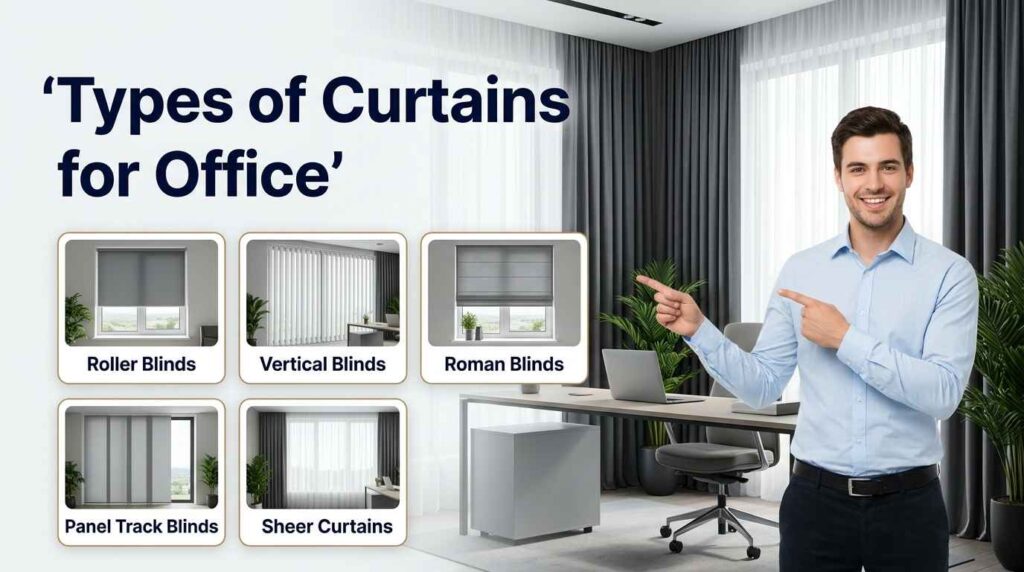
Office curtains are more than just decorative window coverings; they are an essential part of modern workspace design that directly influences how a room feels and functions. The right types of curtains for an office can significantly improve privacy, control natural light, reduce screen glare, and enhance overall comfort, which ultimately supports better focus and productivity throughout the workday. In today’s home offices and professional environments, office window treatments have become increasingly important because they help create a balanced, efficient, and visually comfortable workspace. In this guide, you will learn about different office curtain styles, fabrics, functions, and how to choose the best option based on your specific workspace needs.
Why Office Curtains Matter in Modern Workspaces
Office curtains do more than cover windows. They improve privacy, control natural light, reduce screen glare, enhance energy efficiency, and create a professional work environment. The right office window treatments can make a workspace more comfortable, productive, and visually appealing.
The Role of Window Treatments in Office Design
Privacy and Confidentiality
Office curtains help protect privacy by limiting outside visibility. They are especially useful in home offices, executive offices, and conference rooms where confidential work or meetings take place.
Light Management and Glare Reduction
Proper light control improves workplace comfort. Blackout curtains, light-filtering curtains, and sheer curtains help reduce monitor glare, control sunlight, and create balanced indoor lighting.
Energy Efficiency and Insulation
Thermal curtains and insulated curtains help reduce heat gain during summer and heat loss during winter. This improves window insulation and can lower HVAC energy costs.
Professional Appearance
Well-chosen office drapes and curtain panels enhance office décor and support a clean, organized, and professional workspace design.
Employee Comfort and Productivity
By reducing glare, improving privacy, and maintaining comfortable indoor temperatures, office curtains help create a workspace that supports focus, productivity, and daily comfort.
Key Factors to Consider Before Choosing Office Curtains
Window Size and Shape
Measure windows carefully to ensure proper curtain coverage, functionality, and appearance.
Natural Light Exposure
Choose curtain types based on sunlight levels. Bright spaces may need blackout or light-filtering curtains, while darker rooms often benefit from sheer fabrics.
Office Layout
Different workspaces have different needs. Open offices, private offices, and meeting rooms may require different levels of privacy and light control.
Interior Design Style
Select office curtain styles and fabrics that match the overall interior design and office furniture.
Privacy Requirements
Consider how much privacy the workspace needs when choosing curtain opacity and fabric thickness.
Climate and Energy Efficiency Needs
In warm climates, thermal curtains help block solar heat. In colder regions, insulated curtains improve heat retention and energy efficiency.
Types of Curtains for Office by Function
Different office curtains serve different purposes. Some improve privacy, and some control natural light, while others support energy efficiency or noise reduction. Choosing the right curtain type depends on your workspace needs, window exposure, and productivity goals.
Blackout Curtains for Maximum Light Control
Blackout curtains are designed to block most outside light, making them one of the best office window treatments for light control. They improve screen visibility by minimizing sunlight interference and reducing monitor glare.
These curtains work especially well in conference rooms, presentation spaces, video meeting rooms, and offices with direct sun exposure. They also help create a distraction-free workspace where employees can focus more effectively.
Sheer Curtains for Soft Natural Light
Sheer curtains allow natural daylight to enter while softening harsh sunlight. They create a bright and open office atmosphere without completely exposing the workspace.
Many modern offices combine sheer curtain panels with blackout curtains or blinds to achieve flexible light control throughout the day. This layered window treatment approach improves both functionality and aesthetics.
Thermal Curtains for Energy Efficiency
Thermal curtains help improve window insulation by reducing heat transfer through glass surfaces. During summer, they help block solar heat, while in winter they help retain indoor warmth.
This added insulation can improve energy efficiency, support indoor climate control, and reduce heating and cooling costs over time. They are particularly useful in offices with large windows or significant sun exposure.
Soundproof Curtains for Noise Reduction
Soundproof curtains use dense fabric layers that help absorb sound and reduce outside noise. While they do not completely eliminate noise, they can significantly improve acoustic comfort.
These curtains are ideal for home offices, offices near busy roads, and workspaces where concentration is important. Improved acoustic absorption typically enhances concentration, minimises interruptions, and boosts overall productivity.
Light Filtering Curtains for Balanced Illumination
Light-filtering curtains reduce harsh sunlight while still allowing daylight to enter the workspace. They provide a balance between brightness, visibility, and comfort.
This curtain type works well in offices that require natural light but need protection from excessive glare and heat. The result is a more comfortable and visually balanced work environment.
Privacy Curtains for Confidential Workspaces
Privacy curtains are designed to limit visibility from outside while maintaining a professional appearance. They are commonly made from thicker or opaque fabrics that provide greater coverage.
These curtains are especially effective for executive offices, meeting rooms, and street-facing windows where confidentiality and visual privacy are important concerns.
Insulated Curtains for Year-Round Comfort
Insulated curtains help regulate indoor temperatures throughout the year. Their multiple fabric layers reduce heat loss during winter and limit heat gain during summer.
In addition to supporting energy savings, insulated office curtains contribute to a more comfortable workspace by maintaining stable indoor temperatures and reducing drafts near windows.
Types of Curtains for Office by Style

Office curtain styles define how window treatments look, function, and interact with the overall workspace design. Each style affects usability, aesthetics, and compatibility with modern office environments, including home offices, executive spaces, and conference rooms.
Grommet Curtains
Grommet curtains feature metal rings that slide easily on a curtain rod, making them a practical choice for modern office window treatments. They create a clean, structured appearance that fits well with contemporary office design, especially in home offices and professional workspaces where simplicity and efficiency matter.
Rod Pocket Curtains
Rod-pocket curtains are designed with a sewn-in pocket that holds the curtain rod, creating soft and gathered fabric folds. They are commonly used in traditional office interiors where a more classic and subtle window covering style is preferred, especially in private offices and small workspace setups.
Pencil Pleat Curtains
Pencil pleat curtains offer a tightly gathered, uniform pleat structure that creates a refined and professional appearance. They are often used in formal office environments such as corporate offices and meeting rooms where a polished and elegant interior design is required.
Pinch Pleat Curtains
Pinch-pleat curtains feature structured folds that are sewn at the top, creating a tailored and executive-level appearance. These curtains are ideal for executive offices, boardrooms, and premium workspaces where interior design emphasises authority, professionalism, and visual structure.
Tab-top curtains
Tab-top curtains use fabric loops at the top that slide onto a rod, offering a more relaxed and decorative look. They are suitable for casual office environments, creative studios, and collaborative workspaces where a less formal and more flexible interior style is preferred.
Ripple Fold Curtains
Ripple fold curtains are known for their smooth, wave-like structure that creates a uniform and modern appearance. They are widely used in contemporary office design, especially in minimalist workspaces, conference rooms, and high-end office interiors focused on clean visual flow.
Eyelet Curtains
Eyelet curtains include metal-reinforced holes at the top that allow easy movement along the rod, making them highly functional and visually minimal. They are commonly used in modern office decor where simplicity, easy maintenance, and a streamlined appearance are key priorities.
Types of Curtains for Office by Fabric
Office curtain fabrics directly impact privacy, light control, durability, and overall workspace comfort. Each fabric type interacts differently with natural light, temperature, and office interior design.
Linen Curtains
Linen curtains provide a natural texture that fits modern office interior design. Their breathable fabric allows soft natural light flow, making them suitable for home offices and creative workspaces where a relaxed but professional atmosphere is needed.
Cotton Curtains
Cotton curtains are widely used in office window treatments due to their versatility and affordability. They are easy to maintain and work well in everyday office environments where balanced privacy and light control are required.
Polyester Curtains
Polyester curtains are known for their durability and wrinkle resistance, making them a cost-effective solution for office spaces. They perform well in high-use environments and support consistent appearance in long-term office setups.
Velvet Curtains
Velvet curtains offer luxury aesthetics along with improved sound absorption, making them ideal for executive offices and meeting rooms. Their heavy fabric supports better acoustic comfort and enhances a premium professional environment.
Silk Curtains
Silk curtains provide a premium and elegant appearance, often used in formal professional spaces. They enhance interior design appeal in high-end offices where visual presentation and branding matter.
Faux Linen Curtains
Faux linen curtains replicate the natural look of linen while offering easier maintenance. They are a budget-friendly option for modern office spaces that want a natural aesthetic without high upkeep requirements.
Microfibre Curtains
Microfibre curtains are highly durable and stain-resistant, making them suitable for high-traffic office areas. Their strong performance in daily use environments supports long-term office window covering needs with minimal maintenance.
Best Office Curtains for Different Types of Workspaces

Different office environments have different functional needs. The right office curtains depend on how the space is used, including productivity demands, privacy level, lighting conditions, and overall interior design requirements.
Home Office Curtains
Home office curtains are designed to support productivity while maintaining a balance between natural daylight and privacy. Light-filtering or layered window treatments help reduce screen glare and create a focused workspace suitable for remote work environments.
Executive Office Curtains
Executive office curtains focus on premium materials and refined aesthetics to create a sophisticated professional environment. Heavy fabrics like velvet or structured pleat designs enhance interior design while supporting privacy and acoustic comfort in high-level workspaces.
Small Office Window Curtains
Small office window curtains prioritise space optimisation and light enhancement. Minimalist styles such as sheer curtains or light-filtering fabrics help maximise natural light while maintaining a clean, open visual appearance in compact office spaces.
Shared Workspace Curtains
Shared workspace curtains provide flexible privacy solutions for collaborative office environments. Adjustable window coverings help balance openness with individual focus needs, supporting productivity in co-working and multi-user office layouts.
Conference Room Curtains
Conference room curtains are designed for presentation-friendly light control and professional visual appeal. Blackout or heavy light-blocking curtains improve screen visibility during meetings and enhance communication clarity in corporate environments.
Reception Area Curtains
Reception area curtains play a key role in shaping first impressions and brand identity. Decorative office drapes and modern window treatments contribute to a welcoming environment while reinforcing a strong professional image for visitors and clients.
How to Choose the Right Office Curtains
Selecting office curtains is a functional decision based on how the workspace operates. The right choice depends on workflow needs, lighting conditions, privacy level, and overall office design, ensuring better productivity and visual comfort.
Match Curtains to Office Function
Office curtain selection should align with how the space is used. Focus work areas need glare reduction, meeting rooms require balanced visibility, video conferencing setups depend on controlled lighting, and client-facing environments prioritize a professional appearance using structured office window treatments.
Consider Light Control Requirements
Light control directly affects screen visibility and workplace comfort. Full blackout curtains support presentation spaces, light-filtering curtains reduce harsh sunlight in work zones, and daylight enhancement solutions help maintain natural illumination without eye strain in modern office environments.
Evaluate Privacy Needs
Privacy requirements vary across office layouts. Internal privacy is important in shared workspaces, while external visibility concerns matter for street-facing windows and home offices. Privacy curtains and layered window coverings help maintain confidentiality without blocking natural light completely.
Select the Right Curtain Length and Width
Accurate curtain measurements ensure proper coverage and a professional look. Well-fitted office curtains improve window framing, prevent light leakage, and contribute to a clean interior design. Proper sizing also enhances the functionality of curtain rods and panels in any workspace.
Coordinate Colors With Office Décor
Curtain colors influence mood, productivity, and visual harmony. Soft, neutral shades create a peaceful, professional setting, while productivity-driven color psychology recommends muted greys, clean whites, and natural earth tones. Modern office design trends favor minimal and clean window treatment palettes.
Curtains vs Blinds for Offices: Which Is Better?
Choosing between curtains and blinds depends on functionality, maintenance, and design preference. Both window coverings serve different roles in office window treatments and can even be combined for better performance.
Privacy Comparison
Curtains provide softer and more complete privacy coverage, while blinds offer adjustable visibility control. Offices requiring confidentiality often prefer curtain-based solutions or layered systems.
Light Control Comparison
Blinds allow precise light adjustment, whereas curtains offer broader light diffusion or complete blocking depending on fabric type. Blackout curtains and light-filtering blinds are commonly used together in modern office setups.
Energy Efficiency Comparison
Thermal curtains generally provide better insulation by reducing heat transfer, while blinds offer limited thermal control. Energy-efficient office curtains support HVAC savings in both summer and winter.
Maintenance Comparison
Blinds are easier to clean with simple dusting, while curtains require periodic washing or dry cleaning depending on fabric type, such as velvet, linen, or polyester blends.
Aesthetic Appeal Comparison
Curtains contribute more to interior design, offering softness, texture, and decorative value. Blinds create a minimal and structured look, often used in modern corporate environments.
When Curtains Are the Better Choice
Curtains are ideal for home offices, executive spaces, and meeting rooms where comfort, privacy, and design aesthetics are priorities. They enhance office interior design and improve workspace atmosphere.
When Blinds Are the Better Choice
Blinds are better suited for minimalist offices, technical workspaces, and areas requiring frequent light adjustment. They support functional and clean office environments.
When Layering Curtains and Blinds Works Best
Combining curtains and blinds provides maximum flexibility in office window coverings. This layered system improves light control, privacy, and insulation, making it ideal for modern hybrid workspaces and professional office designs.
Common Mistakes to Avoid When Choosing Office Curtains

Choosing office curtains without considering functionality, environment, and design requirements often leads to poor performance in light control, privacy, and energy efficiency. A correct selection should always align with workspace needs and window conditions.
Ignoring Window Measurements
Incorrect window measurements result in poor fitting office curtains that affect both appearance and performance. Proper sizing ensures full window coverage, better light blocking, and a professional look in modern office window treatments.
Choosing Style Over Function
Many users prioritize curtain design over functionality, which reduces workspace efficiency. Office curtains should always balance aesthetics with practical needs like privacy, glare reduction, and productivity support in real office environments.
Overlooking Energy Efficiency
Ignoring thermal performance can increase heating and cooling costs. Energy-efficient office curtains and insulated fabrics help regulate indoor temperature and support HVAC efficiency, especially in offices with large glass windows.
Selecting the Wrong Fabric
Fabric choice directly impacts durability, light control, and maintenance. For example, polyester curtains offer durability, while blackout or velvet fabrics improve privacy and acoustic comfort in office workspaces.
Using Inappropriate Curtain Lengths
Improper curtain length can disrupt visual balance and reduce professional appeal. Correct length selection ensures clean window framing and enhances interior design consistency in office environments.
Neglecting Privacy Requirements
Ignoring privacy needs can expose sensitive workspaces. Privacy curtains and layered window coverings are essential for conference rooms, executive offices, and street-facing work areas.
Office Curtain Design Trends and Window Covering Ideas
Modern office design trends focus on functionality, minimalism, and smart integration. Window treatments are no longer just decorative—they actively support productivity, energy efficiency, and workspace comfort.
Modern Office Curtains
Modern office curtains emphasize clean lines, neutral tones, and functional fabrics. These designs integrate well with contemporary office interiors and support professional workspace aesthetics.
Minimalist Window Treatments
Minimalist office window coverings focus on simplicity and efficiency. Light fabrics, straight designs, and neutral color palettes help create distraction-free environments that improve focus and productivity.
Energy-Efficient Office Window Coverings
Energy-efficient curtains use thermal and insulated materials to reduce heat transfer. These solutions help maintain stable indoor temperatures and reduce HVAC energy consumption in office environments.
Layered Curtain Designs
Layered window treatments combine sheer curtains with blackout or light-filtering panels. This approach provides flexible control over privacy, daylight, and glare reduction in modern workspaces.
Smart and Motorized Curtain Systems
Smart office curtains use automation and remote control systems for convenience and precision. These motorized solutions are increasingly used in smart offices and modern corporate buildings.
Sustainable Curtain Materials
Sustainable office curtains use eco-friendly fabrics such as organic cotton, recycled polyester, and natural fibers. These materials support environmental responsibility while maintaining durability and modern office aesthetics.
Conclusion
Choosing the right types of curtains for an office is essential for creating a workspace that supports privacy, comfort, productivity, and professional design. From blackout and sheer options to thermal, soundproof, and privacy-focused fabrics, each curtain type serves a specific function that directly impacts light control, energy efficiency, and overall work environment quality. When selected based on office needs such as home office setups, executive spaces, or conference rooms, office curtains not only enhance interior aesthetics but also improve focus, reduce glare, and create a more efficient and comfortable workspace experience.
1. What type of curtain is best for an office?
The best office curtains depend on your workspace needs. Blackout curtains are ideal for full light control, sheer curtains work well for natural daylight, and thermal curtains improve energy efficiency. A layered combination often gives the best balance of privacy, comfort, and productivity.
2. Are blackout curtains good for home offices?
Yes, blackout curtains are very effective for home offices, especially for reducing screen glare and improving focus. They help block external light, making video calls clearer and creating a distraction-free workspace environment.
3. Should an office have curtains or blinds?
Both work well, but the choice depends on function. Curtains offer better aesthetics, insulation, and privacy, while blinds provide precise light control and easy adjustment. Many modern offices use a combination of both for maximum flexibility.
4. Which curtain fabric is best for office windows?
Polyester is the most practical fabric for office windows due to its durability and easy maintenance. Linen works well for modern aesthetics, while velvet is ideal for executive spaces requiring sound absorption and a premium look.
5. How do I choose office curtains?
Choose office curtains based on light control needs, privacy requirements, room size, and interior design style. Also consider fabric type, energy efficiency, and whether the space is for focused work, meetings, or client interaction.

I’m Attaur Rahman, founder of DecorReviewHub. I test and review curtains and home decor products to help homeowners make the right choice for every room. All my guides are based on real use and honest comparisons.