
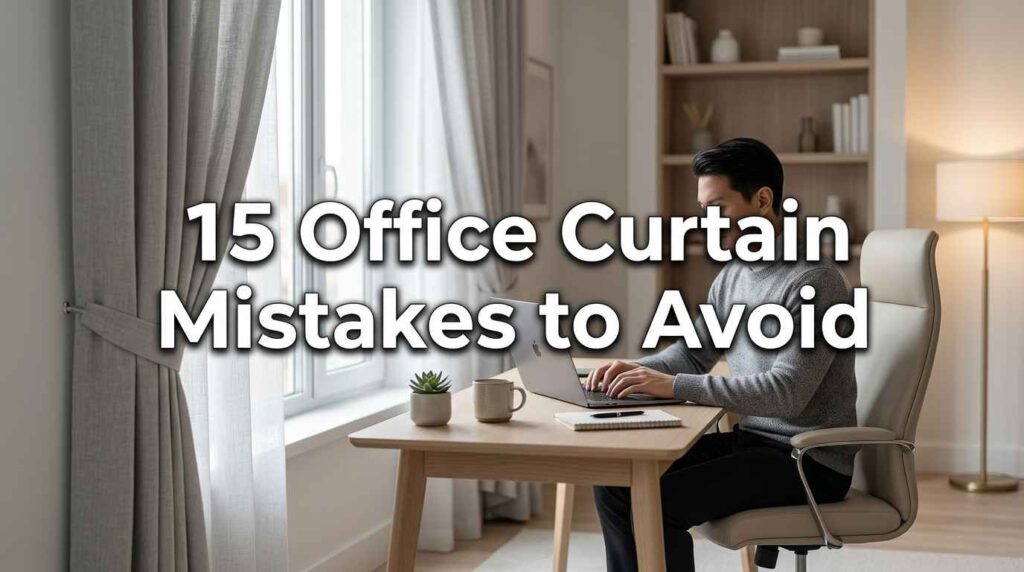
Office curtains are more than just a decorative element; they play an important role in shaping a functional and comfortable home office. The right office curtains or home office curtains can improve workspace comfort by controlling natural light, reducing screen glare, enhancing privacy, and even supporting better energy efficiency in a remote work setup. However, many homeowners make simple but costly errors when selecting office window treatments, which directly affect focus, productivity, and overall work performance. Understanding these issues is essential because small design choices can have a big impact on daily efficiency. In this guide on office curtain mistakes to avoid, you will learn the most common errors people make and how to choose curtains that balance function, style, and productivity for a better workspace experience.
Why the Right Office Curtains Matter More Than Most Homeowners Think
The right office curtains do more than enhance appearance. They influence productivity, privacy, natural light control, screen comfort, and the overall functionality of a home office. Choosing the wrong window treatments can lead to distractions, monitor glare, reduced privacy, and a less comfortable work environment.
Improve Focus and Productivity
Office curtains help create a workspace that supports better focus and concentration. Without proper window coverings, outside activity, traffic, or neighboring homes can become constant distractions. Light-filtering or blackout curtains help reduce visual interruptions, making it easier to stay productive during the workday.
Improve Natural Light and Screen Comfort
Natural light can make a home office feel brighter and more inviting, but too much direct sunlight often causes monitor glare and eye strain. The right curtains help filter harsh sunlight, reduce screen reflections, and improve visibility. For example, a south-facing office may benefit from light-filtering curtains that balance daylight while keeping computer screens comfortable to use.
Enhance Privacy and Professionalism
Privacy is essential in a home office, especially for video calls and Zoom meetings. Office curtains help block outside views while creating a cleaner, more professional background appearance. Whether your workspace faces a busy street or a neighbor’s window, proper privacy control helps maintain a professional setting without sacrificing natural light.
Office Curtain Mistake #1 – Choosing Curtains Based Only on Appearance
Choosing office curtains based only on appearance is a common mistake because attractive window treatments do not always provide the privacy, light control, and functionality needed in a home office. For example, sheer curtains may look elegant but can allow excessive sunlight, create monitor glare, and reduce privacy during video calls. Since natural light directly affects screen visibility, focus, and overall productivity, homeowners should choose curtains that balance aesthetics with practical features such as glare reduction, privacy control, and effective light filtering.
Office Curtain Mistake #2 – Ignoring Natural Light Requirements
Ignoring natural light requirements when choosing office curtains can significantly affect comfort, productivity, and screen visibility in a home office. Too much direct sunlight often leads to harsh monitor glare and reduced visibility, especially during peak daylight hours, making it difficult to focus on work. On the other hand, blocking too much natural light can create a dim and uncomfortable workspace that strains the eyes and reduces overall visual comfort. The key is finding a balanced level of brightness control that supports both natural lighting and glare reduction. For example, south-facing home offices may benefit from light-filtering or semi-sheer curtains that soften sunlight without darkening the room completely. This balance improves visual comfort, reduces eye strain, and creates a more stable environment for long working hours, especially during video calls and screen-based tasks where consistent lighting is essential for productivity.
Office Curtain Mistake #3 – Selecting the Wrong Fabric Type
Choosing the wrong curtain fabric can directly impact light control, comfort, and long-term usability in a home office. Lightweight fabrics like linen curtains or cotton curtains allow more natural light and airflow, but they often fail to block glare or provide enough privacy during video calls. On the other hand, heavyweight options such as blackout fabric or thermal fabric offer better light control, insulation, and screen visibility, making them more suitable for focused work environments. Polyester curtains are a practical middle option because they are durable, easy to maintain, and provide balanced performance for everyday office use. The key is to match fabric choice with your workspace needs—whether you prioritize brightness, privacy, or energy efficiency—so your office remains comfortable, functional, and visually stable throughout the day.
Office Curtain Mistake #4 – Hanging Curtain Rods Too Low or Too Narrow
Hanging curtain rods too low or too close to the window frame is a common mistake that negatively affects ceiling height perception and overall room proportions. When rods are placed incorrectly, the window looks smaller and the visual space of the room feels compressed, which can make a home office feel tight and less open.
To improve this, curtain rods should be installed higher—closer to the ceiling—and wider than the window frame. This simple adjustment increases the visual height of the room, enhances natural window width, and creates a more balanced interior layout. As a result, the workspace feels brighter, larger, and more professional, especially in small home office setups where maximizing visual space is important.
Home Office Curtain Error #5 – Picking an Improper Curtain Length
Choosing the wrong curtain length can quickly make a home office look unbalanced and unprofessional, especially when dealing with floor-to-ceiling window treatments. Short curtains break the visual flow of the wall, making the room feel smaller and affecting overall room proportions.
For a clean and functional home office setup, floor-length curtains are generally the best option because they create a continuous vertical line that improves visual height and supports better interior balance. Floating curtains that hover slightly above the floor also work well in high-traffic office spaces where practicality matters. The right curtain sizing not only improves aesthetics but also enhances window coverage, light control, and the overall professional appearance of the workspace.
Office Curtain Error #6 – Insufficient Curtain Fullness Usage
Not using proper curtain fullness is a common mistake that makes office windows look flat and unfinished. When panel width is too narrow, curtains do not create proper fabric folds, which reduces window coverage and makes the entire setup look low-quality and unbalanced.
To get a professional look, curtain fullness should be based on adequate panel width so the fabric gathers naturally and forms soft folds when drawn. This improves both aesthetics and functionality by ensuring better window coverage and smoother light control. Proper fullness also enhances depth in the room, making the home office feel more refined, structured, and visually complete instead of thin or underdressed.
Office Curtain Error #7 – Ignoring Privacy Requirements
Privacy is often ignored when choosing office curtains, but it directly affects comfort, focus, and professionalism in a home office. Without proper window coverage, street-facing rooms or shared spaces can expose your workspace and create constant distractions during work hours.
To fix this, privacy curtains or light-filtering curtains should be used depending on how much daylight you want to maintain. For better flexibility, layered curtains are the most effective solution because they allow soft daylight during the day and full coverage when privacy is needed. This combination ensures balanced daytime visibility and strong nighttime privacy, creating a more secure, distraction-free environment that supports productivity and professional video calls.
Office Curtain Mistake #8 – Selecting the Wrong Curtain Colour Choice
A wrong curtain color choice can directly affect focus, mood, and overall workspace balance in a home office. Colors that are too bold or mismatched with the room often create visual clutter, making it harder to concentrate during long work hours.
For better productivity, neutral colors like beige, grey, or soft white work best because they support calm focus and reduce distraction. In contrast, overly bright or heavy tones can disrupt color psychology and reduce visual comfort. The goal is to match curtains with overall workspace aesthetics so the office feels clean, balanced, and professional while still maintaining a comfortable environment for daily tasks and video calls.
Office Curtain Mistake #9 – Ignoring Screen Glare and Eye Comfort
Ignoring screen glare and eye comfort is a major mistake in home office setups because it directly affects monitor visibility, focus, and long-term productivity. When a window is positioned behind or beside the screen without proper daylight control, sunlight reflection creates harsh screen glare that forces the eyes to strain, leading to eye fatigue during long working hours.
For example, a desk placed near a south-facing window often receives strong midday sunlight, which can wash out the screen and make text harder to read. The right curtain solution, such as light filtering or blackout curtains, helps reduce glare while maintaining balanced brightness in the room. Proper curtain selection ensures smoother monitor visibility, stable lighting conditions, and a more comfortable work environment where screen-based tasks, video calls, and daily office work feel easier and less stressful on the eyes.
Office Curtain Mistake #10 – Forgetting About Energy Efficiency
Forgetting about energy efficiency is a common office curtain mistake to avoid because curtains are not just for style—they directly influence indoor temperature, comfort, and long-term energy costs in a home office. Poor curtain choices can allow heat to enter in summer or escape in winter, making the workspace uncomfortable and increasing reliance on heating or cooling systems.
For example, a home office with large windows may become too hot in the afternoon due to direct sunlight, which affects concentration and increases cooling needs. In contrast, thermal curtains improve insulation by blocking heat transfer, helping maintain stable temperature control throughout the day. This not only improves comfort but also supports energy savings by reducing electricity usage from air conditioning or heaters. Choosing the right curtains creates a direct connection between insulation, temperature balance, and a more efficient workspace, making energy efficiency a key factor in avoiding common office curtain mistakes.
Office Curtain Mistake #11 – Choosing High-Maintenance Materials
High-maintenance curtain materials are a mistake in home offices because they are difficult to clean, lose durability faster, and create unnecessary upkeep in a daily work environment. Fabrics that need frequent dry cleaning can quickly become impractical and affect the overall workspace look.
For example, delicate fabrics may look stylish but easily collect dust and lose shape over time, reducing both aesthetics and functionality. In contrast, polyester curtains and quality cotton blends are low-maintenance, easy to clean, and long-lasting. Choosing durable materials ensures better usability, consistent workspace aesthetics, and less maintenance effort, making the office more practical for everyday use.
Office Curtain Mistake #12 – Overlooking Room Scale and Window Balance
Ignoring room size and window proportions is a common office curtain mistake because mismatched curtain scales can make a home office feel either overcrowded or unfinished. When curtain panels are too small for large windows, they reduce visual balance and make the space look incomplete, while oversized curtains in small offices can overwhelm the room and reduce visual comfort.
For example, a compact home office works better with lighter, well-fitted window treatments that maintain symmetry without adding bulk, while larger office spaces benefit from fuller curtain panels that enhance window coverage and maintain proportion. The right balance between curtain scale, window size, and room dimensions improves visual harmony, supports better workspace aesthetics, and creates a more professional and organised environment. Proper proportion also strengthens the connection between interior design flow and functional comfort in a home office setup.
Office Curtain Mistake #13 – Using a Single Layer When Multiple Layers Work Better
Using a single curtain layer is a common office curtain mistake because it limits flexibility in light control, privacy, and comfort in a home office. A single fabric cannot adjust to changing daylight conditions, which often leads to either too much brightness or too much darkness during work hours.
Layered curtains or dual curtain systems solve this problem by combining sheer and blackout curtains in one setup. For example, sheer curtains allow soft natural light during the day, while blackout and sheer curtains together provide full privacy and screen control when needed for video calls or focused work. This combination improves daylight control, enhances privacy, and creates a more adaptable workspace that supports productivity throughout different times of the day.
Office Curtain Mistake #14 – Buying Curtains Without Measuring Properly
Buying curtains without proper measurement is a critical office curtain mistake because incorrect sizing affects window coverage, light control, and overall room balance. Small measurement errors often lead to curtains that are either too short or too narrow, creating an unprofessional and incomplete look.
For accurate results, always measure both the width and height of the window before selecting curtains. Proper sizing ensures full window coverage, smooth fabric folds, and correct curtain placement that aligns with room proportions. This improves visual balance, enhances natural light control, and creates a more polished home office setup.
Office Curtain Mistake #15 – Selecting Curtains That Don’t Fit Office Usage Style
Choosing curtains without considering how the office is used is a common mistake because different work setups require different levels of privacy, light control, and functionality. A full-time remote office has different needs compared to a space used occasionally or shared with other activities.
For example, video call setups require better privacy and background control, while multi-purpose home offices benefit from flexible options like light filtering or layered curtains. Matching curtains to actual usage improves comfort, productivity, and overall workspace efficiency, making the office more practical for daily tasks and meetings.
Best Types of Curtains for Different Home Office Needs

Choosing the right curtain type depends on how your home office is used, especially for light control, privacy, and comfort. Different curtain styles support different needs such as reducing screen glare, improving focus, or maintaining a professional background during video calls.
Blackout Curtains
Blackout curtains are best for full light control, making them ideal for offices where screen glare and brightness affect productivity. They block sunlight completely, helping improve monitor visibility and focus.
Light Filtering Curtains
Light-filtering curtains soften natural light without making the room too dark. They reduce glare while keeping the workspace bright and comfortable, which supports balanced daylight control.
Thermal Curtains
Thermal curtains help regulate indoor temperature by improving insulation. They support energy efficiency by reducing heat loss in winter and blocking heat in summer.
Linen Curtains
Linen curtains offer a lightweight and natural look, allowing soft airflow and daylight. They work best in offices where aesthetics and mild lighting are preferred over full darkness.
Layered Curtain Systems
Layered curtain systems combine sheer and heavy fabrics to offer flexibility. They allow daytime brightness with sheers and full privacy or blackout control when needed, making them ideal for multi-purpose home offices.
Expert Tips for Choosing the Best Office Curtains
Selecting suitable office curtains is not just about style but also about building a practical workspace that enhances productivity, comfort, and privacy. The best results come when you balance light control, usability, and long-term practicality instead of focusing only on appearance.
Prioritize Function Before Style
Always choose functionality first because office curtains directly affect glare control, privacy, and focus. A stylish curtain that fails to control light properly can lower productivity in a home office.
Consider Privacy and Lighting Together
Privacy and lighting should be balanced, especially for video calls and screen work. Light filtering or layered curtains help maintain brightness while still protecting privacy.
Think About Long-Term Maintenance
Low-maintenance materials like polyester blends are more practical for daily use. They stay clean longer and maintain their shape, making them suitable for long-term office setups.
Match Curtains to Your Work Habits
Curtains should match how you work. If you use screens all day, go for glare-reducing options; if you attend frequent meetings, prioritize privacy and background control for a professional look.
Conclusion
Avoiding common office curtain mistakes can make a big difference in how your home office looks and performs. From wrong fabric choices and poor measurements to ignoring light control and privacy, each mistake can affect comfort, productivity, and overall workspace quality. The key is to balance privacy, productivity, and aesthetics together instead of focusing only on appearance. When you choose curtains based on both function and design, your workspace becomes more comfortable, professional, and efficient for daily use.
1. What are the most common office curtain mistakes?
Common mistakes include wrong fabric choice, poor measurements, ignoring natural light, and not considering privacy or screen glare. These reduce comfort and productivity.
2. Are blackout curtains good for home offices?
Yes, blackout curtains are ideal for blocking glare, improving screen visibility, and ensuring privacy during work and video calls.
3. How do curtains reduce screen glare?
They reduce glare by controlling sunlight and softening direct light, which improves screen visibility and eye comfort.
4.What curtain color is best for productivity?
Neutral colors like gray, beige, and white work best, as they reduce distraction and support focus.
5. How long should office curtains be?
Floor-length or slightly above-floor curtains are best for a clean, professional, and balanced look.

I’m Attaur Rahman, founder of DecorReviewHub. I test and review curtains and home decor products to help homeowners make the right choice for every room. All my guides are based on real use and honest comparisons.