
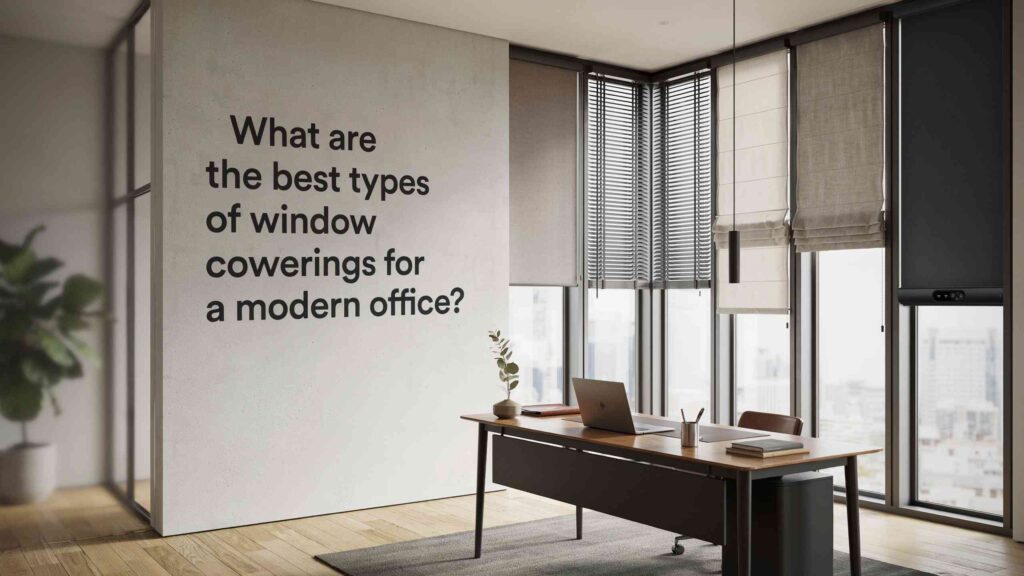
Modern office design is no longer just about furniture and layout; window coverings play a crucial role in shaping how a workspace feels and functions, especially when deciding what the best types of window coverings are for a modern office. These solutions directly influence natural light control, privacy levels, comfort, and overall productivity throughout the day. A well-chosen window treatment also enhances aesthetics by matching modern office decor while improving functionality through better glare reduction and temperature regulation. Today’s offices commonly use roller shades, solar shades, cellular shades, blinds, and smart motorised systems, each offering unique advantages for different workspace needs.
What Are the Best Types of Window Coverings for a Modern Office?
The best types of window coverings for a modern office are roller shades, solar shades, cellular shades, Roman shades, Venetian blinds, and motorised smart shades. Roller and solar shades are ideal for controlling glare and maintaining a clean, contemporary look, while cellular shades improve energy efficiency and noise reduction. Roman shades add a sophisticated touch, Venetian blinds offer precise light control, and smart shades provide convenience through automation. The right choice depends on your office’s privacy needs, natural light exposure, energy-efficiency goals, and overall interior design style.
What Makes a Window Covering Ideal for a Modern Office?
The ideal window covering for a modern office balances natural light, privacy, energy efficiency, and style. Popular options such as roller shades, solar shades, cellular shades, and smart blinds help reduce glare, improve comfort, and create a professional workspace while complementing modern office decor.
Balancing Natural Light and Glare Control
Natural light helps create a brighter and more productive workspace, but excessive sunlight can cause screen glare. Window coverings like solar shades and roller shades help manage sunlight while maintaining a comfortable level of brightness.
Improving Privacy Without Sacrificing Style
Privacy is essential in a home office, especially during meetings and focused work sessions. Modern window treatments provide privacy while maintaining a clean and stylish appearance that fits contemporary workspace design.
Supporting Energy Efficiency and Indoor Comfort
Energy-efficient window coverings help regulate indoor temperatures and improve comfort throughout the year. Cellular shades are especially effective because they provide additional insulation and reduce heat transfer through windows.
Creating a Professional and Productive Workspace
The right window treatment helps reduce distractions, control lighting conditions, and support a professional environment. Proper light management can improve focus, visual comfort, and overall productivity.
Matching Modern Interior Design Trends
Modern office decor often features minimalist designs, neutral colors, and functional elements. Roller shades, Roman shades, and motorized blinds complement these trends while enhancing both aesthetics and functionality.
Roller Shades: The Most Versatile Window Covering for Modern Offices

Roller shades are among the most versatile window coverings for modern offices because they offer effective light control, privacy, UV protection, and a clean, minimalist appearance. Available in both light-filtering and blackout fabrics, roller shades can be customized to suit different workspace needs while complementing modern office decor.
How Roller Shades Work
Roller shades consist of a single fabric panel that rolls up and down using a manual or motorized mechanism. Their simple design makes them a popular choice for homeowners seeking a modern, functional, and space-saving window treatment.
Benefits of Roller Shades for Home Offices
Roller shades help manage natural light, reduce screen glare, and improve privacy in home offices. They also support a cleaner workspace design by providing a sleek appearance that works well with contemporary interiors.
Light-Filtering vs. Blackout Roller Shades
Light-filtering fabrics allow natural daylight to enter while reducing harsh sunlight and glare. Blackout fabrics block most incoming light, making them ideal for offices that require maximum privacy, enhanced focus, or improved video conferencing conditions.
Best Rooms for Roller Shades
Roller shades work well in home offices, study rooms, meeting spaces, and large-window work areas. Their versatility, UV protection benefits, and modern appearance make them suitable for a wide range of office environments.
Solar Shades for Reducing Screen Glare and UV Exposure
Solar shades are designed to reduce screen glare, control sunlight, and block harmful UV rays while preserving outdoor views. As one of the most effective anti-glare window coverings, they help create a brighter, more comfortable workspace without completely blocking natural light.
What Are Solar Shades?
Solar shades are specialized window treatments made from tightly woven fabrics that filter sunlight before it enters a room. They provide a balance between visibility, light control, and privacy, making them a popular choice for modern home offices.
How Solar Shades Improve Computer Visibility
Direct sunlight can create reflections and glare on computer screens, leading to eye strain and reduced productivity. Solar shades act as effective solutions for glare on office windows by diffusing sunlight and improving screen visibility throughout the day.
UV Protection Benefits for Furniture and Flooring
In addition to reducing glare, solar shades help block a significant amount of ultraviolet radiation. This UV protection can help prevent fading and discoloration of furniture, hardwood flooring, rugs, and office decor that are exposed to regular sunlight.
Choosing the Right Openness Factor
The openness factor determines how much light and visibility a solar shade provides. Lower openness percentages offer greater glare reduction and privacy, while higher openness levels allow more natural light and outdoor views. Choosing the right option depends on your sunlight control needs and workspace layout.
Cellular Shades for Energy Efficiency and Noise Reduction

Cellular shades are among the most energy-efficient window coverings for modern offices. Also known as honeycomb shades, they feature a unique cellular structure that helps improve thermal insulation, reduce outdoor noise, and maintain indoor comfort. For homeowners seeking better energy savings and a quieter workspace, cellular shades offer an effective combination of performance and style.
Understanding Honeycomb Shade Construction
Cellular shades are designed with a series of honeycomb-shaped air pockets that trap air between the window and the room. This innovative construction creates an insulating barrier that helps regulate indoor temperatures while enhancing overall window performance. Their clean appearance also complements modern office decor and contemporary workspace design.
How Cellular Shades Improve Insulation
Windows are often a major source of heat gain during summer and heat loss during winter. Cellular shades help minimize this energy transfer by adding an extra layer of thermal insulation. As a result, homeowners can maintain a more consistent indoor temperature, improve comfort, and potentially reduce heating and cooling costs throughout the year.
Reducing Outdoor Noise in a Home Office
A quiet environment is essential for concentration, virtual meetings, and productive work sessions. The honeycomb structure of cellular shades helps absorb and soften outside sounds, making them a practical choice for home offices located near busy streets, schools, or high-traffic areas. This added noise reduction contributes to a more focused and professional workspace.
Single-Cell vs. Double-Cell Designs
Cellular shades are available in both single-cell and double-cell configurations. Single-cell designs provide effective light control and insulation, while double-cell shades offer enhanced thermal performance and improved noise reduction. Choosing between the two depends on your energy-efficiency goals, climate conditions, and desired level of indoor comfort.
Roman Shades for a Sophisticated Modern Office Look
Roman shades are a stylish and elegant window covering choice that enhances the visual appeal of modern office spaces. They combine soft fabric aesthetics with functional light control, making them suitable for homeowners who want a refined and professional workspace without compromising comfort or practicality.
Why Roman Shades Remain Popular
Roman shades remain popular because they blend traditional fabric design with a modern structured look. When raised, they fold into clean horizontal pleats, and when lowered, they create a smooth fabric panel that adds warmth and sophistication to interior spaces. This balance of style and functionality makes them a strong choice for contemporary office environments.
Fabric Options for Contemporary Offices
Roman shades are available in a wide range of fabrics, including linen, cotton blends, and textured synthetics. Light-filtering fabrics allow soft natural daylight to enter the room, while heavier materials provide enhanced privacy and better room darkening. These fabric choices help homeowners align window treatments with both aesthetic preferences and functional workspace needs.
Light Control and Privacy Features
One of the key advantages of Roman shades is their ability to balance light control and privacy. Depending on the fabric thickness, they can soften harsh sunlight, reduce glare on screens, and maintain a comfortable level of brightness. At the same time, they provide reliable privacy, making them suitable for video calls and focused work sessions.
Best Interior Styles for Roman Shades
Roman shades work best in interiors that emphasize modern elegance and clean design. They complement minimalist office setups, contemporary home offices, and transitional interior styles. Their fabric-based structure adds softness to otherwise structured workspaces, creating a balanced and visually comfortable environment.
Venetian Blinds and Horizontal Blinds for Adjustable Light Control

Venetian blinds and horizontal blinds are practical window covering solutions for modern office spaces where precise light control, privacy, and flexibility are important. Their adjustable slats allow homeowners to manage natural light throughout the day while maintaining a clean and functional workspace design.
Wood, Faux Wood, and Aluminum Options
Venetian blinds are available in multiple materials, including natural wood, faux wood, and aluminum. Wood blinds add a warm and premium aesthetic, faux wood blinds offer durability and moisture resistance, and aluminum blinds provide a lightweight and cost-effective solution. Each material supports different interior styles while maintaining effective light control.
Advantages of Adjustable Slats
One of the key benefits of Venetian blinds is their adjustable slat system, which allows precise control over sunlight and privacy. By tilting the slats, users can reduce glare on screens, control brightness levels, and maintain a comfortable indoor environment without completely blocking natural light.
Maintenance and Durability Considerations
Venetian blinds are relatively easy to maintain compared to many fabric-based window treatments. Aluminum and faux wood choices are highly durable and resist dust and moisture well, which makes them ideal for long-term use in home office settings. Regular cleaning helps maintain their appearance and smooth operation over time.
When Blinds Outperform Fabric Shades
Blinds are often a better choice than fabric shades when precise light adjustment is needed throughout the day. They perform impressively in workspaces that require frequent changes in lighting conditions, such as video calls, reading, or screen-based tasks. Their structured design also supports a more controlled and functional office environment.
Vertical Window Blinds for Wide Glass Panels and Sliding Doors
Vertical blinds are an effective solution for large windows and sliding glass doors commonly found in modern home offices. They provide flexible light control, privacy, and easy operation, making them suitable for wide glass surfaces where traditional blinds or shades may not perform efficiently.
Benefits for Floor-to-Ceiling Windows
Floor-to-ceiling windows allow abundant natural light, but they also increase glare and privacy concerns. Vertical blinds help manage these challenges by allowing users to tilt or draw the slats as needed, balancing daylight exposure while maintaining a comfortable and functional workspace environment.
Modern Alternatives to Traditional Vertical Blinds
Modern interior design has introduced updated versions of vertical blinds that feature sleeker designs and improved materials. Panel track systems and fabric-based vertical coverings offer a more contemporary appearance while maintaining the same functional benefits of light and privacy control.
Best Materials for Contemporary Spaces
Vertical blinds are available in materials such as fabric, PVC, and aluminum. Fabric options create a softer and more modern look, while PVC and aluminum provide durability and easy maintenance. These material choices allow homeowners to match blinds with modern office decor and workspace design preferences.
Privacy and Light Management Features
Vertical blinds offer strong privacy control, especially for large glass areas exposed to outdoor views. By adjusting the slats, users can control sunlight direction, reduce glare, and maintain a balanced indoor lighting environment suitable for work, meetings, and daily office activities.
Smart Shades and Motorized Window Coverings for Modern Workspaces
Smart window shades and motorized coverings are considered the most advanced form of contemporary office window treatment solutions.These systems combine convenience, automation, and intelligent control to improve comfort, energy efficiency, and overall workspace functionality.
How Smart Window Treatments Work
Smart window treatments use motorized mechanisms that allow shades to open and close automatically or through remote control. These systems can be programmed based on time of day, sunlight intensity, or user preferences, providing consistent light management throughout the day.
Voice-Controlled and Automated Shades
Modern motorized shades can be operated using voice assistants, making them highly convenient for hands-free control. Users can adjust lighting conditions instantly, improving productivity and reducing interruptions during work sessions.
Integration With Smart Home Systems
Smart shades can be integrated with home automation systems, allowing synchronization with lighting, thermostats, and security devices. This integration enhances energy efficiency and creates a fully connected and responsive workspace environment.
Are Motorized Shades Worth the Investment?
Motorized shades offer long-term value through improved convenience, energy savings, and enhanced comfort. While the initial cost is higher than traditional window coverings, their automation features and compatibility with smart home technology make them a practical investment for modern homeowners seeking efficiency and innovation.
Curtains vs Shades vs Blinds: Which Is Best for a Modern Office?

Curtains, shades, and blinds are three popular window covering solutions for modern office spaces, each offering different levels of design appeal, privacy, energy efficiency, and maintenance. The best choice depends on workspace design goals, light control needs, and budget.
Design Comparison
Curtains offer a soft and decorative look, while shades provide a clean and minimal appearance. Blinds deliver a structured and functional design with adjustable slats. For modern office decor, shades and blinds are more commonly preferred due to their sleek and contemporary style.
Privacy Comparison
Curtains provide the highest level of privacy due to their full fabric coverage. Shades offer adjustable privacy depending on fabric type, while blinds allow controlled privacy through slat positioning. For home office privacy solutions, shades and blinds are more flexible.
Energy Efficiency Comparison
Cellular shades perform best in energy efficiency due to their insulating structure. Curtains also help with insulation, especially thicker fabrics. Blinds provide moderate energy efficiency depending on material and usage.
Maintenance Comparison
Blinds are the easiest to maintain as they require simple dust cleaning. Shades need occasional fabric care, while curtains require regular washing or professional cleaning depending on material type.
Cost Comparison
Blinds are generally the most budget-friendly option, followed by shades. Curtains vary widely in cost depending on fabric quality and customization. For long-term value, shades often provide the best balance of performance and cost.
Quick Comparison Table
| Feature | Curtains | Shades (Roller/Cellular) | Blinds (Venetian/Horizontal) |
|---|---|---|---|
| Design Style | Soft & decorative | Minimal & modern | Structured & functional |
| Privacy Level | High | Medium to High | Medium (adjustable) |
| Energy Efficiency | Medium | High | Medium |
| Maintenance | Moderate to High | Low to Moderate | Low |
| Cost Range | Medium to High | Medium | Low to Medium |
How to Choose the Right Window Covering for Your Home Office
Choosing the right window covering for a home office depends on light control, privacy, room size, and interior style. The ideal solution should support comfort, productivity, and energy efficiency while matching modern workspace design needs.
Consider Window Size and Shape
Large windows may require shades or vertical blinds for better coverage, while smaller windows work well with roller or Roman shades. The right fit ensures balanced light control and a clean visual appearance.
Evaluate Sun Exposure Throughout the Day
Rooms with strong sunlight benefit from solar shades or blackout options to reduce glare. Areas with moderate light can use light-filtering fabrics to maintain natural brightness without visual discomfort.
Determine Privacy Requirements
For video calls or focused work, privacy-focused solutions like cellular shades or blackout roller shades are ideal. They help maintain a professional environment without blocking all natural light.
Match Existing Interior Design
Window coverings should align with modern office decor and overall workspace design. Neutral colors, clean lines, and minimal styles work best for contemporary home offices.
Establish a Realistic Budget
Blinds are generally the most budget-friendly, while motorized and custom shades offer premium features. Choosing based on long-term value ensures better performance and durability.
Best Window Coverings Based on Specific Office Needs
Different office requirements demand different window treatment solutions. Selecting based on function ensures better productivity, comfort, and efficiency.
Best for Productivity
Solar shades and roller shades help reduce glare and improve screen visibility, supporting a focused and productive workspace.
Best for Privacy
Blackout shades and cellular shades provide strong privacy control, especially useful for home offices and virtual meetings.
Best for Energy Efficiency
Cellular shades and thermal curtains enhance insulation and promote energy efficiency by minimizing heat loss and gain.
Best for Noise Reduction
Thick cellular shades and layered curtains help reduce outside noise, creating a quieter and more comfortable work environment.
Best for Large Windows
Vertical blinds and panel track systems are ideal for floor-to-ceiling windows and sliding glass doors.
Best for Small Home Offices
Roller shades and Roman shades are space-efficient and maintain a clean, minimal appearance in compact rooms.
Best for Smart Homes
Motorized and smart shades integrate with home automation systems, allowing voice control and scheduled adjustments for maximum convenience.
Common Mistakes to Avoid When Choosing Office Window Coverings

Choosing unsuitable window coverings for a home office can reduce comfort, productivity, and energy efficiency levels. Understanding common mistakes helps homeowners make better decisions for long-term performance and workspace design.
Ignoring Sun Orientation
One of the biggest mistakes is not considering how sunlight enters the room throughout the day. Windows facing strong direct sunlight often require solar shades or blackout options to prevent glare and overheating.
Prioritizing Style Over Function
While modern office decor is important, choosing window coverings based only on appearance can reduce usability. Effective office window treatments should balance design with light control and privacy needs.
Choosing the Wrong Opacity Level
Opacity plays a key role in controlling brightness and privacy. Light-filtering fabrics may not be suitable for video calls, while blackout shades may block too much natural light for daytime work.
Overlooking Energy Efficiency
Ignoring energy-efficient window coverings can increase heating and cooling costs. Cellular shades and thermal curtains help maintain indoor comfort by improving insulation and reducing energy loss.
Forgetting Future Automation Needs
Many homeowners overlook compatibility with smart home systems. Choosing motorized shades early ensures easier integration with home automation and voice control systems later.
Window Covering Trends for Modern Offices in 2026
Modern office window treatments are evolving with a focus on sustainability, technology, and minimalist design. These trends reflect changing workspace needs and smart home integration.
Sustainable and Eco-Friendly Materials
Eco-friendly fabrics and recyclable materials are becoming more popular in window coverings. These options support environmental responsibility while maintaining modern office aesthetics.
Minimalist Window Treatments
Clean, simple designs like roller shades and hidden track systems are preferred in contemporary workspace design. Minimalist styles create a clutter-free and professional environment.
Smart Automation Growth
Smart shades and motorized systems are increasingly integrated with home automation platforms. Users can control lighting conditions through apps, schedules, or voice assistants.
Layered Window Covering Designs
Layering shades with curtains or blinds provides better control over light, privacy, and temperature. This flexible approach enhances both functionality and interior design depth.
Neutral Colors and Natural Textures
Neutral tones like beige, grey, and white dominate modern office decor trends. Natural textures such as linen and woven fabrics add warmth while maintaining a professional look.
Conclusion
Choosing the right window treatments depends on balancing light control, privacy, energy efficiency, and modern design needs, and the most effective options include roller shades, solar shades, cellular shades, Roman shades, blinds, and smart motorized systems that each serve different workspace goals; when considering all these factors together, it becomes clear that what are the best types of window coverings for a modern office? is best answered by selecting a solution that matches your room’s sunlight exposure, privacy requirements, and interior style rather than relying on a single universal option.
1. Which window covering works best for a home office setup?
The best option depends on your needs, but roller shades, cellular shades, and solar shades are most popular for home offices because they balance light control, privacy, and a clean modern look.
2. Are blinds or shades better for modern offices?
Shades are generally better for modern offices due to their sleek design and better light filtering options, while blinds are ideal when you need precise and adjustable light control.
3. Which window coverings reduce computer glare the most?
Solar shades and light-filtering roller shades are most effective for reducing computer glare because they soften sunlight without completely darkening the room.
4. What are the most energy-efficient office window treatments?
Cellular shades are the most energy-efficient option, as their honeycomb structure provides insulation, helping to reduce heat loss in winter and heat gain in summer.
5. Are motorized shades worth it for homeowners?
Yes, motorized shades are worth it for many homeowners because they offer convenience, smart home integration, improved energy control, and easy automated light management.

I’m Attaur Rahman, founder of DecorReviewHub. I test and review curtains and home decor products to help homeowners make the right choice for every room. All my guides are based on real use and honest comparisons.