
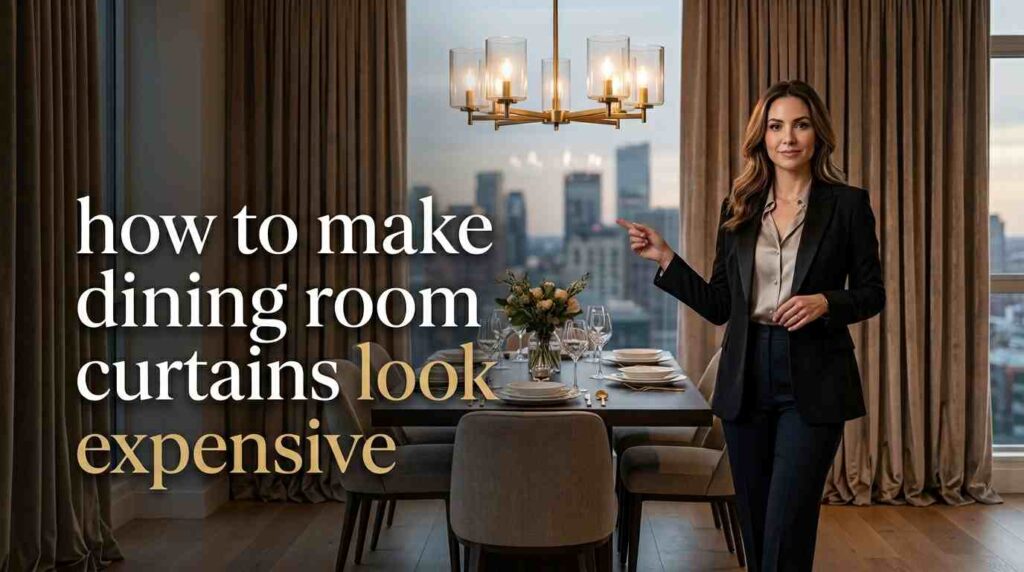
Dining room curtains look expensive when fabric, height, fullness, and layering are combined in the right way to create a balanced and elegant interior design. Most homeowners make the mistake of treating curtains as simple decoration and install them without considering proportion, placement, and material quality, which results in a flat and low-end appearance. This guide explains a complete designer-level system—not just basic styling tips—so you can understand how to make dining room curtains look expensive in a practical and professional way. By focusing on luxury interior styling principles, designer curtain techniques, and upscale dining room aesthetics, you can transform an ordinary space into a refined and visually high-end dining area.
how to make dining room curtains look expensive
Dining room curtains look expensive when they use high-quality fabric, generous fullness, higher rod placement, and balanced light control. The combination of texture, volume, height, and light interaction creates a structured, luxurious appearance that feels intentional and high-end rather than flat or poorly fitted.
Expensive-looking curtains are not about price—they are about proportion, material richness, and precise installation. When panels are hung closer to the ceiling, wide enough to form natural folds, and made from dense, tactile materials like velvet, linen blends, or silk-style fabrics, they instantly elevate the dining space.
Designer rule: Volume (fullness) + Height (placement) + Material (fabric quality) = Luxury look
Psychological Perception of Luxury in Dining Spaces
Luxury is perceived through order, symmetry, and material depth. Curtains that look expensive feel aligned with the room’s scale, colour palette, and furniture layout. Even spacing, consistent folds, and elevated placement create a sense of structure the eye reads as premium design.
Role of Fabric Texture in a High-End Feel
Texture is a strong luxury signal. Rich, tactile fabrics absorb and reflect light in a controlled way, adding depth and dimension. Thin or overly shiny synthetics often appear flat, while textured, medium-to-heavy materials create a soft, layered surface that enhances the room.
Visual Weight vs. Light Diffusion
High-end curtains balance visual weight with light flow. Lined or slightly heavier panels fall neatly and look tailored, while sheers or layered panels allow gentle light diffusion so the room never feels dark or heavy.
How Dining Room Lighting Interacts with Curtains
Dining rooms depend on ambient and focal lighting. Quality fabrics soften daylight and reflect warm indoor light evenly, preventing glare, dullness, or harsh shadows that reduce elegance.
The Formula Designers Use
- Volume: prevents a flat, underwhelming look
- Height: adds architectural presence and perceived ceiling height
- Material: delivers richness and depth associated with luxury
When these three elements work together, even simple curtains can look premium. If one is absent, the entire setup instantly appears inexpensive.
Best Fabrics That Instantly Create a Luxury Look

Dining room curtains look expensive when the fabric has depth, structure, and controlled light interaction. The right material instantly upgrades the room’s visual quality and creates a refined, high-end feel.
Velvet (Rich Depth & Hotel Aesthetic)
Velvet curtains create a luxury look because of their thick pile and deep light absorption, which adds richness and dimension. They drape heavily, fall in clean folds, and are commonly used in high-end hotels and formal dining spaces for a dramatic, upscale effect.
Linen Blend (Soft Luxury for Modern USA Homes)
Linen blend curtains offer a lightweight yet textured finish that feels relaxed but refined. They diffuse natural light softly, making them perfect for modern American dining rooms that aim for a clean, airy, and understated luxury style.
Silk / Faux Silk (Shine & Elegance Balance)
Silk or faux silk curtains deliver a subtle sheen that reflects light evenly, creating an elegant glow in the dining room. Faux silk is often preferred because it maintains the luxury appearance with better durability and lower maintenance, ideal for everyday use.
Heavy Blackout Lined Fabrics (Structured Premium Look)
Blackout-lined curtains look expensive because they provide structure, fullness, and a tailored drape. The added lining improves fabric weight, enhances pleats, and creates a polished, designer-level finish, especially in formal dining settings.
❌ Cheap-Looking Fabrics to Avoid
Curtains look cheap when made from thin polyester, overly shiny synthetics, or low-density fabrics that lack structure. These materials often hang flat, reflect light harshly, and fail to create the depth and softness associated with luxury interiors.
Curtain Hanging Height Rules
Curtains look expensive when they are hung high, wide, and long enough to create a floor-to-ceiling effect, making the dining room feel taller and more structured. Placement—not fabric—is often the biggest difference between cheap and luxury.
Ceiling Illusion Principle (Hang High & Wide)
Hang curtain rods closer to the ceiling and extend them beyond the window frame to create a larger, more open look. This visual trick makes ceilings appear higher and windows wider, which instantly adds a designer-level spacious feel.
Ideal Rod Placement Above Window Frame
For a high-end look, place the rod 6–12 inches above the window frame or just below the ceiling line. This positioning avoids a cramped appearance and gives curtains a clean, elevated starting point, which is common in luxury interiors.
Floor-to-Ceiling Drop Effect
Curtains should reach the floor or slightly kiss it to create a continuous vertical line. This elongates the walls and adds architectural elegance, while short or floating curtains break the visual flow and look unfinished.
Dining Room Specific Adjustment for Table Visibility
In dining rooms, ensure curtains are wide enough to stack neatly on the sides, so they don’t block natural light or interfere with the dining table setup. This keeps the space functional while maintaining a balanced, polished appearance.
Common Mistake: Window-Level Hanging = Cheap Look
Hanging curtains directly at the window frame level makes ceilings look lower and windows smaller. This is the most common mistake and results in a flat, budget appearance instead of a refined, high-end finish.
Fullness Ratio & Fabric Volume

Curtains look expensive when they have enough fabric volume to create deep, structured folds, usually achieved with a 2x to 2.5x fullness ratio. More fabric means better drape, richer texture, and a high-end visual presence.
What Is the Curtain Fullness Ratio?
‘Curtain fullness ratio’ refers to the amount of fabric used compared to the window width. For example, a 2x ratio means the curtain fabric is twice as wide as the window, allowing it to gather into full, elegant folds instead of hanging flat.
Ideal Range (2x to 2.5x Fabric Width)
The ideal fullness for a luxury look is 2 to 2.5 times the window width. This range creates balanced volume without looking bulky, ensuring curtains appear rich, structured, and professionally styled.
Why Flat Curtains Look Low Budget
Curtains with low fullness (1x or less) hang flat and lack depth, making them look thin and unfinished. Without proper volume, the fabric cannot form natural folds, which removes the soft, layered effect associated with expensive interiors.
Dining Room vs Bedroom Requirements
Dining room curtains typically need slightly higher fullness to create a more formal and polished atmosphere, especially for entertaining. Bedroom curtains can be softer and less structured, but dining spaces benefit from clean, fuller drapes that enhance visual impact.
Visual Impact of Pleats (Pinch Pleats vs Grommets)
Pleat style directly affects how fullness appears. Pinch pleats create structured, tailored folds that look more formal and high-end, while grommet curtains offer a simpler, more casual wave. For a luxury dining room, defined pleats enhance depth and elegance.
Certain Hardware Upgrades for a High-End Look
Curtains look more expensive when the hardware is bold, decorative, and proportionate, because rods, finials, and finishes frame the entire window and elevate the overall design.
Decorative Rods vs Basic Rods
Decorative curtain rods instantly upgrade the look by adding visual strength and design detail, while thin or plain rods often feel incomplete. A well-chosen rod acts like a frame, giving curtains a finished, designer appearance.
Finial Design Importance
Finials (the end caps of curtain rods) add a refined finishing touch that enhances style. Elegant shapes—like crystal, metal spheres, or sculpted designs—create a more polished and intentional look, while missing or basic finials make the setup feel plain.
Metal Finish Psychology (Gold, Matte Black, Brushed Nickel)
The finish of curtain hardware affects how luxurious the space feels.
- Gold/brass adds warmth and classic luxury
- Matte black creates a bold, modern, high-end contrast
- Brushed nickel offers a subtle, clean, upscale finish.
Choosing the right finish helps align curtains with the overall dining room aesthetic.
Rod Diameter Impact on Premium Look
Thicker rods (around 1–1.5 inches in diameter) look more substantial and premium, supporting heavy fabrics properly. Thin rods can look weak and unbalanced, while the right diameter adds structure, durability, and visual weight.
Layering Techniques for Luxury Dining Room Curtains
Dining room curtains look expensive when you layer sheer and heavier panels using a dual-rod setup, creating depth, flexible light control, and a refined, hotel-style finish.
Sheer + Heavy Curtain Combination
Pair lightweight sheers with heavier outer panels to add instant dimension. Sheers soften daylight and maintain privacy, while the heavier drapes provide structure and a rich, tailored frame around the window.
Dual Rod System Explanation
A dual-rod system uses two parallel rods—one for sheers and one for main curtains—so each layer moves independently. This setup allows smooth operation and keeps the layers neat, balanced, and visually organised, which is key for a high-end look.
Light Control + Aesthetic Depth
Layering improves both function and style by letting you adjust brightness without losing elegance. The combination of filtered light and structured panels creates depth, shadow, and softness, making the dining space feel more polished.
Hotel-Style Layering Effect
Luxury hotels use layering to achieve a full, symmetrical, and perfectly draped appearance. Replicating this at home—by keeping panels wide, evenly spaced, and slightly gathered—creates a consistent, upscale dining room aesthetic.
Colour Psychology for an Expensive Curtain Look

Curtain colours look expensive when they create harmony, depth, and visual balance with the dining room, using tones that feel calm, rich, and intentional rather than loud or distracting.
Neutral Luxury Palette (Timeless & Elegant)
Neutral tones are the foundation of a high-end look because they feel clean, soft, and sophisticated. They reflect light evenly and blend seamlessly with most interiors.
- Beige and ivory for warmth and softness
- Taupe and soft grey for modern elegance
- Off-white tones for a bright, upscale feel
Deep Tones (Bold & Dramatic Luxury)
Rich, darker colours add depth and drama, making the space feel more formal and refined. These shades work especially well in larger or well-lit dining rooms.
- Navy for a classic, polished look
- Emerald green for a rich, statement style
- Burgundy for warmth and traditional luxury
Matching Dining Furniture Tone Strategy
The curtain colour should complement the dining table, chairs, and overall decor palette. Matching undertones (warm or cool) creates a cohesive and professionally designed appearance, while mismatched tones can feel unbalanced.
Avoid Overly Bright, Cheap-Looking Colours
Very bright or overly saturated colours often reduce the luxury feel because they reflect light harshly and overpower the space.
- Avoid neon or overly bold shades
- Avoid glossy, artificial-looking finishes
- Avoid strong colour clashes with furniture
Subtle, balanced colours always create a more expensive and timeless dining room look.
Dining Room–Specific Curtain Styling Rules for a Luxury Look
Dining room curtains look expensive when they are styled to match the room’s purpose, lighting, and proportions, creating a cohesive, well-balanced environment that feels intentional from the first glance.
Formal vs Casual Dining Setup Impact
Curtain styling should reflect whether the dining space is formal or casual.
- Formal dining rooms benefit from heavier fabrics, fuller drapes, and structured pleats that create a polished, elegant atmosphere.
- Casual dining areas work better with lighter fabrics and softer folds, but still require proper height and fullness to maintain a refined look.
Matching curtain style to the dining setup ensures the space feels consistent and thoughtfully designed.
How Curtains Interact with Dining Table Lighting
Curtains directly influence how natural and artificial light spreads across the dining table. Fabrics that diffuse light softly enhance the warmth of chandeliers or pendant lights, creating a balanced and inviting ambience. Poor fabric choices can cause harsh reflections or dull lighting, which reduces the overall luxury feel.
Guest Perception Psychology (First Impression Design)
Dining rooms are social spaces, so curtains play a key role in first impressions. Full, well-hung curtains signal attention to detail and create a sense of comfort, order, and quality. Guests subconsciously associate these visual cues with a more upscale, well-maintained home.
Window-to-Table Proportion Balancing
Curtains should be sized and positioned to maintain visual balance between the window and the dining table. Panels that are too narrow, too short, or poorly placed can make the room feel uneven. Proper width, height, and spacing ensure the curtains frame the window without overwhelming or underpowering the dining area, resulting in a clean, harmonious look.
Common Mistakes That Make Curtains Look Cheap
Curtains look cheap not because of low budget but because of wrong proportions, poor installation, and incorrect fabric choices. Avoiding these mistakes is essential to achieve a luxury dining room appearance.
Wrong Length (Too Short or Improper Puddling)
Curtains that are too short break the vertical flow of the room and instantly look unfinished. On the other hand, excessive or uneven puddling can feel messy. For a high-end look, curtains should either gently touch the floor or fall with controlled elegance.
Flat Panel Installation
Flat, lifeless curtain panels without proper fullness remove depth and structure. This creates a cheap, unfinished appearance because the fabric cannot form natural folds. Proper installation with enough volume is essential for a premium look.
Wrong Fabric Shine Level
Fabric that is too shiny reflects light harshly and looks artificial, while overly dull fabric can feel lifeless. Luxury curtains use a balanced texture that softly interacts with light, creating depth without glare.
Under-sizing Curtain Width
When curtain panels are too narrow, they fail to cover the window properly and hang flat. This reduces visual richness and makes the setup look incomplete. A proper width ensures full, structured folds that signal quality.
Poor Rod Placement
Installing rods too low or too close to the window makes the ceiling appear shorter and the window smaller. High and wide placement is essential to create a taller, more expensive-looking room layout.
Ignoring Room Lighting Reflection
Lighting plays a major role in how curtains appear. Poor fabric choice or placement can create harsh reflections or dull shadows, reducing elegance. Proper fabric and positioning ensure curtains enhance natural and artificial light instead of disrupting it.
Budget to Luxury Transformation Guide

Cheap curtains can look expensive when you apply a structured upgrade process that improves fabric weight, height, fullness, and hardware quality, instead of replacing everything. Small changes create a major visual transformation.
How to Upgrade Cheap Curtains Step-by-Step
• Add Lining
Adding a lining instantly improves curtain structure and weight. It helps fabric fall more smoothly, reduces transparency, and creates a more tailored, high-end appearance similar to designer curtains.
• Change Rod
Upgrading from a basic rod to a decorative, thicker curtain rod with quality finials immediately elevates the look. Strong hardware frames the window better and adds a luxury finishing touch.
• Increase Fullness
Adding more fabric width or repositioning panels to achieve 2x–2.5x fullness creates deeper folds and better volume. This removes the flat, budget look and introduces a rich, layered drape effect.
• Adjust Height
Raising the curtain rod closer to the ceiling and ensuring floor-length panels creates a taller, more elegant visual frame. Proper height adjustment is one of the fastest ways to upgrade perceived room value.
DIY Luxury Tricks for Homeowners
- Steam curtains to remove wrinkles and enhance flow
- Use clip rings to improve pleat structure without replacing panels
- Extend rods slightly beyond the window frame for wider visual impact
- Layer sheer fabric behind existing curtains for depth
- Match curtain tone with decor accents for a coordinated designer look.
These simple upgrades combine to transform basic curtains into a polished, luxury-style dining room feature without a full replacement.
Professional Interior Designer Tips for Luxury Dining Room Curtains
Professional interior designers make dining room curtains look luxurious by using layering, correct proportion, high rod placement, and generous fullness. These principles create depth, visual balance, and a tailored finish that feels intentional and high-end rather than randomly styled.
Designers don’t rely on expensive fabrics alone. They focus on how curtains are built and installed so the window treatment adds structure, softness, and controlled light to the dining space.
Interior Designer Layering Logic
Designers often use two layers to add depth and light control:
- Sheer panels behind for soft daylight diffusion
- Heavier drapes in front for structure and elegance
This layered approach makes curtains look dimensional, refined, and professionally planned.
Hotel-Style Curtain Styling Rules
Luxury hotels follow strict curtain rules you can apply at home.
- Curtains are floor-length and never short.
- Panels have maximum fullness for rich folds.
- Rods are placed high and wide to increase visual height.
- Fabrics are selected for a soft, elegant drape.
These rules instantly create a hotel-inspired dining room look.
Visual Balance Principles in Luxury Homes
High-end interiors maintain balance between the following:
- Window size and curtain volume
- Curtain height and ceiling height
- Symmetry and even spacing of panels
When curtains frame the dining area without overpowering it, the room feels professionally designed and expensive.
Conclusion
Understanding how to make dining room curtains look expensive comes down to applying a complete design system rather than relying on individual styling tricks. When the right fabric choices, proper fullness ratio, elevated hanging height, balanced layering, and quality hardware all work together, even simple curtains can achieve a high-end, designer-level appearance. By focusing on proportion, texture, and lighting harmony, homeowners can transform their dining space into a more refined and elegant environment that feels intentionally styled and visually luxurious.
FAQs
1. How do I make cheap curtains look expensive in the dining room?
You can make cheap curtains look expensive by upgrading the fullness, height, and hardware. Hang them higher and wider than the window, add lining for better structure, and use a thicker decorative rod. These changes instantly create a more luxury dining room curtain appearance without replacing the fabric.
2. What curtain fabric looks most luxurious?
Fabrics like velvet, silk, faux silk, and heavy linen blends look the most luxurious. They have better weight, texture, and light control, which creates a rich, high-end drape perfect for dining room curtains.
3. Should dining room curtains touch the floor?
Yes, for a luxury look, dining room curtains should either gently touch the floor or lightly skim it. This creates a clean vertical flow and makes the space look taller and more expensive. Short curtains often reduce the premium appearance.
4. What colour curtains look most expensive?
Neutral tones like beige, ivory, taupe, and grey look the most expensive because they feel timeless and elegant. Deep shades like navy, emerald, and burgundy also create a rich, high-end dining room aesthetic when used correctly.
5. What curtain length is best for a luxury dining room look?
The best curtain length is floor-to-ceiling or just touching the floor. This length enhances room height, improves visual balance, and gives dining room curtains a more tailored, designer-style finish.

I’m Attaur Rahman, founder of DecorReviewHub. I test and review curtains and home decor products to help homeowners make the right choice for every room. All my guides are based on real use and honest comparisons.