
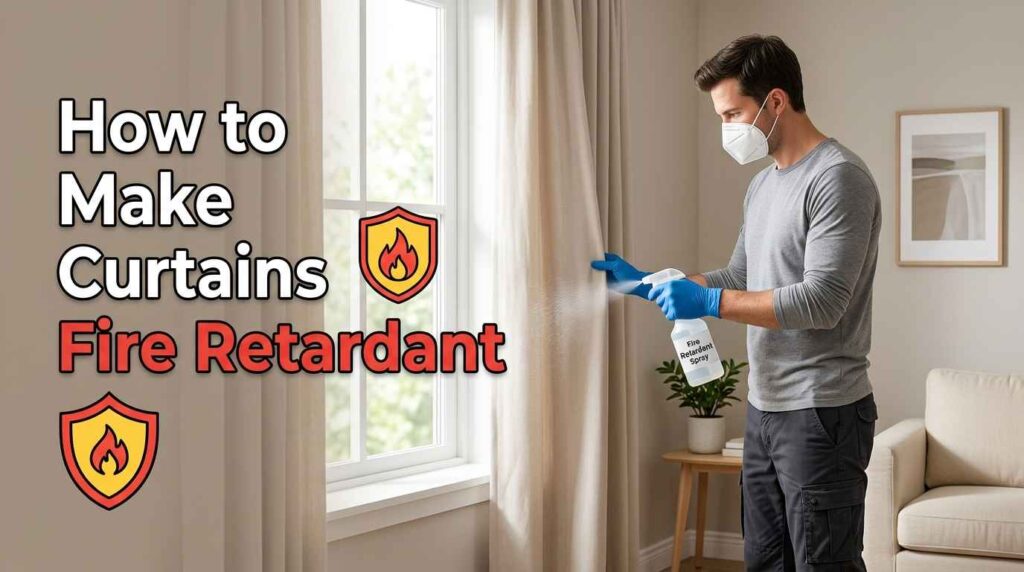
Curtain fire safety is important because curtains are one of the most common household items that can catch fire quickly when they are close to heat sources like heaters, candles, or kitchen flames. Many home fires start or spread faster due to fabric materials used in window treatments, especially when they are untreated or placed in unsafe areas.
In this guide, you will learn how to reduce the risk of fire in your home and discover practical methods for making curtains fire retardant through the use of safe treatments, sprays, and fabric choices. You will also learn what causes certain fires, which materials work best, and how fire-retardant solutions actually work in real situations.
The goal is to help you make safer decisions for your home by understanding simple fire safety steps that anyone can follow without technical knowledge.
What Does “Fire Retardant” Mean for Curtains?
Fire retardant curtains are designed or treated to slow ignition and reduce flame spread when exposed to heat or open flames. Unlike standard curtains, they help improve home fire safety by delaying the burning process and lowering the risk of rapid fire growth. However, fire retardant fabrics are not immune to fire and should be viewed as a safety measure rather than complete protection.
Fire Retardant vs. Fire Resistant vs. Fireproof
Although these terms are often confused, they have different meanings. Fire retardant curtains are treated to slow combustion and flame spread. Fire-resistant curtains are made from materials that naturally resist ignition. “Fireproof” suggests complete protection from fire, but no residential curtain fabric is entirely fireproof under extreme heat conditions.
How Fire Retardant Treatments Slow Flame Spread
Fire retardant treatments work by disrupting the combustion process. When exposed to heat, the treatment helps reduce ignition speed and limits how quickly flames travel across the fabric. This can provide valuable extra time for evacuation and emergency response during a fire.
Why No Fabric Is Completely Fireproof
All curtain fabrics, including cotton, linen, polyester, and velvet, can eventually burn, melt, or deteriorate under sufficient heat. The purpose of fire retardant treatment is not to make fabric fireproof but to improve fire resistance and reduce flammability, making curtains safer for initial residential use.
Can Existing Curtains Be Made Fire Retardant?
In many cases, existing curtains can be made fire retardant by applying a suitable flame retardant treatment. The effectiveness of the treatment depends on the fabric type, fabric condition, and the product being used. While many residential curtains can be treated successfully, results may vary between natural and synthetic materials.
Which Curtain Fabrics Can Be Treated Successfully?
Several curtain fabrics respond well to fire retardant treatments. Cotton and linen are among the most commonly treated materials because they absorb fire-retardant solutions effectively. Polyester curtains can also be treated, although compatibility depends on the specific fabric construction. Velvet and blended fabrics may accept treatment as well, but performance can vary based on fibre content and fabric density.
For best results, homeowners should always choose a fire retardant product that is designed for their specific curtain fabric.
When Fire Retardant Treatment May Not Work Well
Fire retardant treatment may be less effective on heavily coated fabrics, water-resistant materials, or curtains that have accumulated years of dirt, grease, or chemical residues. Some synthetic fabrics may also have limited absorption, reducing the treatment’s ability to bond with the fibres. In these situations, replacing old curtains with purpose-made fire-retardant curtains may be a safer and more reliable option.
How to Make Curtains Fire Retardant: Step-by-Step Guide

Making curtains fire retardant typically involves selecting a compatible fire retardant treatment and applying it correctly to the fabric. While the exact process varies by product, following the proper steps helps improve treatment effectiveness and fabric safety.
Check the Curtain Fabric Type
Start by identifying the curtain fabric. Cotton, linen, velvet, polyester, and blended fabrics may respond differently to fire retardant treatments. Knowing the fiber composition helps ensure that the selected product is compatible with the material and capable of providing reliable flame-retardant protection.
Choose a Suitable Fire Retardant Treatment
Select a fire retardant spray or fabric treatment specifically designed for curtain fabrics. Some products are formulated for natural fibers, while others work better on synthetic materials. Choosing the right treatment helps improve flame resistance and reduces the risk of uneven protection.
Prepare the Curtains Before Application
Before applying any treatment, make sure the curtains are clean and completely dry. Dust, stains, and fabric residues can interfere with absorption and reduce the effectiveness of the fire retardant coating. Proper preparation allows the treatment to bond more evenly with the fabric fibers.
Apply the Treatment Evenly
Apply the fire retardant spray according to the product instructions, ensuring consistent coverage across the entire curtain surface. Uneven application may leave untreated areas that remain more vulnerable to ignition and flame spread.
Allow Proper Drying and Curing Time
After application, allow the curtains to dry fully before reinstalling them. Many fire retardant products require a curing period to achieve maximum effectiveness. Rushing this step can reduce the treatment’s overall performance and durability.
Follow Manufacturer Instructions for Best Results
Always follow the manufacturer’s recommendations regarding application, drying, maintenance, and reapplication schedules. Proper use helps maintain fire retardant performance and ensures the treatment continues to provide effective protection over time.
Can Fabric Be Treated to Become Fire Retardant
Yes, many curtain fabrics can be treated with a fire retardant spray to improve flame resistance and reduce flame spread. These products are commonly used on residential curtains, drapes, stage fabrics, and other textile materials where additional fire protection is desired. However, results depend on the fabric type, product quality, and application method.
How Fire Retardant Sprays Work
Fire retardant sprays work by creating a protective treatment on the fabric surface or within the fibers. When exposed to heat or open flames, the treatment helps slow ignition and disrupt the combustion process. This reduces the speed at which fire can spread across curtain fabrics and may help limit fire growth during the early stages of a fire.
Benefits of Using Fabric Fire Retardant Sprays
One of the main advantages of fire retardant sprays is their ability to improve the fire performance of existing curtains without replacing them. They can be applied to many common fabrics, including cotton, linen, velvet, and certain blended materials. For homeowners, this offers a practical way to enhance curtain safety while maintaining the appearance and functionality of existing window treatments.
Limitations Homeowners Should Know
Fire retardant sprays do not make fabric completely fireproof. Their effectiveness can vary depending on the fabric composition, environmental conditions, and application quality. Some treatments may lose effectiveness after repeated washing, exposure to moisture, or long-term wear. Homeowners should also verify that the product is compatible with their specific curtain material before application.
How Long Fire Retardant Spray Protection Lasts
The lifespan of fire retardant protection depends on the product formulation, fabric type, and maintenance practices. In many cases, protection gradually decreases over time due to cleaning, sunlight exposure, and everyday use. Regular inspection and reapplication, when recommended by the manufacturer, can help maintain consistent flame-retardant performance.
Best Curtain Fabrics for Fire Retardant Treatment

Not all curtain fabrics respond the same way to fire retardant treatments. Absorption rate, fiber composition, fabric density, and surface finish can all influence treatment effectiveness. Understanding how different materials react to flame-retardant products helps homeowners choose safer and more suitable window treatments.
Cotton Curtains
Cotton curtains are among the easiest fabrics to treat with fire retardant solutions. As a natural fiber, cotton typically absorbs fire retardant treatments well, allowing the product to penetrate the fabric more effectively. This makes cotton a common choice for homeowners looking to improve curtain fire safety without replacing existing window coverings.
Linen Curtains
Linen curtains can also respond well to fire retardant treatments due to their natural fiber structure. Proper application helps improve flame resistance and reduce flame spread. Because linen is often used in lightweight and decorative window treatments, regular maintenance and reapplication may be necessary to maintain consistent protection.
Polyester Curtains
Polyester curtains offer different performance characteristics than natural fabrics. Some polyester materials can be treated successfully, while others depend on the fabric construction and manufacturer recommendations. Homeowners should verify product compatibility to ensure the fire retardant treatment adheres properly and delivers reliable results.
Velvet Curtains
Velvet curtains are valued for their thick texture and luxurious appearance. Their dense pile can help retain fire retardant treatments, but effectiveness may vary depending on whether the velvet is made from natural, synthetic, or blended fibers. Careful application is important to achieve even coverage throughout the fabric.
Sheer Curtains
Sheer curtains are typically lightweight and allow significant airflow and natural light. Because of their thin construction, they may require thorough and uniform treatment to achieve adequate flame-retardant performance. Special attention should be given to complete coverage during application.
Blackout Curtains
Blackout curtains often contain multiple fabric layers or specialized coatings designed to block light. The effectiveness of fire retardant treatment depends on the curtain’s materials and construction. Some blackout fabrics accept treatment well, while others may require products specifically formulated for coated or layered textiles.
What Are Fire Retardant Curtains Made Of?
The materials used in fire retardant curtains vary depending on how the fabric achieves its flame-resistant properties. Some textiles are manufactured with built-in resistance to ignition, while others receive specialized treatments that improve their fire performance. Understanding these differences can help homeowners choose the most suitable option for their safety and design needs.
Inherently Flame-Resistant Fabrics
Inherently flame-resistant fabrics are made from fibers that naturally resist ignition and slow flame spread. Because the protective properties are built into the material itself, the performance generally remains effective throughout the life of the fabric. These textiles are often used in environments where long-term fire protection is a priority and repeated washing is expected.
Chemically Treated Fabrics
Chemically treated fabrics achieve their flame-retardant properties through a specialized coating or treatment applied to the textile surface. This approach is commonly used for cotton, linen, blended materials, and other decorative window coverings. While treated fabrics can provide effective fire protection, their performance may gradually decline over time due to cleaning, moisture exposure, and everyday wear.
Commercial vs. Residential Fire-Retardant Curtains
Commercial curtains are often designed to meet stricter fire safety requirements for public spaces such as theaters, hotels, schools, and event venues. Residential curtains, on the other hand, are typically selected to improve household fire safety while maintaining comfort and appearance. Although both options aim to reduce fire risk, the performance standards, durability expectations, and intended applications may differ depending on the environment.
DIY Fire Retardant Curtain Treatments: Do They Really Work?

Many homeowners explore DIY fire retardant treatments as a low-cost way to improve curtain safety. While some homemade solutions may help reduce flammability, their effectiveness often varies depending on the fabric type, application method, and long-term durability. Knowing what DIY methods can and cannot do is essential before depending on them for fire safety.
Common DIY Methods Homeowners Try
Homemade fire retardant treatments typically involve applying mineral-based solutions to curtain fabrics in an attempt to reduce ignition and slow flame spread. These methods are most commonly used on natural fibers such as cotton and linen because they tend to absorb liquid treatments more effectively than many synthetic materials.
Borax-Based Fire Retardant Solutions
Borax is one of the most widely discussed ingredients in DIY flame-retardant recipes. It is often combined with water and other compounds to create a fabric treatment intended to improve fire resistance. While borax-based solutions may provide some level of protection, their performance can vary significantly and may not match the consistency of professionally formulated products.
Advantages and Drawbacks of DIY Treatments
The primary advantage of DIY treatments is affordability and accessibility. A lot of these materials are simple to find and don’t require any special tools to use. However, effectiveness, durability, and coverage are often less predictable than commercial alternatives. Repeated washing, moisture exposure, and everyday wear may also reduce the treatment’s ability to maintain consistent flame-retardant performance.
DIY vs. Commercial Fire Retardant Products
Commercial fire retardant products are specifically developed to provide more reliable coverage, performance, and durability across a range of curtain fabrics. DIY solutions may offer temporary improvements in fire resistance, but professionally manufactured treatments are generally designed to deliver more consistent results and clearer application guidelines. For homeowners seeking dependable long-term protection, commercial products are often the more practical choice.
How Long Does Fire Retardant Treatment Last on Curtains?
The lifespan of a fire retardant treatment depends on several factors, including fabric type, product formulation, environmental conditions, and maintenance practices. Some treatments remain effective for extended periods, while others may gradually lose performance due to washing, moisture exposure, sunlight, and everyday wear. Regular inspection helps ensure curtain fabrics continue to provide reliable flame-retardant protection.
Factors That Affect Durability
Several factors influence how long a fire retardant treatment remains effective. Fabric composition, fiber absorption, treatment quality, and exposure to heat, humidity, and direct sunlight can all affect long-term performance. Natural fabrics and synthetic materials may also respond differently depending on how well the treatment bonds with the textile fibers.
Does Washing Remove Fire Retardant Protection?
In some cases, washing can reduce the effectiveness of a fire retardant treatment, particularly if the product is not designed to withstand repeated cleaning. Detergents, water exposure, and frequent laundering may gradually weaken the protective barrier applied to the fabric. Following the manufacturer’s care instructions can help preserve flame-retardant performance for a longer period.
When Reapplication Is Necessary
Reapplication may be necessary after multiple wash cycles, extended use, or whenever the manufacturer recommends retreatment. Curtains exposed to high humidity, frequent cleaning, or heavy household use may require more regular maintenance to maintain consistent fire resistance. Periodic retreatment helps ensure continued protection against ignition and flame spread.
Signs the Treatment May Be Losing Effectiveness
A decline in performance may occur as the treatment ages or experiences repeated environmental exposure. Visible fabric wear, frequent cleaning, prolonged sunlight exposure, or the passage of time can all indicate the need for inspection or retreatment. Monitoring the condition of curtain fabrics helps homeowners maintain effective fire protection and support overall home safety.
When Should You Replace Curtains Instead of Treating Them?
While fire retardant treatments can improve curtain safety, they are not always the best solution. In some cases, replacing old curtains with newer or fire-rated options may provide better long-term protection. The condition of the fabric, its location, and the level of fire risk should all be considered before deciding whether to treat or replace curtains.
Old or Damaged Fabrics
Older curtains may have weakened fibers, fabric damage, or years of wear and tear that make treatments less effective. Fading, fraying, stains, and general fabric wear can affect how well a fire retardant product works. When curtains are heavily worn, replacing them is often a safer and more practical choice.
Curtains Near High-Risk Heat Sources
Curtains placed near fireplaces, space heaters, radiators, candles, or cooking areas face a higher risk of catching fire. Although fire retardant treatments can help slow flame spread, fabrics exposed to regular heat may need stronger protection. In these areas, choosing more fire-resistant materials can improve household safety.
Situations Where Fire-Rated Curtains Are a Better Choice
Fire-rated curtains can be a more reliable choice when lasting fire safety is a key priority. Homes with fireplaces, rental properties, home theaters, or other higher-risk areas can benefit from fabrics designed to meet fire safety requirements. Unlike some treatments that may need to be applied again over time, fire-rated materials are built to provide more consistent protection throughout their lifespan.
Common Mistakes to Avoid When Making Curtains Fire Retardant

Fire retardant treatments can help improve curtain safety, but simple mistakes can reduce their effectiveness. Using the wrong product, missing important steps, or expecting too much from a treatment may leave curtains with less protection than expected. Avoiding these common mistakes can help improve fire safety and treatment performance.
Applying Too Little Product
A common mistake is using too little fire retardant spray on the fabric. If some areas do not receive enough coverage, those spots may still catch fire more easily. For better protection, the treatment should be applied evenly across the entire curtain surface.
Ignoring Fabric Compatibility
Not every fire retardant product works with every fabric. Cotton, linen, polyester, velvet, and blended materials can react differently to treatments. Using a product that is not made for your curtain fabric may reduce effectiveness and lead to uneven protection.
Skipping Reapplication Requirements
Many homeowners apply a treatment once and forget about it. Over time, washing, sunlight, moisture, and daily use can reduce its effectiveness. Following the recommended reapplication schedule helps curtains keep their flame-retardant protection for longer.
Assuming Fire Retardant Means Fireproof
One of the biggest mistakes is believing that fire retardant curtains cannot burn. Fire retardant treatments are designed to slow ignition and reduce flame spread, not stop fire completely. Curtains can still catch fire under enough heat, which is why safe placement and general fire safety practices remain important.
Additional Home Fire Safety Tips for Window Treatments
Making curtains fire retardant is only one part of home fire safety. The location of your window treatments, nearby heat sources, and everyday household habits can also affect fire risk. Following a few simple safety practices can help create a safer living space.
Keeping Curtains Away From Heaters and Fireplaces
Curtains should be kept a safe distance from fireplaces, space heaters, radiators, and other heat sources. Fabric that hangs too close to heat can dry out, become damaged, or catch fire more easily. Keeping enough space between curtains and heating equipment helps lower the risk of accidental ignition.
Safe Placement Around Candles
Open flames can be dangerous when placed near window coverings. A light breeze from an open window may cause curtains to move toward a candle flame. To improve safety, place candles on stable surfaces and keep them away from fabric, drapes, and other materials that can burn.
Electrical Safety Near Curtains
Electrical cords, power strips, lamps, and decorative lights should not be pressed against curtain fabrics. Damaged wiring or overloaded electrical devices can create heat and increase fire risk. Regularly checking electrical equipment and keeping cords organized can help prevent potential hazards near windows.
Choosing Safer Window Coverings
Some window coverings provide better fire performance than others. Fire-rated curtains, flame-resistant fabrics, and properly treated materials can offer added protection compared to untreated textiles. When choosing curtains, consider both style and safety to help reduce fire risks throughout the home.
Conclusion
In conclusion, learning how to make curtains fire retardant helps you improve home safety by reducing how easily fabrics catch and spread fire. With the right treatment, many materials like cotton, linen, and polyester can become more resistant to flames, but they still are not completely fireproof. Choosing the correct fabric, applying fire retardant products properly, and following basic fire safety habits can greatly lower fire risk in your home while keeping your curtains both safe and functional.
FAQs
1. How do you make curtains fire resistant?
You can make curtains more fire resistant by applying a fabric-safe fire retardant treatment. For the best results, choose a product that matches the curtain fabric and follow the application instructions carefully.
2. Is it possible to treat fabric with a fire retardant spray?
Yes, many fabrics can be treated with a fire retardant spray. These products help slow ignition and reduce flame spread when exposed to heat or open flames.
3. Are fire retardant curtains completely fireproof?
No. Fire retardant curtains are designed to slow burning and improve fire safety, but they are not completely fireproof and can still burn under enough heat.
4. What are fire retardant curtains made of?
They are usually made from flame-resistant fibers or fabrics treated with a fire retardant coating. Typical examples include cotton, polyester, and fabric blends.

I’m Attaur Rahman, founder of DecorReviewHub. I test and review curtains and home decor products to help homeowners make the right choice for every room. All my guides are based on real use and honest comparisons.