
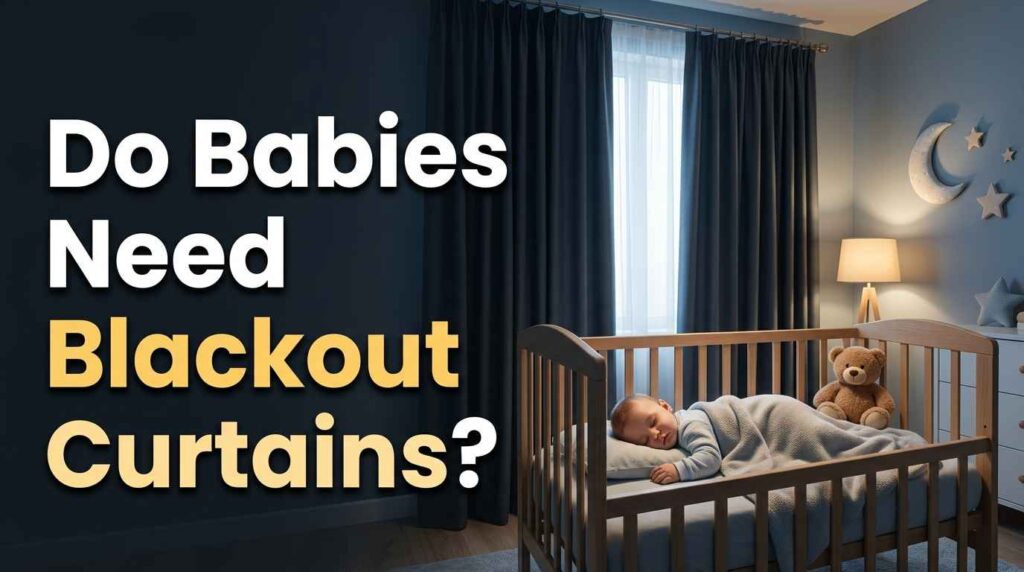
Every new parent asks the same question at some point: do babies need blackout curtains, or is this just another nursery trend? The truth is, there’s no single answer that fits every home. Some babies sleep peacefully with a little light in the room, while others wake up the moment the sun rises. What matters most is your baby’s room, your home’s location, and how your little one already sleeps.
In this guide, we’ll walk through real, everyday situations, like bright morning sun, daylight saving time changes, and city apartments with streetlights, to help you figure out whether your baby truly needs blackout curtains. By the end, you’ll have a clear, simple answer based on your own home, not just what worked for someone else’s baby.
Blackout Curtains — Necessity or Just a Nice-to-Have?
Blackout curtains are not a strict must-have for every baby, but they become a real necessity when your baby’s room gets a lot of light. For homes with bright windows, they solve a real sleep problem. For darker rooms, they may just be a nice bonus.For a broader look at picking the right window treatment, check out our complete buying guide to curtains for kids’ rooms.
Necessity vs. Convenience: What’s the Difference?
A necessity means your baby’s sleep is being hurt without it. A convenience means it just makes life a little easier. Blackout curtains fall into both groups, depending on the home.
If your baby wakes up crying every time the sun comes up, that’s a necessity. If your baby sleeps fine either way, blackout curtains become more of a nice extra, not a must.
Does Every Baby Need Blackout Curtains?
No, not every baby needs them. Some babies sleep deeply no matter how bright the room is. Others are very sensitive to even small amounts of light. This is why there is no single “yes” or “no” answer that fits all homes.We found similarly mixed results when testing whether blackout curtains help toddlers nap better.
Are Blackout Curtains Worth It for Your Baby Sleep Environment?
For most American homes, especially ones with big windows or morning sun, blackout curtains are worth the investment. They give parents better control over the baby’s sleep environment, which often leads to longer naps and fewer early wake-ups.If you’re ready to shop, see our tested picks for the best room-darkening curtains for the nursery.
But worth it doesn’t always mean required. It means it can help, especially in the right setting.
Do All Babies Actually Need Them? (The Honest, Nuanced Answer)

No, not all babies need blackout curtains. Some babies sleep well in a bright room, while others need total darkness to fall and stay asleep. It mostly depends on your baby’s own sleep needs and temperament.
Every Baby’s Sleep Needs Are Different
Infant sleep development is not the same for every baby. Some babies fall asleep easily and stay asleep, no matter what is happening around them. Other babies wake up at the smallest change in light or sound. This is completely normal and has nothing to do with good or bad parenting.
How Light Sensitivity Affects Sleep
Some babies are simply more sensitive to light than others. A light-sensitive baby may wake up the moment sunlight enters the room. A baby who is not sensitive to light may sleep through a bright morning without any trouble.
Baby Temperament Plays a Big Role
Just like adults, babies have their own personalities from birth. Some babies are calm and adaptable. They can build healthy infant sleep habits in almost any environment. Other babies need more consistency, including a dark room, to feel settled and secure.
Some Babies vs. Other Babies: Why Comparison Doesn’t Help
It’s easy to compare your baby to a friend’s baby who “sleeps anywhere.” But comparing sleep associations between two different babies rarely helps. What works for one baby may not work for yours, and that’s okay.
The real question isn’t what other babies need. It’s what helps your baby sleep best.
The “Need vs Want” Framework
Blackout curtains become a real need when your nursery has strong light, early sunrises, or a baby who wakes up easily. They stay a “want” when the room is already dim or your baby sleeps well without extra darkness.
Factors That Determine the Need
A few simple factors decide whether blackout curtains are truly necessary for your home:
- How much natural light enters the nursery
- What time the sun rises in your area
- How easily your baby wakes up from light
- Whether naps happen during bright daytime hours
If most of these apply to your home, blackout curtains move from a “want” to a real need.
Evaluating Your Nursery Lighting
Before deciding whether to buy blackout curtains, take a simple look at your baby’s room. Stand inside during the brightest part of the day. If the room feels bright even with regular curtains closed, that’s a strong sign you need something stronger.
Who Actually Needs Blackout Curtains?
Blackout curtains benefit families the most when
- The nursery faces direct morning sun.
- The baby naps during the day.
- Sunlight levels in your area tend to run high.
- The baby already struggles with early waking.
Choosing the Right Sleep Environment for Your Baby
Not every baby needs the same setup. The goal is choosing the right sleep environment based on your baby’s actual sleep patterns, not just what other parents recommend. This simple, practical approach helps you make a smart, needs-based decision instead of guessing.
Situational Decision Tree — Does YOUR Baby Need One? (USA-Specific)

Your baby’s need for blackout curtains depends on four things: your room’s direction, the season, where you live, and your baby’s current sleep pattern. Check each one below to see where you stand.
Room Orientation Check
Room orientation matters more than most parents realize. An east-facing nursery gets strong morning sunlight, often waking babies too early. A west-facing nursery brings bright evening light, which can delay bedtime. If your baby’s room feels like a bright bedroom no matter the window direction, blackout curtains likely help.
Seasonal & Regional Check (USA)
Across the USA, sunrise times shift a lot through the year. Daylight saving time can cause an early sunrise that wakes babies before 6 a.m. Summer daylight hours stretch late into the evening, while winter daylight arrives late morning. Because regional sunlight exposure varies so much across states, your need for blackout curtains may change season to season.
Location Type Check
Where you live also plays a role. Homes in urban apartments often deal with streetlights and urban light pollution at night. Suburban homes usually have fewer artificial lights but may still face strong daytime sun. City living often increases the need for full-room darkness.
Sleep Pattern Check
Finally, look at your baby’s actual sleep pattern. Signs like early morning waking, short daytime naps, nap resistance, or frequent night waking often connect to light exposure. Inconsistent naps or frequent cat naps during short wake windows can also point to a light-related sleep issue.
Will Blackout Curtains Confuse Your Baby’s Day-Night Schedule?
No, blackout curtains do not confuse a baby’s day-night schedule. A baby’s sense of day and night comes from their internal biological clock, not just the light in one room.
How the Biological Sleep Clock Really Works
Every baby is born with a biological sleep clock that slowly matures over the first few months. This clock controls circadian rhythm development, which is what tells the body when to feel sleepy and when to feel awake. This process happens naturally, whether the nursery is bright or dark.
The Role of Melatonin in Sleep Regulation
As the day goes on, the body slowly builds up a sleep hormone called melatonin. Melatonin production increases in the evening and helps prepare the body for nighttime sleep. This natural process is part of sleep regulation, and it works even with blackout curtains closed all day.
Do Blackout Curtains Affect a Baby’s Circadian Rhythm Long Term?
There is no proof that blackout curtains harm circadian rhythm development over time. In fact, many babies use them for months or years without any long-term sleep problems. Since babies still get light cues from waking hours, feeding times, and daily activity, their body clock continues to develop normally, even in a dark room.
The Real Answer for the Focus Keyword
So, when it comes to whether babies need blackout curtains without risking confusion, the answer is simple: darkness supports sleep maturation; it does not block it. Blackout curtains help control light, not the baby’s internal clock.
The “Sleep Prop” Dependency Debate
Blackout curtains are not a harmful sleep prop. They support a baby’s sleep environment, but they do not stop a baby from learning to sleep in other places when needed.
Understanding Sleep Associations
Many parents worry that blackout curtains will become one of many sleep associations their baby depends on, like rocking or feeding to sleep. But darkness works differently. It’s part of the environment, not something a parent has to do each time.
Sleep cues help; they don’t trap.
A dark room acts as one of several sleep cues that tell the baby it’s time to rest. Along with a bedtime routine, like a bath or a lullaby, blackout curtains simply add one more clear signal for sleep. This actually supports a healthy sleep routine, rather than creating a problem.
Can Babies Still Adapt Without Them?
Yes. Babies are naturally adaptable. Even babies used to a fully dark room can learn to nap in a stroller, car seat, or someone else’s home. For occasional travel sleep, simple tricks like a portable shade or a blanket over the window often solve the problem for a night or two.
Building a Consistent, Not Rigid, Sleep Environment
The goal is a consistent sleep environment at home, not a perfect one everywhere. A baby who sleeps well with blackout curtains at home can still build adaptable sleep habits over time, especially with a steady bedtime routine guiding them.
What Happens If You DON’T Use Blackout Curtains?

Without blackout curtains, some babies may face more bedtime struggles, shorter naps, or trouble falling asleep, especially in bright rooms. But for babies in naturally dim rooms, skipping them may cause little to no problem at all.
Difficulty Falling Asleep in a Bright Room
When a nursery gets a lot of light, babies can have real difficulty falling asleep. Light signals the brain to stay alert, which can delay naps and bedtime, especially during long summer evenings.
Overstimulation and an Overtired Baby
Too much light and visual activity in a room can lead to overstimulation. An overstimulated baby often becomes an overtired baby, which sounds helpful for sleep but actually makes it harder to fall asleep and stay asleep.
Rising Sleep Pressure Without Enough Rest
Sleep pressure builds up the longer a baby stays awake. If short naps keep getting cut short by light, sleep pressure can build too high, leading to crankiness, fussiness, and harder bedtimes at night.
A Balanced Look: Disadvantages on Both Sides
It’s worth noting that some disadvantages of blackout curtains exist too, like rooms feeling too dark for daytime activities or parents forgetting the time. So while skipping blackout curtains isn’t dangerous, it may lead to more bedtime struggles in homes with strong natural light.
Age-Based Necessity — When Does the “Need” Actually Start?
Babies typically begin needing extra darkness near the 3-4 month mark, as sleep habits shift the most.Before that, a newborn can usually sleep just fine in a slightly lit room.
Newborns (0-3 Months): Light Barely Bothers Them
A newborn baby doesn’t really notice light and dark yet. Their internal clock isn’t running on a full schedule yet. This is why even a young infant can nap in a bright room without much trouble in the first few weeks of life.
The 3-Month Sleep Changes Begin
Around the 3-month mark, small sleep changes start to show up. The baby’s brain begins telling the difference between day and night a little more clearly. This is often when parents first ask, “Do babies need blackout curtains now?”
The 4-Month Sleep Regression: When Darkness Starts to Matter
By the time babies reach the 4-month sleep regression, sleep becomes lighter and easier to disturb. This is a normal part of infant milestones and developmental stages. Many older infants wake up more easily from light during this stage, which is why blackout curtains often help the most here.
When to Stop Using Blackout Curtains for Baby
There’s no fixed age to stop. Some families use them for years, slowly adding more light as the child grows and gets used to brighter rooms over time.
Cost vs. Benefit — Is It Worth Buying?

Blackout curtains are usually worth the cost if your baby struggles to sleep in a bright room. They are affordable, easy to find, and often solve the problem in just one try.
How Much Do Blackout Curtains Cost?
Room-darkening curtains and blackout blinds come in many price ranges. Some cost very little, while thicker, higher-quality options cost more. Most parents find a good option without spending too much money.
Budget-Friendly Nursery Solutions
If you’re not ready to buy yet, simple budget-friendly nursery solutions can help. A dark blanket taped over the window works as a temporary blackout solution until you’re ready to buy something better.
Are They a Good Investment for Nursery Comfort?
For most homes, yes. Better sleep means a happier baby and more rest for parents too. This small cost often brings big value in daily nursery comfort and calmer bedtimes.
The Simple Bottom Line
These are practical sleep solutions that don’t cost much but can make a real difference. So if you’re asking, “Do babies need blackout curtains?” In most cases, it’s a small price for peaceful, easier nights.
What Pediatric Experts Say About Necessity
Most pediatric sleep experts see blackout curtains as a helpful tool, not a strict requirement. They focus more on safe sleep practices than on how dark a room should be.
What the American Academy of Pediatrics Focuses On
The American Academy of Pediatrics (AAP) gives clear safe sleep practices for babies, like sleeping on the back, using a firm mattress, and keeping the crib free of loose blankets. However, the AAP does not list blackout curtains as a required item for infant wellness.
What a Pediatric Sleep Consultant Usually Recommends
Many families work with a pediatric sleep consultant when naps or nighttime sleep becomes hard. These experts often suggest a darker room as one part of good sleep hygiene, especially for babies who wake up early or nap poorly. But they usually pair this advice with a steady routine, not just curtains alone.
Pediatric Sleep Recommendations Focus on the Whole Picture
Pediatric sleep recommendations usually look at the full sleep environment, not just light. Room temperature, noise, and a regular bedtime all support healthy infant development, along with proper darkness.
The Bottom Line From Experts
So do babies need blackout curtains, according to experts? Not exactly as a rule. Experts see them as a smart tool that supports healthy sleep, not something every baby is required to have.
Quick Self-Assessment — Do You Actually Need Blackout Curtains?
If your baby wakes up early from sunlight, struggles with naps, or sleeps in a bright room, blackout curtains will likely help. If your baby sleeps well already, you may not need them at all.
Signs Your Baby Needs Blackout Curtains
Look for these common signs. Your baby needs blackout curtains:
- Wakes up very early with the sunrise
- Has short, restless daytime naps
- Struggles to fall asleep in daylight
- Sleeps in a room with strong morning or evening sun
If two or more of these sound familiar, blackout curtains can make a real difference.
Signs Blackout Curtains Are Unnecessary
On the other hand, there are also clear signs blackout curtains are unnecessary:
- Your baby naps well even in a lit room.
- The nursery already stays naturally dim.
- Sleep has never been a struggle, day or night.
How to Know If Blackout Curtains Will Help
The easiest way to know how blackout curtains will help is to test the room first. Sit in the nursery during nap time and notice how bright it feels. A very bright room is a strong sign that change is needed.
Evaluating Nursery Lighting Before Deciding
Take a few days to observe your baby’s sleep pattern before deciding on buying anything. This simple step in evaluating nursery lighting helps you make a smart, needs-based choice.
Looking for more expert curtain advice? Visit our DecorReviewHub for in-depth buying guides, styling tips, and room-by-room curtain recommendations.
Conclusion
So, do babies need blackout curtains? The honest answer is that it depends on your baby, your room, and where you live. Some babies sleep just fine with a little light, while others need real darkness to nap well and sleep through the night. If your nursery gets strong morning sun, your baby wakes up too early, or naps keep getting cut short, blackout curtains can make a big difference. But if your baby already sleeps well, they simply aren’t required. The best way forward is to watch your baby’s sleep patterns closely, try small changes first, and decide based on what truly helps your little one rest better, not just what other parents are doing.
FAQs
1. Is it actually necessary, or just a marketing trend?
It’s not just a trend. For babies who struggle with light in the room, blackout curtains are one of the most practical sleep solutions available. But for babies who sleep well already, it’s more of a helpful extra than a true necessity.
2. At what point does it become “essential” vs. “optional”?
It becomes essential when light clearly disturbs your baby’s naps or nighttime sleep. It stays optional if your baby sleeps deeply no matter how bright the room is.
3. Do all rooms need them, or just the nursery?
In most homes, only the nursery setup really needs full darkness. Other rooms, like the living room or kitchen, don’t need blackout curtains at all.
4. Is spending money on this worth it for the short newborn stage?
Even though newborns don’t need total darkness right away, many parents see it as an early investment. As the baby grows, healthy sleep routine habits and better rest support strong infant brain development, making it a useful long-term choice, not just a short-term one.
5. What if my baby sleeps fine without one — should I still get it?
If your baby already sleeps well, there’s no urgent need to buy one. But keeping it in mind as one of several sleep improvement methods can help later, especially during growth spurts or sleep regressions when light sensitivity often increases.

I’m Attaur Rahman, founder of DecorReviewHub. I test and review curtains and home decor products to help homeowners make the right choice for every room. All my guides are based on real use and honest comparisons.