
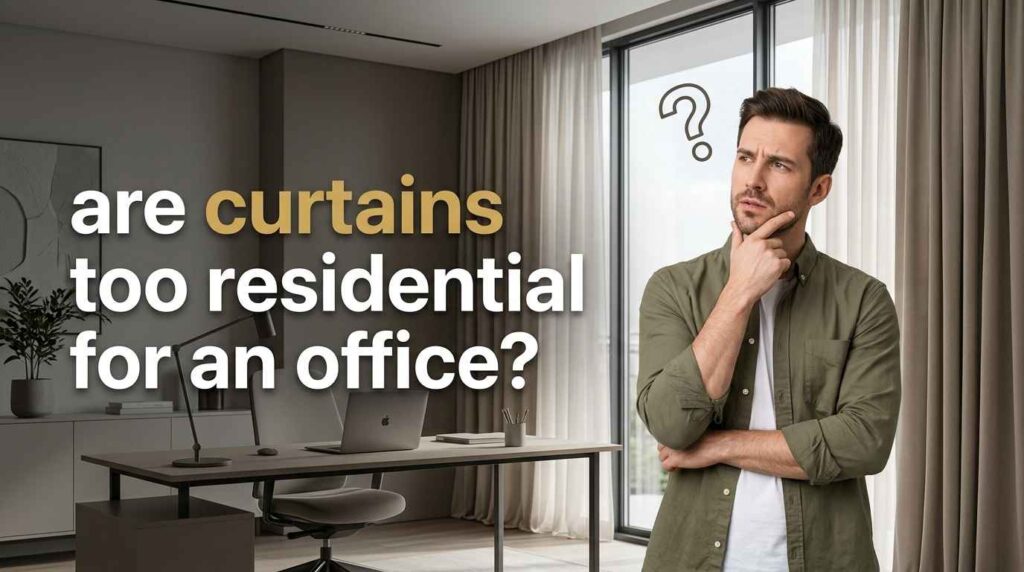
Office design is not only about furniture; window treatments also play an important role in how a space looks and feels. They control light, improve privacy, and affect the overall mood of a workspace. Curtains are often seen as a residential element because they are commonly used in homes, which creates confusion about their use in professional environments.
A lot of people wonder, “Are curtains too residential for an office?” because they are unsure if curtains can match a modern workplace style. The truth is, it depends on the design, fabric, and overall setting of the office.
In most cases, the right choice of curtains can easily fit into a professional office without looking out of place.
Are Curtains Too Residential for an Office?
No, curtains are not too residential for an office. When chosen in professional fabrics, neutral colors, and simple designs, curtains can improve privacy, light control, comfort, and overall office aesthetics. Many modern offices use curtains alongside blinds to create a polished, professional, and welcoming workspace.
The Difference Between Residential and Professional Office Curtains
The idea that curtains belong only in homes is outdated. Today, many businesses, executive offices, coworking spaces, and home offices use curtains as part of their interior design strategy.
However, not all curtains create the same impression. Curtains can look too residential when they feature the following:
- Bright floral prints
- Heavy decorative details
- Excessive layering
- Bold home-style patterns
- Outdated fabric designs
In contrast, office-friendly curtains typically have clean lines, simple designs, and colors that complement the workspace.
Material and Color Matter Most
The fabric and color of a curtain play a major role in determining whether it looks professional.
Materials such as linen, textured polyester, and blackout fabrics often create a modern and polished appearance while helping control natural light.
Professional office curtain colors commonly include:
- Gray
- White
- Beige
- Charcoal
- Navy blue
- Soft earth tones
These shades blend well with most office furniture and help create a focused, productive environment.
Why Modern Offices Use Curtains
Many modern offices are moving beyond traditional blinds and incorporating curtains into their window treatments. Curtains can soften hard surfaces, improve acoustics, and make a workspace feel more comfortable without sacrificing professionalism.
They also offer several practical benefits, including:
- Better light management
- Increased privacy
- Reduced screen glare
- Improved visual comfort
- Enhanced interior design appeal
For executive offices, conference rooms, and home offices, curtains can be both a functional and stylish solution.
Do Curtains Look Professional in Office Spaces?

Yes, curtains can look professional in office spaces when they match the overall office design. Many modern offices, executive offices, conference rooms, and commercial workspaces use curtains to improve privacy, control natural light, and create a polished appearance.
The key factor is not whether you choose curtains or blinds. What matters most is the fabric, color, style, and installation. Well-designed office curtains can make a workspace look modern, organized, and professional.
Why Some People Think Curtains Look Unprofessional
Many people associate curtains with living rooms and bedrooms, which leads to the belief that they do not belong in a workplace. In reality, curtains only look unprofessional when the design feels too residential.
Office curtains may appear less professional if they use bright colors, busy patterns, decorative ruffles, tassels, low-quality materials, or poor installation. These design choices can make a workspace feel more like a home than a professional office.
Why Modern Offices Use Curtains
Many corporate offices and executive suites use minimalist curtains because they offer both style and functionality. They help reduce glare on computer screens, improve privacy, and create a more comfortable work environment.
Professional office curtains typically feature clean lines, neutral colors, quality fabrics, and simple hardware. This creates a refined look without making the office feel cold or overly formal.
Design Matters More Than Curtains or Blinds
A common mistake is focusing only on whether curtains or blinds are the better option. In most cases, the overall interior design has a much greater impact on how professional a workspace looks.
A poorly chosen blind can look outdated, while a well-designed curtain system can make an office feel modern and sophisticated. The best results come from coordinating window treatments with office furniture, lighting, wall colors, and workspace layout.
How Curtains Can Make an Office Look Residential
Even high-quality curtains can create a residential appearance if they are styled incorrectly. Floral prints, overly decorative fabrics, soft pastel colors, and curtains that are too short can make a professional office feel more like a living room.
To maintain a business-like appearance, curtains should complement the existing office décor and support the overall workspace aesthetic.
What Makes Office Curtains Look Professional?
Professional office curtains are simple, functional, and visually balanced. They enhance the workspace without becoming the main focal point.
The best office curtains usually include a neutral color palette, structured design, high-quality fabric, proper floor-length sizing, and a clean modern appearance. These features help create a workspace that feels professional, comfortable, and productive.
Curtains vs Blinds for Office Spaces: Which Is Better?
When comparing curtains vs. blinds for office spaces, neither option is automatically better. The right choice depends on your office design, privacy needs, light control requirements, and overall workplace environment. While blinds have traditionally been the preferred choice in corporate offices, modern office curtains are becoming increasingly popular because they add comfort, style, and functionality.
For most workspaces, the best window treatment is the one that balances professionalism, privacy, natural light control, and visual appeal.
Curtains vs Blinds: Quick Comparison
| Feature | Curtains | Blinds |
|---|---|---|
| Professional Look | Elegant, modern, and welcoming | Clean, structured, and corporate |
| Light Control | Good light filtering and privacy | Precise control over sunlight and glare |
| Privacy | Excellent privacy coverage | Very good privacy control |
| Noise Reduction | Helps absorb sound and improve acoustics | Limited noise reduction |
| Maintenance | Requires occasional washing or cleaning | Easy to clean and maintain |
| Design Flexibility | Available in many fabrics, colors, and styles | Fewer design customization options |
| Comfort & Warmth | Creates a softer and more comfortable atmosphere | Offers a more functional appearance |
| Best Suited For | Executive offices, meeting rooms, creative workspaces, and home offices | Corporate offices, commercial buildings, and traditional workplaces |
Why Blinds Have Been the Traditional Office Choice
Blinds have long been a popular choice in office spaces because they provide a clean, structured, and professional appearance. They are easy to operate, require minimal maintenance, and offer excellent control over sunlight and glare.
In workplaces where employees spend hours using computer screens, blinds can help manage natural light while maintaining a neat and organized environment.
Are Blinds More Professional Than Curtains?
Not necessarily. A professional office is defined by its overall interior design rather than the type of window treatment used.
Well-designed office curtains can look just as professional as blinds. In many modern workplaces, curtains are used to create a comfortable, sophisticated, and visually balanced atmosphere while maintaining a polished business appearance.
Why Office Curtains Are Growing in Popularity
Modern office design increasingly focuses on employee comfort, workplace wellness, and aesthetics. Curtains help soften hard surfaces, improve room acoustics, and create a more welcoming workspace.
They also provide excellent privacy and can make executive offices, conference rooms, and creative workspaces feel more refined and professional.
The Rise of Hybrid Window Treatments
Many modern offices no longer choose between curtains and blinds. Instead, they combine both to maximize style and functionality.
Blinds provide precise light control, while curtains add comfort, privacy, and visual appeal. This layered approach creates a more flexible and professional office environment.
Which Option Is Best for Your Office?
The best choice depends on your office needs and design goals.
Traditional corporate offices often prefer blinds because they are practical, low-maintenance, and highly effective for light control.
Curtains are often preferred in executive offices, meeting rooms, and modern workspaces where comfort, privacy, and design appeal are important.
For many businesses, a combination of curtains and blinds offers the perfect balance of professionalism, functionality, and workplace comfort.
When Curtains Work Best in Office Design

Curtains work best in office spaces where privacy, light control, comfort, and appearance are important. They are especially effective in home offices, meeting rooms, and executive offices because they can make a workspace feel more comfortable while maintaining a professional look.
The key is choosing simple, modern curtains that match the overall office design.
Home Offices
Many homeowners use curtains to create a productive and comfortable workspace. Some of the best home office curtain ideas include neutral-colored linen curtains, blackout curtains for glare control, and light-filtering panels that allow natural light into the room.
These options help reduce distractions while improving the overall look of the office.
Meeting Rooms
Curtains are a practical choice for meeting rooms because they improve privacy and help control lighting during presentations and video calls.
In many offices, blackout curtains are used to reduce screen glare and create a more focused environment for discussions and presentations.
Executive Offices
Executive offices often benefit from high-quality curtains that add a professional and sophisticated touch. Well-designed corporate office curtains can enhance privacy, improve comfort, and create a more polished appearance for clients and employees.
Simple fabrics, clean lines, and neutral colors usually work best in executive spaces.
Choosing the Right Office Curtain Design
The best office curtain design ideas focus on simplicity rather than decoration. Modern office curtains should complement the workspace instead of becoming the center of attention.
For a professional look, choose:
- Neutral colors such as gray, beige, white, or navy
- Quality fabrics with a clean texture
- Floor-length curtains for a polished appearance
- Minimal patterns and decorative details
When used in the right spaces, curtains can improve both the functionality and appearance of an office without making it feel too residential.
How to Make Curtains Look Non-Residential
Curtains do not have to make an office look residential. The key is choosing simple, professional designs that match the workspace. In most cases, fabric, color, and styling matter more than the curtains themselves.
Choose Neutral Colors
Neutral colors create a clean and professional appearance. Shades like gray, white, beige, charcoal, and navy work well in most office settings and blend easily with office furniture and décor.
Use Simple, Modern Designs
Avoid curtains with floral prints, bold patterns, ruffles, or decorative details. Instead, choose curtains with clean lines and a minimalist design that supports a professional environment.
Select High-Quality Fabrics
The right fabric can instantly elevate the look of an office. Linen, textured polyester, and blackout fabrics often provide a more polished and business-friendly appearance than lightweight decorative materials.
Hang Curtains Properly
Floor-length curtains usually look more professional than short curtains. Proper installation also helps create a structured and intentional design rather than a casual residential look.
Avoid Overly Decorative Styling
Keep curtain hardware, tiebacks, and accessories simple. Too many decorative elements can make an office feel more like a living room than a workspace.
Best Curtain Fabrics for Office Use

The best curtain fabric for office spaces depends on your goals. Linen works best for a premium and professional look, blackout curtains are ideal for light control and productivity, and sheer curtains suit modern offices that want to maximize natural light.
Choosing the right fabric can make a significant difference in how professional and functional an office feels.
Linen Curtains for a Premium Office Look
Linen is one of the most popular choices for professional workspaces because it offers a clean, sophisticated appearance. A linen curtain office look works especially well in executive offices, meeting rooms, and modern home offices.
Linen curtains can:
- Create a high-end appearance
- Add texture without looking busy
- Complement modern office interiors
- Maintain a professional atmosphere
Blackout Curtains for Better Productivity
For offices that need maximum light control, blackout curtains for office use are often the best solution. They help reduce glare on computer screens and create a more comfortable working environment.
Blackout curtains are especially useful for the following:
- Home offices
- Conference rooms
- Presentation spaces
- Offices with large windows
By controlling sunlight, they can help employees stay focused throughout the day.
Sheer Curtains for Modern Offices
Many modern offices use sheer curtains to filter daylight while creating a bright and spacious atmosphere. They are a popular choice in modern and minimalist workspaces.
Benefits of sheer curtains include:
- Increased natural light
- Brighter office interiors
- Modern and clean appearance
- Reduced harsh sunlight
They work best in offices that prioritize natural lighting and contemporary design.
Which Fabric Is Best for Your Office?
There is no single best curtain fabric for office environments. The right choice depends on the function of the space.
- Choose linen for a premium corporate look.
- Choose blackout curtains for privacy and productivity.
- Choose sheer curtains for a bright, modern office design.
Key Takeaway
The best curtain fabric for office use depends on your needs, but linen, blackout, and sheer curtains are among the most effective options. Each offers unique benefits while helping create a professional and comfortable workspace.
Office Curtain Colors That Look Professional
The best curtain colors for office spaces are neutral and balanced tones that support focus, professionalism, and a clean interior design. Colors like gray, beige, white, navy, and charcoal are widely used because they fit most best curtain colors for office searches and work well in modern work environments.
Office curtain color choice directly affects how a space feels, from authority-driven executive rooms to open and creative workspaces.
Neutral Palette Psychology in Office Design
Neutral colors are the safest and most professional choice in office interiors. They reduce visual distraction and help create a calm working environment.
Common neutral options include:
- Gray
- Beige
- White
- Soft taupe
These tones are widely used in office interior design ideas because they match furniture easily and keep the workspace visually clean.
Dark Tones for Authority and Focus
Dark curtain colors are often used in executive and corporate spaces where authority and seriousness matter.
Popular dark tones include the following:
- Charcoal
- Navy blue
- Deep brown
These colors create a strong and focused atmosphere, making them ideal for meeting rooms, boardrooms, and leadership offices. They also reduce glare and improve screen visibility.
Light Tones for Openness and Bright Spaces
Light-colored curtains are best for creating an open and airy office environment. They help reflect natural light and make small offices feel larger.
Best light tones include:
- White
- Cream
- Light gray
These shades are often used in creative workspaces and modern startups where openness and collaboration are important.
Common Mistakes That Make Curtains Look Residential

Curtains can look unprofessional in an office when they are chosen without considering design balance. Most issues come from color, fabric quality, pattern choice, and curtain length. Avoiding these mistakes is key to preventing home-style office decor mistakes and keeping a workspace professional.
Bright Colors That Distract
Bright or overly saturated colors can make office curtains feel too casual and residential. Shades like neon, bright red, or strong patterns reduce focus and do not fit professional environments.
For a clean office look, neutral and muted tones are always better.
Cheap or Low-Quality Fabric
Fabric quality plays a major role in how curtains are perceived. Thin or shiny low-quality materials often create an unprofessional office curtain look.
Instead, choose:
- Linen
- Heavy cotton blends
- Textured polyester
- Blackout fabric
These materials look more structured and professional.
Heavy Patterns and Decorative Designs
Bold floral prints, large graphics, or overly decorative patterns can make an office feel like a home living room. This is one of the most common design mistakes in office interiors.
Simple and minimal designs always work better in professional spaces.
Wrong Curtain Length
Curtains that are too short or poorly fitted can break the visual flow of an office. This often creates an unfinished and casual appearance.
For a professional look:
- Use floor-length curtains
- Ensure proper installation height
- Keep alignment clean and straight
Real Office Use Cases
Curtains are not limited to homes. In modern workplaces, they are widely used in startups, corporate offices, conference rooms, and home offices because they improve privacy, light control, and overall design. This also proves that the idea of whether curtains are too residential for an office depends mainly on styling, not the product itself.
- Startups use curtains for flexible layouts, small meeting zones, and glass partition coverage.
- Corporate offices install curtains in executive cabins, private offices, and client meeting rooms.
- Conference rooms use curtains for better light control, reduced glare, and improved presentation visibility.
- Home offices use curtains for screen glare reduction, video call backgrounds, and work-life separation.
In all these cases, curtains support a modern and professional environment when designed properly, showing they are not inherently residential for office spaces.
Conclusion
Are curtains too residential for an office? It depends completely on how they are designed and used. Curtains are not automatically residential; instead, they can look highly professional when you choose the right fabric, color, and style. In modern office design, neutral tones, simple patterns, and clean installation make curtains a practical and stylish option for improving privacy, comfort, and overall workspace appearance.
FAQs
1. Are curtains too residential for an office space?
No, curtains are not too residential for an office. They only look residential when the wrong fabric, color, or design is used. With simple and modern styling, they fit perfectly in professional office spaces.
2. Can curtains look professional in an office?
Yes, curtains can look very professional in an office. Neutral colors, clean designs, and high-quality fabrics help create a modern and business-appropriate appearance.
3. Which curtain styles work best in office spaces?
The most suitable curtains for office spaces are linen, blackout, and sheer styles. Linen adds a premium and professional feel, blackout curtains support productivity by blocking excess light, and sheer curtains create a bright, modern, and open workspace environment.
4. Curtains vs. blinds—which is better for an office?
Neither is always better. Blinds offer a more corporate and minimal look, while curtains add comfort and design value. Many modern offices use both together for better light control and aesthetics.
5. Do modern offices use curtains?
Yes, many modern offices use curtains in meeting rooms, executive cabins, and home offices. They are chosen for privacy, comfort, and improved interior design when used correctly.

I’m Attaur Rahman, founder of DecorReviewHub. I test and review curtains and home decor products to help homeowners make the right choice for every room. All my guides are based on real use and honest comparisons.