
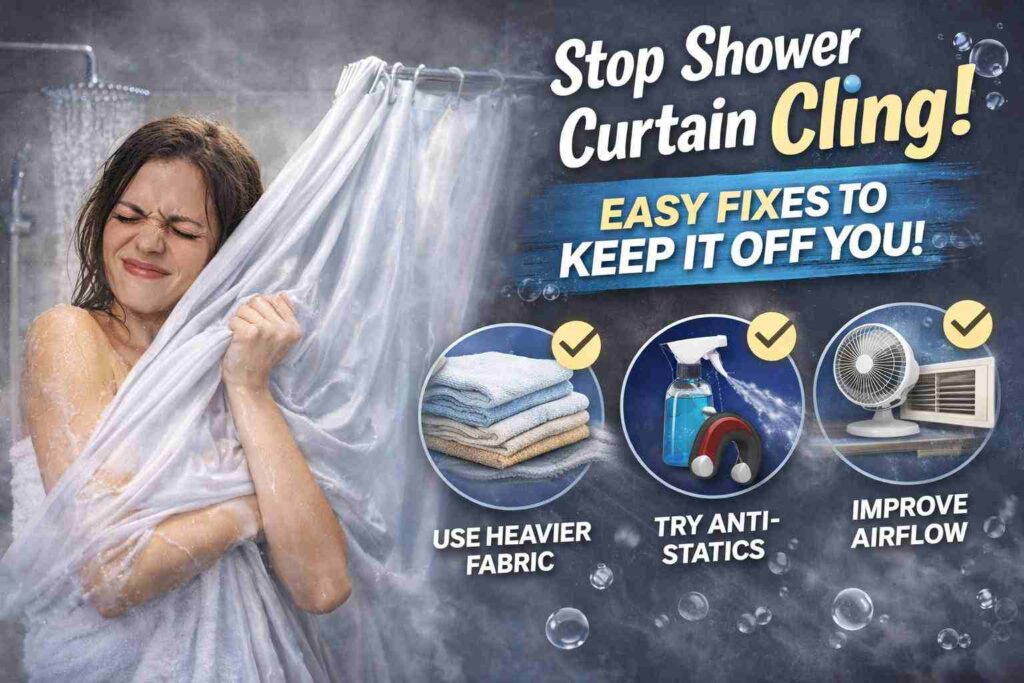
Are you tired of your shower curtain clinging to you every time you shower? For many homeowners, this is a common and frustrating problem that interrupts a comfortable bathroom routine. The curtain sticks due to a combination of static electricity, steam, water flow, and changes in air pressure—all of which create inward movement toward your body.
In this guide, we’ll walk you through expert, actionable solutions to solve this issue for good. From selecting the right curtain materials and using anti-static solutions to implementing simple shower curtain hacks, you’ll discover practical ways to improve bathroom comfort while preventing cling. By following these strategies, you can finally enjoy a static-free shower curtain and a smoother, more enjoyable shower experience.
This article provides reliable, research-backed advice to help homeowners tackle the problem efficiently, ensuring practical and effective solutions you can trust.
Why Your Shower Curtain Sticks
A shower curtain sticking to your body is not random—it’s the result of physics, material choice, and bathroom conditions working together. Below is a clear, SEO-optimized breakdown using real-world science and practical context.
Static Electricity & Curtain Material
Static cling in the bathroom often depends on the material of the shower curtains.
- Thin plastic and vinyl liners build static easily.
- Lightweight curtain materials react more to air movement.
- Fabric or heavier liner options are less susceptible to sticking.
When static builds up, the curtain sticks and moves toward you, especially in dry or cold air conditions.
Steam, Air Pressure & the Bernoulli Effect
Hot showers create steam, which changes air pressure inside the shower stall.
- Fast-moving water from the showerhead creates a low-pressure zone.
- Higher pressure outside the curtain pushes it inward
- This pressure difference is explained by Bernoulli’s principle.
- Convection currents and air currents pull the curtain inside.
This vortex-like effect causes inward movement of the curtain during a shower.
Water Flow & Suction from Shower Spray
The shower spray itself plays a major role.
- Fast-moving water creates a lower-pressure air pocket.
- The effect pulls lightweight curtains inward.
- Suction increases when water hits the liner directly.
This phenomenon is more noticeable with plastic or vinyl liners.
Bathroom Humidity & Ventilation Issues
Bathroom humidity makes the problem worse.
- High humidity increases static and cling
- Poor ventilation traps steam inside the room.
- Cold air drafts from outside can trigger air pressure imbalance.
Without proper airflow, the curtain sticks more aggressively during showers.
Why It Feels Worse Than It Is
Multiple factors combine at once:
- Static electricity
- Air pressure imbalance
- Water movement and suction
- Lightweight materials
Together, they push the curtain inward toward your body instead of letting it stay near the bathtub.
Simple Solutions for Immediate Relief
If your shower curtain keeps sticking to you, these solutions offer fast, practical relief without complicated changes. Each option focuses on controlling air movement, adding stability, and reducing cling—making them ideal for everyday use.

Add Weight Where It Matters
Lightweight curtains move easily, so adding weight is one of the fastest fixes.
- Choose weighted shower curtains with sewn-in weights.
- Use magnets along the bottom edge to anchor the liner.
- Switch to heavy-duty liners designed to resist air movement
These weighted curtain solutions help keep the curtain down and stable.
Secure the Edges
When the edges stay in place, the curtain can’t move inward.
- Apply magnetic strips to attach the liner to the tub or wall.
- Use suction cups for extra grip during shower spray
- Ideal for plastic or vinyl liners
These magnetic curtain hacks stop inward movement instantly.
Try Simple DIY Fixes
You don’t need special tools for effective bathroom DIY solutions.
- Clip binder clips to the bottom of the liner for added weight
- Use small DIY anchors for better control
- Great for renters and temporary setups
These fixes are budget-friendly and easy to remove.
Adjust Your Curtain Rod Setup
The right setup can make a big difference.
- Install a curved shower curtain rod to keep the curtain further away.
- Adjust rod height to improve airflow balance
- Understand how different curtain rod types affect movement
Better placement means less contact with your body.
Use a Two-Layer Curtain System
Layering adds both function and comfort.
- Place an anti-cling shower liner inside the tub.
- Hang a decorative outer curtain for extra weight
- Helps stabilize the liner and reduce pressure changes
Quick Takeaway
These solutions work because they:
- Add weight
- Reduce air movement
- Improve curtain positioning
Using one method—or combining a few—can immediately stop your shower curtain from sticking and make every shower more comfortable.
DIY & Home Remedies
If you’re looking for quick and practical ways to stop your shower curtain from sticking, DIY & home remedies can make a big difference. Using simple household items and easy techniques, you can create a static-free shower curtain without spending much or buying specialized products.
One effective method is applying a fabric softener spray directly to the curtain. This reduces static cling and keeps the liner from moving toward your body during showers. Another helpful trick is pre-wetting the curtain before stepping in. A slightly damp liner naturally reduces inward float caused by fast-moving water and air currents.
For additional control, sprinkle baby powder or cornstarch along the edges of the curtain. This minimizes static build-up and keeps the liner from sticking to your skin. Finally, folding the curtain properly when not in use ensures that it maintains its shape, prevents tangling, and reduces long-term cling issues.
These household hacks are not only cost-effective but also part of smart DIY bathroom solutions. Incorporating these small adjustments can significantly improve your shower experience and act as practical home improvement tips for every homeowner.
Choosing the Right Materials & Curtain Type
Selecting the right shower curtain materials is one of the most effective ways to prevent your curtain from sticking and to improve overall bathroom comfort. Understanding the differences in fabrics, treatment options, and liner types can make your daily shower hassle-free.

Fabric vs. Vinyl vs. PEVA vs. Polyester Blends
Different materials behave differently when exposed to water, steam, and air movement. Vinyl and PEVA liners are lightweight and tend to stick more due to static and airflow. Polyester blends and fabric curtains are generally heavier, reducing inward movement and providing better stability. Choosing the right material helps minimize static cling and keeps your curtain in place.
Anti-Static Treated Curtains
For a static-free shower curtain, consider curtains treated with anti-static coatings. These liners repel static electricity, preventing the curtain from clinging to your body even during hot, humid showers. Anti-static curtains are particularly effective when paired with heavier fabrics.
Heavy-Duty vs. Lightweight Liners
Heavier liners provide more resistance to air currents and fast-moving water, reducing inward float. Lightweight liners, while easier to clean, are more prone to movement and sticking. Choosing heavy-duty options can be a simple fix for recurring cling problems without altering your shower setup.
Mold-Resistant & Easy-to-Clean Options
To maintain a hygienic bathroom, select mold-resistant shower liners. These options are easier to clean and prevent mildew buildup, which can worsen curtain cling. Following bathroom cleaning tips alongside mold-resistant materials ensures a fresh and functional shower liner over time.
Bathroom Environment & Ventilation Tips
Creating the right bathroom environment is essential to stop your shower curtain from sticking and to improve overall home comfort solutions. Proper ventilation, airflow, and temperature management work together to reduce humidity and prevent inward curtain movement.
Use Fans or Open Windows
One of the easiest ways to tackle curtain cling is by improving bathroom ventilation. Running an exhaust fan or opening a window during and after showers helps remove excess moisture, reducing the chances of the curtain sticking to you.
Shower Temperature Management
The temperature of your shower can affect air pressure and curtain movement. Hot showers generate more steam, creating suction and inward movement, while warm showers reduce this effect. Adjusting your water temperature helps balance air circulation in the shower.
Proper Airflow & Circulation
Good airflow prevents stagnant air pockets that pull the curtain inward. Make sure the bathroom has clear paths for air to move freely, which balances pressure and keeps the curtain stable.
Placement of Bathroom Vents
The placement of bathroom vents in relation to the shower plays a key role. Properly placed vents remove humid air efficiently, reducing condensation on curtains and preventing excess humidity buildup.
Quick Takeaway
- Improve ventilation with fans or open windows
- Adjust shower temperature to reduce suction
- Maintain proper air circulation
- Ensure bathroom vents are correctly positioned
Implementing these tips not only prevents curtain cling but also enhances overall bathroom comfort and hygiene.
Curtain Cleaning & Maintenance
Keeping your shower curtain clean is essential not only for hygiene but also for preventing it from sticking. Regular shower curtain cleaning reduces static, prevents mold, and ensures your bathroom stays fresh and functional.
Regular Washing to Prevent Mold & Mildew
Frequent washing is a simple way to maintain your liner and improve bathroom maintenance tips. For vinyl, PEVA, or polyester liners, washing every 2–4 weeks removes dirt and moisture that encourage mold and mildew growth.
Effective Cleaning Solutions
Use natural or mild chemical solutions to clean your curtain:
- Vinegar: Helps remove mineral buildup and disinfects
- Baking soda: Gently scrubs away soap scum and residue
- Bleach: Only for plastic liners, effective for mold prevention
These solutions support mildew removal while keeping the curtain material intact.
For a step-by-step guide on keeping your shower curtain fresh and mold-free, check out our article on how to clean your shower curtain in the washing machine with vinegar.
Avoid Soap Scum Buildup
Soap scum accumulation increases sticking and creates a breeding ground for mold. Regularly wipe the liner and shower walls to prevent residue. Maintaining a clean surface reduces static cling and enhances curtain performance.
Drying Tips to Prevent Static
Proper drying helps avoid static cling in shower curtains:
- Shake off excess water after each shower
- Hang the curtain fully open to air dry.
- Use a fan or ventilated bathroom to speed drying.
Good airflow while drying not only reduces static but also extends the life of your liner.
Quick Takeaway:
- Wash curtains regularly (2–4 weeks).
- Use vinegar, baking soda, or bleach for cleaning.
- Prevent soap scum buildup
- Dry curtains completely to reduce static
These curtain maintenance strategies combine mold prevention, mildew removal, and shower curtain cleaning best practices for a long-lasting, functional, and static-free bathroom environment.
Conclusion
In summary, knowing how to stop a shower curtain from sticking to you comes down to combining smart solutions that address both the curtain and your bathroom environment. Key strategies include weighted curtains, proper ventilation, choosing the right curtain materials, and using simple DIY hacks like magnets, fabric softener sprays, or pre-wetting the liner.
Homeowners should try one fix at a time to see which works best and then gradually combine multiple solutions for maximum effectiveness. From anti-static liners to adjusting airflow and shower temperature, these methods together create a static-free shower curtain and a more comfortable bathroom experience.
Take action today—upgrade your shower experience by applying these expert tips, and enjoy a bathroom where your curtains stay in place every time. By following these strategies, you’ll finally master the problem of curtain cling and consistently achieve the results you want.
FAQs
1: Why does my shower curtain stick only sometimes?
It happens due to changes in air pressure, humidity, and water flow during different showers.
2: Does a curved rod really prevent curtain cling?
Yes, a curved rod keeps the curtain away from your body and improves airflow.
3: Which material works best for anti-static curtains?
Polyester blends, heavy-duty fabrics, or anti-static treated liners work best.
4: Can ventilation alone solve the problem?
No, ventilation helps, but combining it with weighted liners or DIY fixes is more effective.
5: Are DIY hacks really effective?
Yes, simple hacks like magnets, pre-wetting, or fabric softener reduce sticking quickly.

I’m Attaur Rahman, founder of DecorReviewHub. I test and review curtains and home decor products to help homeowners make the right choice for every room. All my guides are based on real use and honest comparisons.