
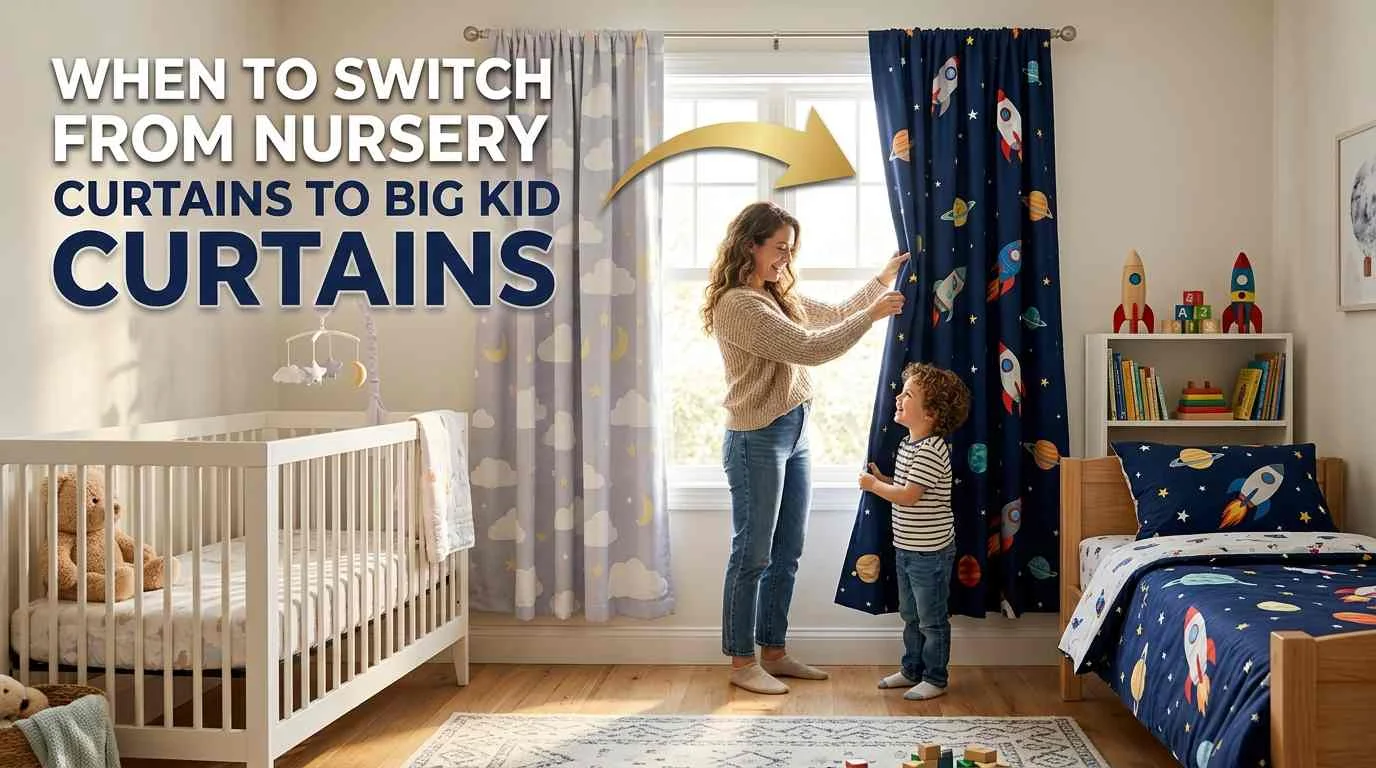
Your baby’s nursery, with its soft colors and sweet prints, once felt just right. But children grow fast, and those same curtains may not fit your child’s world anymore. This guide explains exactly when to switch from nursery curtains to big kid curtains, with clear age ranges, warning signs, and safety guidance based on common child development stages.
When to Switch From Nursery Curtains to Big Kid Curtains
Most parents switch from nursery curtains to big kid curtains between ages 3 and 5. This is usually when a child moves to a big kid bed, outgrows the baby theme, or the curtains show wear or lack safety features like cordless designs.
At What Age Should Kids Switch From Nursery to Big Kid Curtains?
The right age depends on the child, but the switch typically falls into one of three stages: toddler, preschool, or kindergarten age.
Ages 2 to 3: Toddlers are often moving from a crib to a toddler bed. The curtains can usually stay the same, but the transition is a good time to start planning ahead.
Ages 3 to 4: Preschoolers begin showing clear likes and dislikes. Many parents switch from nursery curtains to big kid curtains here, choosing colors or themes the child now enjoys.
Ages 4 to 5: By kindergarten age, most children have outgrown a baby-themed room entirely. This is the most common stage for a full room update, including curtains that match a growing child’s needs, like better light control.
There is no single correct age to switch from nursery curtains. Some parents wait for a major life event, like starting school. Others make the change earlier as part of a full nursery-to-big-kid-room makeover. Watch your child’s development and preferences more than the calendar. If your child starts asking for a “big kid room,” that is a strong signal it’s time.
Signs It’s Time to Replace Nursery Curtains
Fading fabric, an outdated baby theme, corded designs, and a child who dislikes the room’s look are the clearest signs to replace nursery curtains.
- The theme feels too babyish. Soft clouds or tiny animal prints suited a newborn. A preschooler often prefers bolder colors or patterns instead.
- Fabric is fading or worn. Sunlight weakens fabric over time, reducing how well curtains block light or protect privacy.
- Cords raise safety concerns. As toddlers become more mobile, corded window treatments become a real hazard. The U.S. Consumer Product Safety Commission has long warned that corded blinds and curtains pose a strangulation risk to young children, making cordless designs the safer choice.
- Your child’s routine has changed. A toddler dropping naps may need different light control at bedtime.
- The room is being repurposed. As a nursery transforms into a full bedroom for an older child, curtains often complete the transition.
Just one obvious sign is enough to justify a swap, particularly when safety concerns arise.
Nursery Curtains vs. Big Kid Curtains: Key Differences
Big kid curtains differ from nursery curtains in design, safety features, fabric strength, and how well they support an older child’s routine.
| Feature | Nursery Curtains | Big Kid Curtains |
|---|---|---|
| Design | Soft, baby-themed prints | Bold colors or child-chosen themes |
| Safety | May include cords | Usually cordless, child-safe |
| Fabric | Lighter, delicate materials | Durable, washable fabric |
| Function | Basic light control | Blackout or light-filtering options |
| Purpose | Fits a calm nursery mood | Reflects the child’s growing personality |
The core shift is purpose. Nursery curtains suit a newborn’s calm environment. Big kid curtains are chosen with the child’s own preferences, safety, and daily use in mind—a key part of any nursery-to-big-kid-room makeover.
Safety Features to Look For When Upgrading
Cordless designs, secure mounting, and flame-resistant fabric are the most important safety features when choosing big kid curtains.
- Cordless curtains. Cordless curtains are the single most important upgrade. Cordless designs remove the strangulation risk linked to traditional corded curtains and blinds.
- Secure mounting. Curtain rods and brackets should be firmly fixed so an active, climbing child cannot pull them down.
- Flame-resistant fabric. Especially important in rooms near heaters, lamps, or nightlights.
- Washable material. Kids’ rooms see spills and marks; washable fabric keeps upkeep simple.
- No small, detachable parts. Avoid decorative add-ons that could become a choking hazard.
Safety matters as much as style. Once a toddler starts climbing on furniture or reaching toward windows, cordless, securely mounted curtains become essential, not optional.
Choosing the Right Fabric for a Growing Child’s Room

Blackout, light-filtering, and washable fabrics are the best options for a growing child, depending on their sleep needs.
Blackout curtains suit toddlers and preschoolers who still nap or wake early, helping block outside light for a more consistent sleep environment.
Light-filtering curtains work well for older kids who no longer nap but still want softer daytime light.
Thermal or insulated curtains help keep a child’s room at a steady temperature, supporting better sleep quality.
Washable, durable fabric matters in any kids’ room. Cotton and cotton-blend fabrics remain popular for being soft, breathable, and easy to clean.
Choose fabric based on your child’s actual sleep habits and the room’s natural light. A child who wakes at sunrise benefits most from blackout curtains; a child sensitive to full darkness may prefer light-filtering options.
How to Choose Big Kid Curtains: Style and Practical Tips
Match the curtains to the room’s new theme, involve your child in the choice, and pick a design that can grow with them.
Start with a general theme—a favorite color, hobby, or simple modern look. Gender-neutral patterns, like stripes or nature themes, tend to last longer as a child’s taste evolves.
Letting your child pick between two or three approved options gives them ownership over their new “big kid” space, making the transition feel exciting rather than sudden.
Favor timeless patterns over trend-based designs a child may outgrow within a year. Solid colors or subtle prints also pair easily with future bedding changes.
Always measure the window and check curtain length before buying. Curtains that are too short let in unwanted light; curtains that are too long can become a tripping hazard for an active child.
Common Mistakes Parents Make During the Transition
The most common mistakes are switching too early or too late, ignoring safety features, and choosing overly trendy designs.
- Poor timing. Changing curtains before a child is ready, or waiting long after they’ve outgrown the nursery, can both cause friction. Follow the child’s cues, not a strict schedule.
- Ignoring safety. Some parents focus only on style and skip cordless, securely mounted designs—a real risk as kids become more active.
- Overly trendy choices. A very specific character theme may lose appeal within a year, leading to another update sooner than needed.
- Ignoring sleep needs. Light control and fabric quality directly affect a child’s sleep, not just the room’s appearance.
- Skipping the child’s input. Leaving a child out of the decision can make the new room feel less personal to them.
Avoiding these mistakes makes the switch from nursery curtains to big kid curtains smoother, safer, and more meaningful for the whole family.
Conclusion
Knowing when to switch from nursery curtains to big kid curtains comes down to watching your child, not the calendar. Most families make the change between ages 3 and 5, guided by clear signs like a worn-out baby theme, safety concerns with corded designs, or a child who is simply ready for a room that feels more “big kid” than “baby.” By choosing cordless, durable, and well-fitted curtains, you can make this small update a meaningful part of your child’s growing world.
FAQs
1. What age should you replace nursery curtains?
Most parents replace nursery curtains between ages 3 and 5, often alongside a bed change or full room update.
2. Do toddlers need different curtains than babies?
Yes. Toddlers benefit from cordless, child-safe designs and more durable fabric than typical nursery curtains offer.
3. Are nursery curtains too babyish for a toddler?
Often, yes, past age 3. Many toddlers start preferring bolder colors or themes that match their growing personality.
4. Should kids have blackout curtains?
Blackout curtains help children who nap or wake early, supporting more consistent, better-quality sleep.
5. How long should nursery curtains last?
Nursery curtains typically last 2 to 4 years before fading, wear, or a room makeover calls for a replacement.

I’m Attaur Rahman, founder of DecorReviewHub. I test and review curtains and home decor products to help homeowners make the right choice for every room. All my guides are based on real use and honest comparisons.