
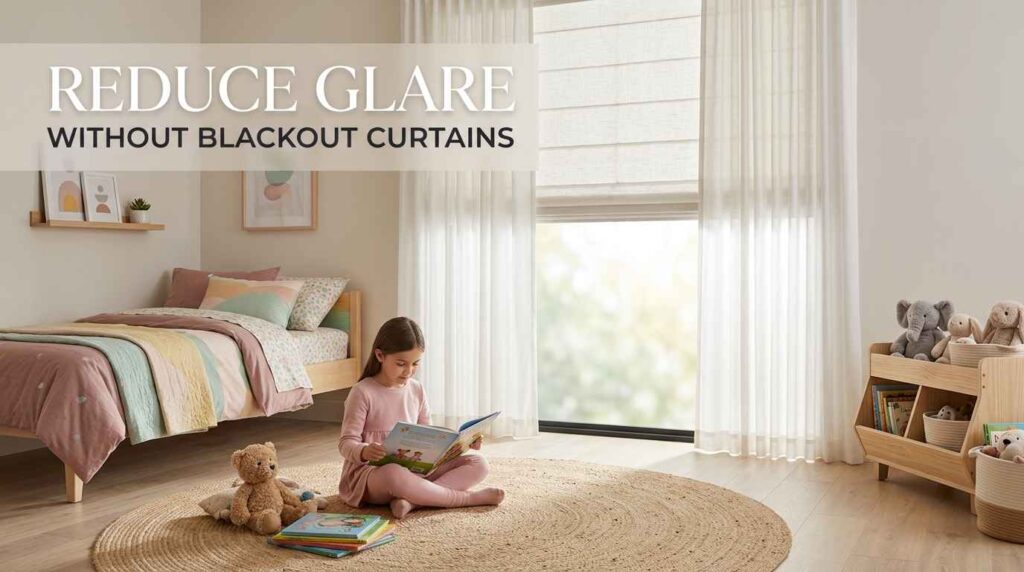
Bright, harsh sunlight streaming into a child’s room is a problem almost every parent faces at some point. It can wake kids up too early, make screens hard to see, or just feel uncomfortable during playtime. Many parents want to reduce sunlight in kids’ room spaces, but they don’t want to lose natural daylight by hanging heavy blackout curtains.
The good news is you don’t have to choose between glare and brightness. This guide covers simple, effective ways to reduce glare without blackout curtains, including light-filtering curtains, shades, blinds, and window film. Each option softens harsh sunlight instead of blocking it out completely, keeping the room bright and comfortable.
Here’s exactly how to reduce glare in a kids’ room without blackout curtains so your child gets natural light without the discomfort of direct, harsh sun.
Why Is There So Much Glare in a Kids’ Room?
A kids’ room gets too much glare mainly because sunlight comes in through bare glass with nothing to soften it. When light hits a flat window with no covering, it stays sharp and bright instead of spreading out gently across the room.
Window orientation plays a big role too. A room that faces east receives strong light in the morning. A room that faces west receives harsh light in the afternoon. The angle of the sun changes through the day, so glare often comes and goes depending on the time.
Reflective surfaces make the problem worse. Glossy furniture, mirrors, glass picture frames, and even shiny toys can bounce sunlight around the room. This creates extra bright spots, even in areas away from the window.
Screens are another big cause of glare. TVs, tablets, and computer monitors reflect sunlight easily. When a screen sits near a window, sunlight can hit it directly, making it difficult for a child to see anything on it.
Finally, a room with no window covering, or one with a thin, ineffective curtain, gives sunlight nothing to slow it down. Without some kind of light-filtering barrier, harsh rays pass straight through and hit eyes, screens, and furniture at full strength.
Once you know what’s causing the glare, it becomes much easier to pick the right fix — without needing full blackout curtains.
Glare vs. Blackout—What’s the Real Difference?
Glare and blackout are not the same thing. Glare means light is too sharp, too bright, or bouncing off a surface in an uncomfortable way. Blackout means almost no light enters the room at all.
Glare happens when raw sunlight hits your eyes, a screen, or a shiny surface without anything to soften it. The room isn’t too bright overall — the light is just harsh and hard to look at. A child might squint, struggle to see a tablet, or feel uncomfortable sitting near the window.
Blackout, on the other hand, is about blocking almost all light from coming in. Blackout curtains are designed to make a room dark, even in the middle of the day. This is useful for naps or early bedtimes, but it removes natural daylight completely.
Here’s the key idea: you don’t need to block all light to fix glare. You just need to soften harsh natural light so it spreads out evenly instead of hitting in one sharp beam. This is called light diffusion. Materials like sheer fabric, light-filtering shades, or frosted window film scatter sunlight gently across the room instead of blocking it.
How to Reduce Glare in a Kids’ Room Without Blackout Curtains

You can reduce glare in a kids’ room without blackout curtains by using light-filtering window treatments that soften sunlight instead of blocking it completely. Here are the best options.
Use Light-Filtering Curtains
Light-filtering curtains are made from fabric that spreads sunlight evenly across the room instead of letting it beam in one harsh direction. They cut down glare while still allowing soft, natural daylight to fill the space. These curtains work well for everyday use and don’t make the room feel dark or closed off.
Try Sheer Curtains to Diffuse Direct Sunlight
Sheer curtains are thin, light, and airy, which makes them perfect for scattering direct sunlight. Instead of blocking the light, they break it up into a soft, gentle glow. This keeps the room bright and cheerful while removing the sharp, uncomfortable edge of raw sunlight.
Install Solar Shades
Solar shades are built specifically to cut glare and block extra heat while still letting you see outside. They work great in rooms that get strong, direct sun for long periods. Many parents choose solar shades because they protect furniture and screens from fading too.
Choose a Light-Filtering Roller or Cellular Shades
Cellular shades, also called honeycomb shades, trap air inside their layers, which helps soften harsh light and adds a bit of insulation. Light-filtering roller shades work in a similar way, diffusing sunlight as it passes through. Both options keep the room comfortable in every season.
Use Adjustable Blinds
Adjustable blinds give you full control over how much light enters, since you can tilt the slats to any angle. For kids’ rooms, it’s best to choose cordless blinds to avoid any safety risks. Faux wood blinds are also a popular pick because they’re sturdy and easy to clean.
Apply Glare-Reducing Window Film
Anti-glare window film is applied directly to the glass, so it works without any curtains or shades at all. It reduces harsh glare and blocks a large amount of UV rays, protecting both your child’s eyes and the room’s furniture. Some films also add a frosted look for extra privacy.
Layer Curtains With Shades or Blinds
Pairing a light-filtering shade with a decorative curtain gives you the best of both worlds. Use the shade during the day to soften glare while keeping the room bright, then close the curtain in the evening for extra privacy. This layered setup means you’re never stuck with just one level of light control.
Adjust Furniture and Screen Placement
Simply moving desks, TVs, and tablets away from direct window light can make a big difference. Screens facing a window tend to reflect sunlight, making it hard to see anything on them. Repositioning furniture is a free, instant way to cut down on glare and reflection.
Use Exterior Shade Where Appropriate
Outdoor solutions like awnings or exterior shades block sunlight before it even touches the window. This stops glare at the source, rather than trying to manage it once it’s already inside. It’s a great option for windows that get intense, direct sun for most of the day.
Best Glare-Reduction Options Compared
The best window treatment for glare depends on your room’s sunlight, privacy needs, and budget. Here’s a quick comparison of the top options.
| Solution | Glare Reduction | Natural Light | Privacy | Child Safety | Best For |
|---|---|---|---|---|---|
| Sheer curtains | Good | High | Moderate | Depends on hardware | Soft daylight |
| Light-filtering curtains | Very good | Medium | Good | Depends on hardware | General kids room |
| Solar shades | Excellent | Medium–High | Good | Cordless preferred | Strong sun |
| Window film | Excellent | Medium–High | Depends on film | No hanging cord | Permanent glare control |
| Blinds | Very good | Adjustable | Good | Cordless preferred | Precise control |
| Cellular shades | Very good | Medium | Good | Cordless preferred | Glare + insulation |
| Shutters | Excellent | Adjustable | Excellent | Depends on design | Long-term solution |
If you compare curtains vs. blinds for glare, curtains give a softer, more natural look, while blinds offer sharper, adjustable control. Between window film vs. curtains, film is a permanent fix that works without any fabric at all, while curtains are easier to change or update over time.
For a room with strong afternoon sun, solar shades or shutters work best. For a softer, everyday look, light-filtering curtains are the easier choice. Whatever you pick, each option here helps cut glare without needing full blackout curtains.
How to Choose the Right Solution for Your Child’s Room
The best alternative to blackout curtains depends on a few simple factors about your child’s room. Think through these before you decide:
- Morning vs. afternoon sun — East-facing rooms need help with early sunlight, while west-facing rooms need stronger glare control in the afternoon.
- Screen and desk glare — If your child uses a tablet, computer, or TV near the window, look for options like solar shades or anti-glare window film that cut reflection directly.
- Privacy needs — Some materials, like sheer curtains, let in more light but offer less privacy. Others, like cellular shades or shutters, offer both privacy and light control without blackout curtains.
- Natural light preference — If you love a bright room, choose light-filtering options over anything heavier.
- Budget — Curtains are usually the most affordable, while window film and shutters cost more but last longer.
- Ease of cleaning — Fabric curtains can collect dust, while blinds and shades are easier to wipe down.
- Child safety — Always check for cordless designs, since they’re the safest pick for any young child’s room.
Weighing these factors together makes it much easier to reduce glare in kids’ room spaces — without ever needing full blackout curtains.
Best Options for Different Kids’ Room Situations

Every room is different, so the best fix depends on your child’s specific space, sunlight, and needs. Here’s kids’ room glare reduction broken down by situation.
For a Room With Strong Afternoon Sun
West-facing rooms get intense afternoon sunlight. Solar shades or cellular shades work best here, since they block strong glare while keeping the room cool.
For an East-Facing Room With Strong Morning Sun
East-facing rooms deal with sharp morning sun glare. Light-filtering curtains or sheer curtains soften early light without making the room feel dark.
For a Kids’ Study Desk or Screen Area
To reduce glare on a computer, tablet, or TV, use anti-glare window film or adjustable blinds near the desk. This creates a comfortable, glare-free study area.
For a Room That Needs Natural Daylight
If keeping daylight matters most, choose non-blackout window treatments like sheer or light-filtering curtains. They let in plenty of soft, natural light.
For a Small Budget
Simple, inexpensive glare reduction options include light curtains or a basic DIY window diffuser. These are cheap ways to cut glare without a full renovation.
For Maximum Flexibility (Day + Night Control)
Layering a shade with a curtain gives daytime light control and nighttime darkness. This flexible setup adjusts easily as the day changes.
For Privacy + Glare Reduction Together
Frosted window film or cellular shades offer privacy without blocking natural light, so you get both comfort and coverage in one solution.
Are Blackout Curtains Actually Necessary?
No — blackout curtains aren’t necessary just to fix glare. They’re only needed when you want near-total darkness, like for naps or an early bedtime.
Glare is a different problem. It’s about harsh, uncomfortable light, not the overall brightness of the room. You can solve glare with light-filtering curtains, solar shades, or window film, all of which soften sunlight instead of blocking it out completely.
If your child sleeps easily with some daylight in the room, blackout curtains may not add much value. But if naps happen during the day, or your child is sensitive to any light while sleeping, blackout treatments still have a clear purpose — just not for glare control.
For everyday daytime glare, light-filtering solutions are almost always the better fit. They keep the room bright and comfortable while removing the sharp edge of direct sunlight.
There’s one more factor worth considering before you choose: heat and UV exposure, which can also shape your final decision.
Does Glare Reduction Also Help With Heat and UV?
Yes — many glare-reduction solutions also cut down heat and UV exposure at the same time. This makes them useful for more than just comfort.
Solar shades and UV-blocking window film are designed to reduce solar heat gain, which keeps the room cooler during sunny hours. This means less strain on your AC and a more comfortable space for your child to play or study in.
UV protection for kids’ rooms matters too. UV rays can fade furniture, flooring, and toys over time. Many window films and shades block a large percentage of these rays, protecting both your child’s skin near windows and the room’s furnishings.
So when you choose a glare solution, you’re often solving three problems at once: comfort, heat control, and UV protection — all without needing full blackout curtains.
Kids’ Room Window Treatment Safety Tips
Safety matters just as much as comfort when choosing window treatments for a child’s room. Keep these simple tips in mind:
- Choose cordless designs—Cordless blinds for kids remove the risk of tangled or looped cords entirely.
- Secure hardware and mounting—Make sure brackets and frames are firmly attached so nothing can be pulled loose.
- Keep cords and chains out of reach—if a corded option is unavoidable, use cord cleats or wraps to keep them high and secure.
- Avoid climbable setups—Don’t place beds, chairs, or shelves right next to a window, since kids can use them to climb up and reach cords or the window itself.
Following these basics keeps your child-safe window treatments both stylish and secure.
Conclusion
Reducing glare in a kids’ room doesn’t mean giving up natural light or reaching for heavy blackout curtains. With the right mix of light-filtering curtains, solar shades, blinds, or window film, you can create a bright, comfortable space that’s still easy on the eyes and safe for your child. Whether you’re dealing with strong afternoon sun, a glare-prone study desk, or just want more flexibility throughout the day, there’s a simple solution that fits your room. By learning how to reduce glare in a kids’ room without blackout curtains, you get the best of both worlds—a comfortable, glare-free space that still feels open, bright, and welcoming.
FAQs
1. How can I reduce glare in a kids’ room without blackout curtains?
Use light-filtering curtains, sheer curtains, solar shades, or anti-glare window film to soften harsh sunlight while keeping the room bright.
2. What can I use instead of blackout curtains?
Good alternatives include light-filtering shades, cellular shades, blinds, and window film, all of which reduce glare without fully darkening the room.
3. Do sheer curtains reduce glare?
Yes, sheer curtains scatter direct sunlight into a soft, even glow, cutting down glare while still letting daylight in.
4. Do light-filtering curtains block sunlight?
No, they don’t block sunlight completely. Instead, they soften and spread it out, reducing glare while keeping the room naturally lit.
5. What blinds are best for reducing glare?
Cordless adjustable blinds work best, since you can angle the slats to control light direction and cut glare precisely.

I’m Attaur Rahman, founder of DecorReviewHub. I test and review curtains and home decor products to help homeowners make the right choice for every room. All my guides are based on real use and honest comparisons.