
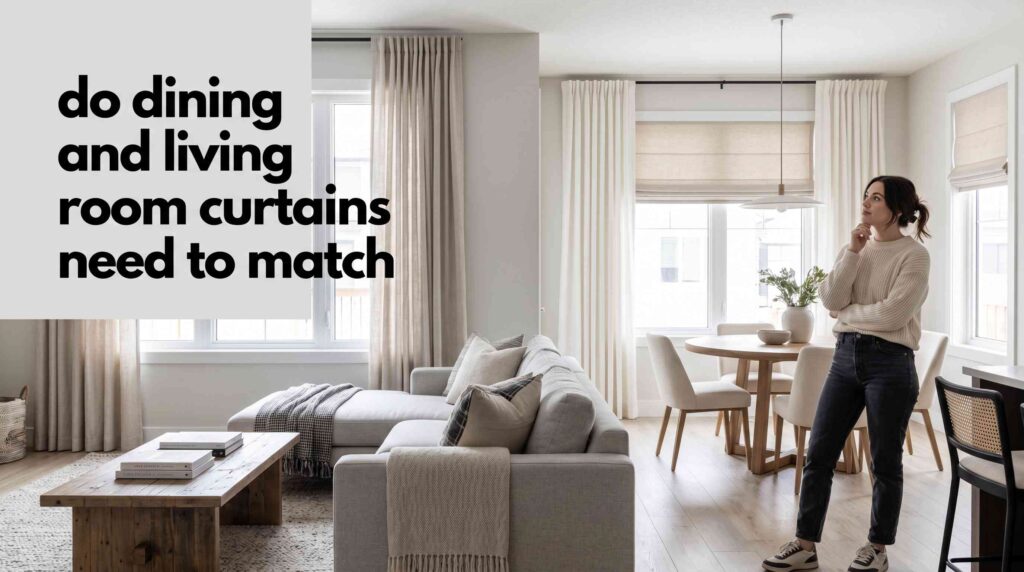
Choosing curtains often feels more confusing than it should, especially when you’re trying to make your home look “designed” rather than random or mismatched. In many modern U.S. homes with open floor plans, even a small design choice like curtain style can change how connected or divided your living and dining spaces feel. That’s why interior designers don’t treat this as a simple yes-or-no decision. In this guide, you’ll get a clear, experience-based answer to whether dining and living room curtains need to match, along with practical, real-world tips based on proven interior design principles so you can make confident decisions for your space.
Do Dining and Living Room Curtains Need to Match?
No, dining and living room curtains do not need to match exactly. In most modern homes—especially open floor plans—coordinating colours, fabrics, or styles creates a more balanced and visually appealing look than identical curtains. Matching can give a clean, uniform feel, but mixing complementary designs adds depth, contrast, and a more personalised interior style.
- Matching curtains = formal, uniform look
- Coordinating curtains = modern, flexible style
- Open floor plans = coordination works best
- Separate rooms = more design freedom
In today’s interior design trends, especially in U.S. homes with open-concept layouts, strict matching is no longer necessary. Instead, designers recommend focusing on coordination—using similar colour palettes, textures, or curtain styles to create visual harmony without making both spaces look identical. This approach helps define each area (living vs dining) while still maintaining a cohesive overall design.
Matching vs Coordinating Curtains

Matching curtains use the same fabric, colour, and style in both rooms, while coordinating curtains use a shared colour palette or design theme with slight variations. In modern homes—especially in the U.S.—coordinating curtains is preferred because it creates visual harmony without making spaces look repetitive.
What Does “Matching Curtains” Mean?
Matching curtains means using identical window treatments in both the dining room and living room. This includes the same fabric, colour, length, pattern, and hanging style.
This approach works best in formal or traditional interiors where symmetry and consistency are important. However, it can sometimes feel too rigid or outdated in modern layouts.
What Does “Coordinating Curtains” Mean?
Coordinating curtains means keeping a consistent design theme while allowing variation. Instead of identical curtains, you use the same colour family or complementary tones with different patterns or textures.
This creates a cohesive look while giving each room its own personality, which is especially useful in open-concept homes.
Which One Looks Better in Modern Homes?
In most modern U.S. homes, coordinating curtains looks better than matching ones. Open floor plans require visual flow without making spaces feel duplicated.
Coordinated curtains allow you to maintain balance while adding depth, contrast, and a more designer-style finish.
Real Examples (Practical Styling Ideas)
- Neutral living room curtains paired with subtle patterned dining room curtains
- Light-coloured curtains in one room balanced with slightly darker tones in the other
- Linen curtains in the living area combined with textured cotton in the dining space
These combinations keep both rooms connected while avoiding a flat, repetitive look.
Matching vs Coordinating Curtains (Quick Comparison)
| Feature | Matching Curtains | Coordinating Curtains |
|---|---|---|
| Style | Identical in both rooms | Similar but not identical |
| Look | Formal and uniform | Modern and visually balanced |
| Flexibility | Limited design options | High flexibility |
| Best For | Traditional or small spaces | Open floor plans and modern homes |
| Visual Impact | Clean but can feel repetitive | Dynamic, layered, and stylish |
Should Curtains Match in Open Floor Plans?
Curtains in open floor plans do not need to match exactly. Instead, coordinating colours, fabrics, or styles creates better visual harmony while allowing each area—like the living and dining space—to maintain its own identity.
Why Open Concept Homes Change the Rules
Open-concept layouts combine the living room and dining area into one continuous space. Because everything is visible at the same time, curtains should feel connected without looking overly identical.
Instead of strict matching, the focus shifts to visual harmony. This means using similar tones, textures, or design styles that tie both spaces together while still creating subtle contrast.
When Matching Curtains Works
Matching curtains can still be a smart choice in certain situations where simplicity matters.
- In minimalist interiors where a clean, uniform look is preferred
- In smaller open layouts where too much variation can feel cluttered
In these cases, identical curtains help create a calm, cohesive appearance without overwhelming the space.
When Coordinating Curtains Works Better
In most modern open floor plans, coordinating curtains is the more effective approach.
- Large spaces benefit from variation to avoid a flat, repetitive look.
- Different curtain styles can help visually separate living and dining zones.
- Mixing complementary colours or textures adds depth while maintaining unity
This approach keeps the design interesting while still feeling connected.
Pro Tip: Use Curtains for Visual Zoning
Curtains can act as a subtle way to define different areas without adding walls.
For example, you can use light, airy curtains in the living room and slightly richer tones in the dining area—both within the same colour palette. This creates separation without breaking the overall flow of the space.
7 Interior Designer Rules for Coordinating Curtains

To coordinate curtains like a professional, follow simple design rules: use a consistent colour palette, mix textures thoughtfully, balance patterns, and keep key elements like hardware and length uniform. These rules help create a cohesive look without making both rooms feel identical.
1. Stick to One Colour Palette
Choose 2–3 main colours and use them across both rooms. This keeps everything visually connected, even if the curtain styles are different.
2. Mix Textures, Not Chaos
Combine materials like linen, cotton, or velvet instead of using the same fabric everywhere. Texture adds depth without breaking harmony.
3. Balance Patterns Carefully
If one room has patterned curtains, keep the other more subtle or solid. This prevents visual overload and keeps the design clean.
4. Keep Curtain Hardware Consistent
Use the same curtain rods, rings, or finishes in both spaces. Small details like hardware help tie the rooms together.
5. Match Curtain Length Across Rooms
Curtains should have a similar length and hanging style (e.g., floor-length) to maintain a polished, uniform appearance.
6. Use Accent Colours Smartly
Pull accent colours from furniture, rugs, or décor and reflect them in your curtains. This creates a natural flow between spaces.
7. Consider Lighting Differences
Adjust curtain fabric and opacity based on natural light in each room. For example, use lighter fabrics in darker areas and heavier ones where there is more sunlight.
When Curtains SHOULD Match

Curtains should match when you want a formal, balanced, and uniform look—especially in traditional homes or symmetrical layouts. If you’re wondering, do dining and living room curtains need to match? The answer is yes in these specific cases where consistency enhances elegance and structure.
Formal Homes
In formal interiors, matching curtains create a clean and polished appearance. Using the same fabric, colour, and style in both the dining and living rooms reinforces a sense of order and sophistication.
This is ideal for homeowners who prefer a classic, refined look rather than a relaxed or mixed design.
Symmetrical Layouts
When your home design is based on symmetry—such as identical windows, balanced furniture placement, or mirrored layouts—matching curtains help maintain visual alignment.
In this case, using different curtain styles can disrupt the balance, while identical curtains keep the space cohesive and structured.
Luxury and Classic Interiors
In luxury or traditional homes, matching curtains often enhance the overall aesthetic. Rich fabrics like velvet or silk, paired with consistent colours and styles, create a high-end, timeless feel.
If you’re still asking, ‘Do dining and living room curtains need to match?’ in classic interiors the answer leans toward yes, because matching elements contribute to a more elegant and unified design.
When Curtains Should NOT Match

Curtains should not match when you want a more modern, dynamic, and personalised look. In many cases—especially eclectic, contemporary, or large homes—coordinating different curtain styles creates better visual interest and prevents the space from feeling flat or overly uniform.
Eclectic Design
In eclectic interiors, mixing styles is the whole point. Using identical curtains can limit creativity and make the space feel less expressive.
- Different patterns and fabrics add personality
- Mixing styles creates a layered, curated look.
- Coordinated (not matching) curtains keep balance without losing uniqueness.
Modern Interiors
Modern design focuses on contrast, simplicity, and clean variation rather than strict uniformity. Matching curtains can feel outdated in these spaces.
- Coordinated colours with different textures look more contemporary
- Variation adds depth without breaking harmony.
- Avoids a repetitive, “catalogue-style” appearance
Large Homes
In larger homes, matching curtains across multiple spaces can make the design feel repetitive and less engaging.
- Different curtain styles help define each area.
- Visual variation prevents the space from looking monotonous.
- Coordination keeps the flow while adding dimension
Best Curtain Colour Combinations for Living & Dining Rooms
The best curtain colour combinations for living and dining rooms include neutral pairs like white and beige or grey and cream; modern contrasts like black and white or navy and gold; and warm tones such as brown, rust, and olive. These combinations create balance, contrast, and visual flow while keeping both spaces connected without looking identical.
Neutral Combinations
Neutral tones are the safest and most versatile choice for most homes. They blend easily with different furniture styles and keep the space looking clean and balanced.
These are ideal if you want a cohesive look without making the space feel too strict or repetitive.
Modern Combinations
Modern interiors benefit from bold contrasts that still feel intentional and balanced.
- Black and white offer a sharp, timeless contrast
- Navy + gold adds a rich, elegant touch
Instead of exact matching, use one dominant colour in one room and a complementary tone in the other to create depth.
Warm & Cosy Styles
Warm tones help create a comfortable and inviting atmosphere.
- Earth tones like brown, rust, olive, and tan add natural warmth.
These shades work especially well in open layouts when paired with wood, linen, or soft textures.
What Works Best (How to Choose)
To get the best results, focus on coordination instead of exact matching:
- Choose one base colour and use lighter or darker variations
- Repeat one accent colour across both rooms
- Balance light and dark tones to avoid a flat look
- Match curtains with furniture, rugs, or wall colours
The best curtain colour combinations are those that coordinate rather than match exactly. Neutrals keep things simple, bold contrasts add style, and warm tones create comfort—choose based on the mood you want to create.
Common Curtain Mistakes to Avoid

The most common curtain mistakes include over-matching, clashing patterns, ignoring lighting, choosing the wrong curtain length, and mixing too many colours. Avoiding these errors helps create a balanced, modern look and improves overall curtain coordination between living and dining rooms.
Over-Matching (Boring Look)
Using identical curtains in both rooms can make the space feel flat and outdated.
- Creates a repetitive, “one-style” look
- Reduces visual interest
- Works only in formal settings
Instead, aim for coordinating curtains to add depth while keeping harmony.
Clashing Patterns
Mixing patterns without a clear plan can overwhelm the space.
- Too many bold prints create visual chaos.
- Patterns without a shared colour theme look disconnected
Stick to one dominant pattern and balance it with solid or subtle designs for better curtain styling in open floor plans.
Ignoring Lighting
Curtains should match the lighting needs of each room, not just the design.
- Heavy fabrics in dark rooms block natural light.
- Sheer curtains in bright areas may lack privacy.
Choose fabrics based on light exposure to improve both function and window treatment design.
Wrong Curtain Length
Incorrect curtain length can ruin the overall look, even if colours are perfect.
- Too-short curtains look unfinished
- Uneven lengths between rooms break visual flow.
Floor-length curtains usually work best for a clean and polished appearance.
Mixing Too Many Colours
Using too many colours can make the design feel unorganised.
- Lack of a clear palette creates confusion
- Too many contrasts reduce harmony.
Limit your design to 2–3 main colours for better curtain colour coordination across rooms.
Avoiding these mistakes ensures your curtains look intentional, stylish, and well-coordinated—especially in modern homes where balance matters more than exact matching.
How to Decide (Step-by-Step Guide)
To decide whether your dining and living room curtains should match, focus on your home layout, interior style, and how both spaces visually connect. In modern design, especially in U.S. homes, coordination is often better than exact matching for a balanced and flexible look.
Step 1: If Your Home is Open-Concept → Coordinate Curtains
If your living and dining areas are connected in one open space, avoid identical curtains in both rooms.
- Use the same colour family for visual flow
- Add variation through texture or subtle patterns
- Keep the overall style consistent but not identical.
This helps both spaces feel connected while still giving each area its own identity.
Step 2: If Rooms Are Separate → You Have Full Flexibility
When the dining and living rooms are separated by walls or clear divisions, you have more design freedom.
- You can match curtains for a uniform look.
- Or use different styles for each room
- Focus on each room’s individual theme and purpose
This setup allows either matching or coordination without affecting visual harmony.
Step 3: If You Want a Modern Look → Go for Coordination
Modern interiors prioritise simplicity, contrast, and clean design over strict uniformity.
- Avoid exact curtain matching
- Use complementary colours instead
- Mix textures like linen, cotton, or sheer fabrics
This creates a stylish, updated, and designer-inspired appearance.
Step 4: If You Want a Classic Look → Matching Works Better
Traditional or formal interiors often look best with consistency and symmetry.
- Matching curtains create a polished, elegant feel.
- Use rich fabrics like velvet, silk, or heavy linen
- Keep colours and patterns consistent across rooms
This approach enhances structure and timeless appeal.
Final Tip
The key rule is simple:
- Open spaces = coordinated curtains
- Separate rooms = match or mix freely
- Modern style = variation with balance
- Classic style = consistency and symmetry
This decision framework helps you choose the right curtain strategy while maintaining a cohesive and visually appealing home design.
Real-Life Styling Examples
Real-life curtain styling depends on home size, layout, and design goals. In small apartments, matching curtains can create simplicity. In large open homes, coordination works better for balance. In luxury homes, a mix of matching and coordinating creates a refined, high-end look.
Small Apartment (Matching Works)
In small apartments, space is limited, so keeping curtains the same in both rooms often works best.
- Matching curtains create a clean and unified look.
- Helps avoid visual clutter in tight spaces
- Makes the interior feel more organised and spacious
This approach is ideal when simplicity and consistency are the main design goals.
Large Open Home (Coordination Works Better)
In large open-concept homes, living and dining areas are visually connected, so matching everything can feel repetitive.
- Coordinating curtains adds depth and dimension.
- Different textures or tones help define each space.
- Maintains flow without making the design flat
This is the most recommended approach for modern U.S. homes with open layouts.
Luxury Home (Balanced Matching)
In luxury interiors, the goal is elegance with subtle variation. Strict matching is not always necessary, but full contrast is also avoided.
- Use a coordinated colour palette across rooms
- Mix premium fabrics like velvet, silk, or linen
- Keep design elements balanced and intentional
This creates a sophisticated, high-end look that feels both connected and stylish.
Conclusion
Deciding whether your dining and living room curtains should match depends on your home layout, interior style, and personal design preference. In most modern U.S. homes, especially open floor plans, coordination works better than exact matching because it creates balance, depth, and a more flexible design. However, matching curtains can still work well in small apartments or formal and classic interiors where consistency and symmetry are important. Ultimately, the best approach to making dining and living room curtains match is not a strict rule but a design choice based on how you want your spaces to feel and connect visually.
1. Do all curtains in a home need to match?
No, all curtains in a house do not need to be the same. Using different but coordinated curtains in each room creates more visual interest and allows each space to have its own style while still maintaining overall harmony.
2. Can you mix curtain patterns in different rooms?
Yes, you can mix curtain patterns as long as they share a common colour palette or design theme. Keeping one unifying element helps prevent the space from looking cluttered or visually disconnected.
3. What colour curtains go with everything?
Neutral colours like white, beige, grey, and cream go with almost everything. These shades are versatile and work well with most interior styles, making them a safe choice for both living and dining rooms.
4. Should curtain length be the same in every room?
It is recommended to keep curtain length consistent, especially in connected spaces. Matching lengths creates a balanced and clean look, while uneven lengths can disrupt visual flow between rooms.
5. Is it okay to mix curtain fabrics?
Yes, mixing curtain fabrics is fine if done carefully. Combining textures like linen, cotton, or sheer fabrics adds depth and style, as long as the colours and overall theme remain coordinated.

I’m Attaur Rahman, founder of DecorReviewHub. I test and review curtains and home decor products to help homeowners make the right choice for every room. All my guides are based on real use and honest comparisons.