
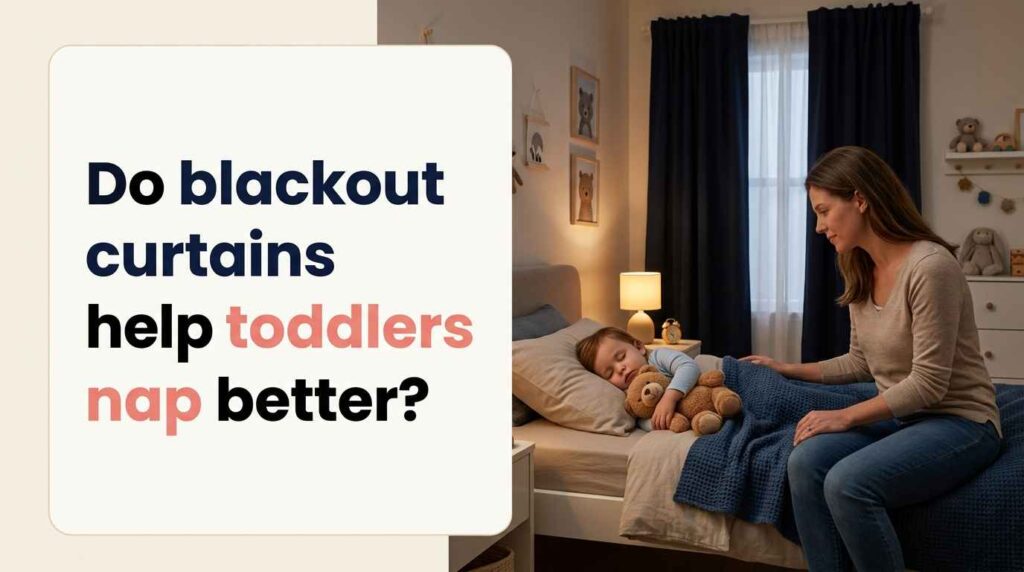
It’s 1 p.m., your toddler is clearly tired, but the room is bright, and naptime turns into a battle. Sound familiar? Many parents wonder the same thing: do blackout curtains help toddlers nap better? The short answer is yes—darkness helps the brain relax and supports natural sleep hormones, making naps easier to start and stay in. But curtains alone aren’t the whole story. Nap quality also depends on routine, room temperature, and your toddler’s age. In this article, we’ll break down exactly how darkness affects toddler sleep, whether blackout curtains actually help naps last longer, how they compare to room-darkening curtains, and what else you can do to create the perfect nap-friendly room—even if a full blackout setup isn’t possible yet.
Why Darkness Matters for Toddler Naps
Darkness helps a toddler’s brain make sleep hormones and know it’s time to rest. Light does the opposite—it keeps the brain alert. That’s why a dark room often makes naps easier.
A toddler’s body runs on an inner clock called the circadian rhythm. This clock uses light and darkness to decide when to feel sleepy and when to feel awake. Bright light tells the brain, “Stay awake.” Darkness tells the brain, “It’s time to sleep.”
Light, Melatonin, and Sleep
Light blocks a natural sleep hormone called melatonin. Less melatonin makes it harder for a toddler to fall asleep or stay asleep. Darkness helps the body make more melatonin, which supports deeper, calmer sleep.
Circadian Rhythm and Naps
The circadian rhythm is still developing in toddlers. It controls their sleep-wake cycle, including naps. When a room stays too bright, this inner clock gets confused, and naps may feel unnecessary to the brain, even if the toddler is exhausted.
How Sunlight Affects Naps
Natural light, especially strong afternoon sun, can:
- Delay falling asleep
- Cause early wake-ups
- Shorten nap length
Sunlight is excellent for daytime alertness, but during nap time, too much brightness can work against a toddler’s natural sleep signals.
In short: darkness supports the body’s sleep biology, while light works against it—especially during daytime naps.
Do Blackout Curtains Actually Help Toddlers Nap Better?
Yes, in most cases. Blackout curtains block outside light, which helps the brain relax and make melatonin. This often makes it easier for a toddler to fall asleep and stay asleep during naps. But they are not a magic fix—they work best along with a good nap routine.
What Sleep Experts Say
Many pediatric sleep experts agree that a dark room supports better daytime sleep. Darkness helps lower brain activity and supports the body’s natural sleep-wake cycle. However, experts are careful to say blackout curtains are a helpful tool, not a guaranteed solution. Every toddler is different, and sleep also depends on age, tiredness level, and daily routine.
Do They Help with Early Morning Waking?
Yes, often. Morning sunlight is one of the biggest reasons toddlers wake up too early. Blackout curtains block this early light, so the brain doesn’t get the “wake up” signal too soon. This can lead to a slightly later, more rested start to the day—and sometimes a smoother nap schedule later on.
Are They Worth It for Naps?
For most families, yes. If a toddler’s room gets bright afternoon sunlight, blackout curtains can make naps calmer and less disrupted by light. They won’t resolve every sleep issue, but they remove one major distraction — brightness — from the sleep environment.
In short: blackout curtains help control light, which supports better naps, but they work best as part of a full sleep-friendly routine.
Do Blackout Curtains Help Toddlers Nap Longer?

Not always. Blackout curtains can reduce light-related wake-ups, which may help a nap last a little longer. But darkness alone doesn’t guarantee a longer nap duration—many other things affect how long a toddler sleeps.
What Else Affects Nap Duration
Nap length depends on more than just light. Other big factors include:
- Age and sleep needs
- How tired the toddler is before the nap
- Nap timing (too early or too late)
- Noise and room temperature
- A consistent nap routine
Even in a perfectly dark room, a toddler may still take a short nap if one of these other factors is off.
Short Naps vs. Long Naps — Is Darkness the Only Factor?
No. Darkness helps remove one disruption—light. But short naps often happen because of overtiredness, an inconsistent schedule, or a nap that starts too late in the day. A dark room helps a toddler stay asleep once they’re settled, but it can’t fix timing or routine problems on its own.
Correct framing: Blackout curtains don’t promise longer naps. What they do is reduce light-related disruptions, which can support a smoother, less interrupted nap. Nap length still depends on the toddler’s age, schedule, and overall sleep routine.
In short: darkness helps naps feel calmer and less broken up—but it works together with routine and timing, not instead of them.
Common Toddler Nap Problems Linked to Light
Many nap problems happen because a room is too bright. Light can stop a toddler from falling asleep, cause early wake-ups, or lead to short, broken naps.
Toddler Won’t Nap When It’s Bright Outside
Bright light tells the brain to stay awake, so a toddler may fight sleep even when tired. This is common during afternoon naps when sunlight is strongest. A sunny room makes it harder for the brain to slow down and release melatonin, the hormone needed for sleep.
Toddler Wakes Up Early Because of Sunlight
Morning light is a major cause of early wake-ups. As soon as natural light enters the room, the brain senses it’s daytime and lowers melatonin. This can cut naps short or end them before the toddler has had enough rest.
Toddler Takes Short or Cat Naps in a Bright Room
A bright room can cause light sleep disruption. Instead of deep, restful sleep, a toddler may drift in and out, waking after just 20–30 minutes. This often happens because light keeps interrupting the natural sleep cycle.
In short: most light-related nap problems come down to one thing—brightness disturbing the brain’s natural sleep signals.
How Dark Should a Toddler’s Room Be for Naps?
A toddler’s room should be dark enough that you can barely see your hand in front of your face. This level of darkness supports deeper, longer naps.
Signs Your Toddler’s Room Isn’t Dark Enough
Some clear signs the room needs more light-blocking:
- You can clearly see shapes or furniture with curtains closed.
- Sunlight glows around curtain edges.
- Toddler wakes at the same time sunlight hits their bed.
- Naps feel short or restless on sunny days.
If any of these sound familiar, the room likely needs better light control.
Morning Sunlight vs. Afternoon Sunlight in the Nap Room
Morning sunlight is usually the biggest cause of early wake-ups, especially in east-facing rooms. Afternoon sunlight tends to affect nap start time, making it harder to fall asleep in the first place.
Knowing which direction your toddler’s window faces can help you understand when light is likely to disrupt sleep the most—and where extra darkness is needed.
The darker the room, the fewer light-related interruptions—and window direction plays a big role in when those interruptions happen.
Blackout Curtains vs. Room-Darkening Curtains — How Do They Compare?

Blackout curtains block almost all light, while room-darkening curtains only reduce light. For toddler naps, blackout curtains usually work better because naps need real darkness, not just dimness.
People often mix up these two, but they are not the same. Knowing the difference helps you pick the best curtains for toddler naps.
Which One Blocks More Light
Blackout curtains are made with a thick, tightly woven fabric or a special lining. This design blocks around 95–100% of outside light. They are built specifically to create a very dark room.
Room-darkening curtains use lighter fabric. They cut down brightness, but sunlight can still glow through the material. They dim a room—they don’t fully darken it.
So when comparing blackout vs. room-darkening curtains for toddlers, blackout curtains are the stronger light-blockers by far.
Which Is Better for Toddler Daytime Naps
For daytime naps, when the sun is strongest, blackout curtains are usually the better choice. Since toddlers are more sensitive to light exposure, even a dim glow from room-darkening curtains may be enough to disturb sleep.
Room-darkening curtains for a toddler’s bedroom may still be good enough if the room doesn’t get direct sun or if the toddler isn’t very light-sensitive. In that case, they can be a lighter, more budget-friendly option.
But if your goal is the best window coverings for toddler sleep, especially for bright rooms or strong afternoon sun, blackout curtains are the safer, more reliable pick. If you’re shopping for a nursery specifically, our tested picks in gray blackout curtains for nursery and blush pink blackout curtains for nursery show how color and light-blocking performance can work together.
In short: room-darkening curtains soften light, but blackout curtains block it—and for toddler naps, blocking usually wins.
Quick Comparison
| Feature | Blackout Curtains | Room-Darkening Curtains |
|---|---|---|
| Light blocked | 95–100% | 50–80% |
| Fabric type | Thick, dense, often lined | Lighter, standard weave |
| Best for | Bright rooms, strong sun, light-sensitive toddlers | Rooms with low/indirect light |
| Darkness level | Near-total darkness | Dim, not fully dark |
| Price | Usually higher | Usually lower |
| Best time to use | Daytime naps, early mornings | General privacy, mild light control |
Why Blackout Curtains Might Still Let Light In
Even good blackout curtains can let light in if they’re not installed correctly. Small gaps around the edges are usually the real problem, not the fabric itself.
Common Gaps Where Light Leaks In
Light leakage almost always happens in the same spots:
- Gaps on the sides, between the curtain and the wall
- Space above the curtain rod
- A gap under the curtain if it’s too short
- Thin curtain panels that don’t fully cover the window
- Light sneaking through where two panels meet in the middle
Even high-quality blackout fabric can’t block light if the curtain doesn’t fully cover the window frame. This is why some parents feel blackout curtains “aren’t working”, when really, it’s a coverage problem, not a fabric problem. Getting the length right matters more than most parents expect — our guide to the best curtain length for kids’ rooms walks through how to measure for full coverage.
How to Get Better Coverage
A few simple fixes make a big difference:
- Mount the rod wider than the window, so panels extend past the frame.
- Mount the rod higher, above the window, to block the top gap.
- Choose panels wide enough to overlap slightly in the middle
- Make sure the curtain length reaches the floor or windowsill, with no gap underneath.
Getting the curtain rod placement right often solves more light leakage issues than buying a thicker curtain. If your existing panels are on the opposite problem—dragging on the floor or pooling near a crawling toddler—see what to do if curtains are too long for kids’ rooms for safe, easy fixes.
In short: most light leakage isn’t about curtain quality—it’s about how the curtains are hung and how much of the window they actually cover.
How to Make a Toddler’s Room Darker (With or Without Curtains)
Curtains aren’t the only option. Blackout shades, blinds, curtain liners, or layering different window treatments can all help make a room darker for naps. If curtains aren’t an option in your space at all, our detailed roundup of how to make a kids’ room darker without blackout curtains covers nine alternatives in more depth.
Blackout Shades and Blinds as Alternatives
If you want to darken a toddler’s room without curtains, blackout shades and blackout blinds are the best curtain-free option. They fit closely inside the window frame, which can reduce side gaps better than curtains alone. This makes them a strong choice for parents who want serious light control without hanging any curtain panels at all. Cellular shades and roller shades are two of the most common curtain-free choices for toddler rooms.
Blackout Curtain Liners
If you already like your current curtains but they don’t block enough light, a blackout curtain liner can help. This is an extra fabric layer attached behind your existing curtains. It adds light-blocking power without needing to replace your whole curtain set.
Layering Curtains with Shades for Full Darkness
For the darkest possible room, many parents layer window treatments—for example, blackout shades mounted inside the window frame, plus blackout curtains hung outside. This combination approach covers gaps that a single treatment might miss, especially in bright rooms with strong afternoon sun.
Whether you want to keep curtains, skip them completely, or combine both, there’s a darkening option that fits—shades and blinds work great without curtains, while liners and layering boost darkness for those who want to keep them.
Beyond Darkness — What Else Affects Toddler Nap Quality
Darkness helps, but it’s not the only thing that matters. Room temperature, noise, and a steady nap routine all play a big role in how well a toddler sleeps during the day. Even the best blackout curtains for toddlers can’t fix a bad routine or a noisy room.
Room Temperature and Noise
A room that’s too hot or too cold can disturb daytime sleep, even in total darkness. Most sleep experts suggest keeping a toddler’s room cool and comfortable, not stuffy or cold. If temperature swings are a recurring problem, our guide to thermal curtains for kids’ rooms explains how the right fabric can help insulate the room alongside blocking light. Noise matters too—sudden sounds like doors, traffic, or siblings playing can wake a toddler mid-nap. A calm, quiet space works alongside darkness, not instead of it.
Nap Routine and Wind-Down Time
A predictable nap routine helps a toddler’s body know it’s time to rest. A short wind-down period—like dimming lights, reading a book, or quiet play—signals the brain to slow down before nap time. Skipping this step, even in a fully dark room, can make it harder for a toddler to settle.
Consistent Nap Schedule by Age
A consistent nap schedule supports the body’s natural sleep-wake cycle. Napping at the same time each day trains the brain to expect rest, making it easier to fall asleep quickly—with or without perfect darkness.
In short: darkness is powerful, but temperature, noise, and routine work together with it to support real, restful daytime sleep.
Does This Change By Age? (1-, 2-, and 3-Year-Olds)
Yes, a little. Younger toddlers usually need more sleep and are more sensitive to light, while older toddlers may adjust more easily. But blackout curtains for toddlers help across all these ages.
- 1-year-olds: Need longer, more frequent naps. Very sensitive to light—even small brightness can cause early waking.
- 2-year-olds: Nap once a day, usually 1–3 hours. Still light-sensitive, especially during afternoon sun.
- 3-year-olds: Naps may get shorter or less regular. Darkness still helps, but routine plays a bigger role at this age.
Note: These age differences don’t need separate articles. They belong together here, since the core idea—darkness supports better daytime sleep—stays the same across all toddler ages.
Are Blackout Curtains Safe for a Toddler’s Room?

Yes, blackout curtains are safe for a toddler’s room when chosen and installed correctly. The main safety concern isn’t the fabric—it’s cords and loose hardware within a toddler’s reach.
For a full walkthrough of what to check before hanging anything in a toddler’s space, see Are curtains safe for toddler rooms?
If your child is still in the nursery stage, are curtains safe for baby rooms? This covers the same ground for younger ages.
Toddlers are curious and love to pull, tug, and climb. This makes window covering safety an important part of choosing curtains, not just an afterthought.
Cordless and Child-Safe Window Treatments
Always choose cordless window coverings for a toddler’s room. Long cords are a known strangulation risk for young children, especially those under age five. Look for:
- Cordless curtain designs
- Wand-operated or motorized options
- Curtains with no hanging tiebacks within reach
Many safety organizations recommend child-safe window treatments as a must-have, not just a nice extra, in any room where toddlers sleep or play unsupervised.
Proper Installation Tips
Even safe curtains can become risky if installed poorly. A few simple tips help:
- Mount the curtain rod securely to the wall, not just resting on brackets.
- Keep furniture (like cribs or beds) away from curtain cords or fabric.
- Avoid curtains that pool loosely on the floor near a crawling toddler.
- Check hardware regularly to make sure nothing has come loose.
In short: blackout curtains are safe for toddlers when you choose cordless designs and install them properly—safety comes down to smart choices, not the curtains themselves.
Conclusion
So, do blackout curtains help toddlers nap better? In most cases, yes—they block disruptive light, support natural melatonin production, and create a calmer space for daytime sleep. But they aren’t a magic fix on their own. Real, consistent naps come from combining darkness with a steady nap routine, a comfortable room temperature, and age-appropriate sleep timing. If your toddler’s room gets strong morning or afternoon sun, blackout curtains are one of the simplest, safest upgrades you can make—just remember to install them properly, choose cordless designs, and pair them with good sleep habits for the best results.
FAQs
1. Do blackout curtains help toddlers sleep longer?
Not always. They reduce light-related wake-ups, which can help sleep last longer, but nap length also depends on age, routine, and tiredness.
2. Should toddlers nap in a completely dark room?
It helps, but it’s not required. A very dark room supports better melatonin production, though slight dimness is fine for many toddlers.
3. Can sunlight disrupt a toddler’s nap?
Yes. Sunlight can delay sleep, cause early wake-ups, and shorten naps by lowering melatonin and signaling the brain to stay awake.
4. Are room-darkening curtains enough for toddlers?
Sometimes. They work fine in low-light rooms, but bright or sunny rooms usually need full blackout curtains for real results.
5. Can blackout curtains help with early morning waking?
Yes. They block early sunlight, which is one of the most common reasons toddlers wake up too early in the morning.

I’m Attaur Rahman, founder of DecorReviewHub. I test and review curtains and home decor products to help homeowners make the right choice for every room. All my guides are based on real use and honest comparisons.