
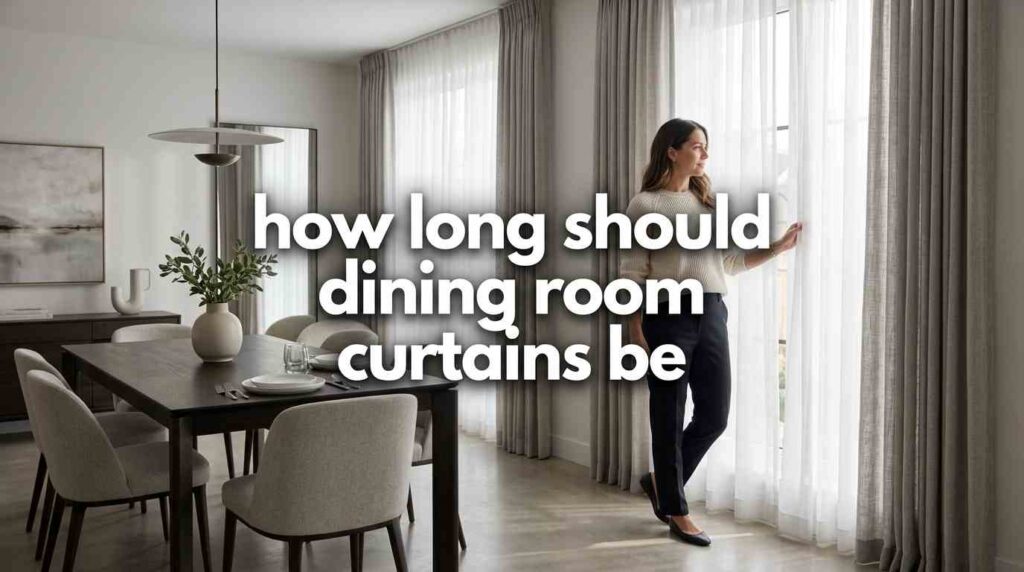
Dining room curtain length plays a key role in defining both the style and balance of the space. In most interiors, the ideal curtains usually fall into three main categories: floor kiss (just touching the floor), slight break (1–2 cm resting on the floor), and puddled length (a more decorative, luxury-focused style). The right choice is not fixed—it depends on your dining room style, ceiling height, and furniture proportion. When selected correctly, it improves overall visual harmony and enhances how spacious and elegant the room feels. Understanding how long dining room curtains should be is essential because it helps you achieve the right combination of functionality, aesthetics, and interior balance without making the space look either unfinished or overly heavy.
What Is the Ideal Curtain Length for a Dining Room?
The ideal curtain length for a dining room is floor-length—where curtains either just touch the floor (floor kiss) or fall slightly 1–2 cm onto it (slight break). This creates a clean, elegant look while maintaining proper proportion between the window, walls, and furniture.
In most dining rooms, curtain length is not just about covering the window—it’s about achieving the right visual balance and height illusion. Floor-length curtains help elongate the room, making ceilings appear taller and the space feel more refined.
Understanding Curtain Drop Height
Curtain drop height refers to the distance from the curtain rod to the floor. This is the most important measurement when deciding curtain length.
- Standard drop: rod to floor (exact or slightly extended)
- For a modern look: curtains should just touch the floor.
- For a softer look: allow a slight break (1–2 cm of fabric on the floor)
This ensures the curtains don’t look too short or awkwardly long.
Why Floor Alignment Matters
Proper floor alignment is what separates a polished dining room from one that looks unfinished.
- Curtains ending above the floor can make the room look smaller and less elegant.
- Curtains that align with the floor create a seamless vertical line.
- Slightly longer curtains add softness without looking messy.
Correct alignment improves the overall window treatment proportion and enhances the dining room’s visual appeal.
How to Measure Curtain Length Correctly
To get the right dining room curtain size, follow a simple measurement method:
- Install or decide on the curtain rod position (usually higher than the window frame)
- Measure from the rod down to the floor
- Add or subtract length based on your style:
- 0 cm → floor kiss
- +1–2 cm → slight break
- +5–10 cm → puddled style
This rod-to-floor measurement ensures accurate curtain drop height and keeps the overall design balanced.
The perfect curtain length is not random—it depends on correct measurement, floor alignment, and proportion. When done right, it enhances both the functionality and the elegance of your dining room.
Types of Curtain Lengths for Dining Rooms

Dining room curtains are typically styled in three main lengths: floor-length, slight break, and puddled. Each option affects the room’s formality, visual balance, and overall dining atmosphere.
3.1 Floor-Length Curtains (Most Recommended)
Floor-length curtains fall exactly to the floor, creating a clean and structured look. This is the most widely recommended option because it maintains perfect window treatment proportion and works in almost every dining setup.
- Creates a sharp, modern appearance
- Enhances vertical lines, making ceilings look taller
- Ideal for formal dining rooms and minimalist interiors
This length keeps the curtain drop height precise, avoiding both excess fabric and awkward gaps.
3.2 Slight Break Curtains (1–2 cm on Floor)
Slight break curtains extend just 1–2 cm onto the floor, adding a soft and relaxed finish. This style introduces subtle movement while still maintaining a neat overall appearance.
- Adds a gentle, elegant touch without looking heavy
- Works well in semi-formal or family dining spaces
- Balances comfort and style in everyday use
This option slightly increases the curtain drop, giving a more natural fabric flow compared to strict floor alignment.
3.3 Puddled Curtains (Luxury Styling)
Puddled curtains extend several centimetres onto the floor, creating a gathered or “pooled” effect. This style is more decorative and is used to highlight luxury and richness in the space.
- Best suited for high-end or formal dining rooms
- Adds depth, texture, and visual drama
- Common in traditional or classic interior styles
However, this longer curtain drop height focuses more on aesthetics than practicality, making it ideal for low-traffic, decorative dining areas.
Key Insight
Choosing the right curtain length depends on how you want your dining room to feel:
- Clean and modern → floor-length
- Soft and balanced → slight break
- Rich and decorative → puddled
Each type directly impacts the room’s scale, proportion, and dining experience, not just the window coverage.
Should Dining Room Curtains Touch the Floor?
Yes—dining room curtains should usually touch the floor, but the exact finish depends on your design style and how the space is used. Floor-touch curtains create a clean, continuous vertical line that improves dining room aesthetics, while slightly longer styles add softness or luxury depending on the look you want.
In most modern interiors, curtains are designed to either just touch the floor (floor kiss) or fall slightly onto it. Curtains that hang above the floor often break the visual flow and make the room feel less refined.
(Modern vs Traditional)
- Modern dining rooms:
Floor-touch curtains are preferred. They create a sharp, minimal look with precise window treatment proportion and no excess fabric. - Traditional or classic dining rooms:
A light curtain pooling effect (a few centimetres of fabric on the floor) is acceptable. This adds depth and a more decorative, formal feel.
The decision is not random—it follows the overall interior style and the level of formality in the dining space.
Hygiene vs. Aesthetics Balance
While floor-length curtains look better, practical use matters in a dining area:
- Floor-touch curtains (no pooling) → best balance of cleanliness and elegance
- Slight break (1–2 cm) → soft look with minimal maintenance
- Heavy pooling → can collect dust and is harder to maintain in active dining spaces
Because dining rooms are used for eating and gathering, excessive fabric on the floor can reduce hygiene and usability.
Floor Touch vs Curtain Pooling Effect
Understanding this difference is key:
- Floor-touch curtains:
Clean, structured, and ideal for everyday dining rooms - Curtain pooling effect:
Decorative, luxurious, but better suited for low-traffic or formal dining areas
Both styles serve different purposes, but only one should match your room’s function.
Key Takeaway
For most dining rooms, curtains should touch the floor without heavy pooling. This approach maintains proper curtain drop height, keeps the space clean, and enhances overall visual balance.
If your goal is practicality + style, → go with floor-touch.
If your goal is luxury + decoration, consider controlled pooling.
How to Measure Curtain Length Correctly (Step-by-Step Guide)

To measure curtain length correctly, measure from the curtain rod down to the floor, then adjust the final length based on your chosen style (floor touch, slight break, or puddled). This method ensures accurate curtain drop calculation and keeps the overall window treatment proportion balanced.
Getting this right is critical—small measurement errors can make curtains look too short, uneven, or visually off in a dining room.
Step 1: Decide the curtain rod placement height.
Curtain rod placement directly affects the final curtain drop and room perception.
- Install the rod 10–20 cm above the window frame or closer to the ceiling.
- Higher rod placement creates a ceiling height illusion, making the dining room feel taller and more spacious.
- Keep the rod level and centred for balanced alignment
This step defines the starting point of your curtain measurement.
Step 2: Measure from Rod to Floor
Measure the full distance from the bottom of the curtain rod to the floor.
This is your base curtain drop height.
- Use a steel tape for accuracy
- Measure at multiple points (left, centre, right) to account for uneven floors
- Take the longest measurement to avoid curtains appearing too short.
This ensures your curtains will align properly with the floor.
Step 3: Add Length Based on Curtain Style
Once you have the base measurement, adjust it depending on the finish you want:
- Floor-touch (floor kiss):
Use the exact rod-to-floor measurement. - Slight break (1–2 cm on floor):
Add 1–2 cm for a softer, more relaxed look. - Puddled curtains (luxury style):
Add 5–10 cm or more for a visible curtain pooling effect.
This step fine-tunes the final appearance and controls how the fabric interacts with the floor.
Step 4: Adjust for Visual Proportion and Room Balance
Measurement is not just technical—it also affects visual design.
- Higher curtains elongate walls and improve dining room aesthetics.
- A proper curtain drop creates a clean vertical line from ceiling to floor
- Balanced length ensures harmony between windows, furniture, and wall space.
Avoid stopping curtains above the floor, as it breaks the visual flow and reduces elegance.
Key Takeaway
Accurate curtain measurement follows a simple formula:
rod height → floor measurement → style adjustment
Curtain Rod Height vs Curtain Length Relationship
Curtain rod height directly determines how long your curtains should be—and how your dining room feels. A higher rod creates a taller, more open look, while a low rod shortens the visual height and can make the space feel cramped. Getting this relationship right is essential for proper interior proportion balance.
High Rod = Taller Room Illusion
Mounting the curtain rod higher—closer to the ceiling—extends the curtain drop and visually lifts the room.
- Creates a strong ceiling illusion design by drawing the eye upward
- Makes windows appear larger than they actually are
- Enhances vertical lines for a clean, elegant dining setup
This approach works especially well in small or standard-height dining rooms where maximising perceived height is important.
Low Rod = Cramped Appearance
Placing the rod just above the window frame limits curtain length and compresses the visual space.
- Breaks the vertical flow between ceiling and floor
- Reduces the perceived window height ratio
- Makes the room feel shorter and less refined
Shorter curtain drops caused by low rod placement often lead to an unbalanced and outdated look.
Optimal Curtain Rod Positioning Rule
For the best visual result, position the curtain rod 10–20 cm above the window frame or as close to the ceiling as possible.
- Extend the rod wider than the window to improve width perception
- Pair high rod placement with floor-length curtains for a full vertical line
- Maintain symmetry to support overall interior proportion balance
This positioning ensures that curtain length and rod height work together—not against each other.
Key Insight
Curtain rod height is not just a technical detail—it controls how the entire dining room is perceived.
Higher rods + longer curtains = a taller, more elegant space.
Lower rods + shorter curtains = compressed, less balanced space
Dining Room Style-Based Curtain Length Guide
| Dining Room Style | Best Curtain Length | Why It Works |
|---|---|---|
| Modern Minimalist | Floor Kiss | Creates clean vertical lines and a simple, modern look |
| Luxury Dining Room | Light Puddle | Adds depth, softness, and a rich decorative feel |
| Casual Family Dining | Slight Break | Balances comfort with a soft, relaxed aesthetic |
| Small Dining Space | Floor Kiss | Enhances ceiling illusion and makes the room feel larger |
This table works because curtain length is not a one-size-fits-all decision. Each dining room style requires a different curtain-drop approach to maintain proper interior proportion balance and visual harmony.
- Modern minimalist spaces rely on clean geometry, so a floor-kiss length keeps the design sharp and uncluttered.
- Luxury dining rooms use light puddling to create a more decorative and premium curtain pooling effect.
- Casual family dining areas need flexibility, so a slight break adds softness without losing practicality.
- Small dining rooms benefit from floor-kissing curtains because they improve the ceiling illusion design and make the space feel more open.
Common Mistakes When Choosing Curtain Length

Most curtain length problems in dining rooms happen because people ignore proportion, measurement logic, and room style. Even small errors can break the overall interior balance and make the space look less refined.
Curtains Too Short (Cheap Look Signal)
One of the biggest design mistakes is choosing curtains that end above the floor.
- Breaks the natural vertical flow of the room
- Makes windows look smaller than they actually are
- Creates an unfinished and low-quality appearance
This is considered a major visual proportion error because it disrupts the full-length window treatment effect.
Excessive Puddling in Dining Areas
While light puddling can look luxurious, too much fabric on the floor is a mistake in dining rooms.
- Collects dust and becomes hard to maintain
- Makes movement and cleaning difficult
- Overpowers the overall dining space design
This leads to interior imbalance, especially in active dining areas where practicality matters.
Wrong Rod Height Placement
Incorrect curtain rod positioning directly affects curtain length and room perception.
- Low rods reduce the ceiling height illusion
- Poor placement disrupts window height ratio
- Creates uneven or compressed visual structure
This is one of the most common design mistakes that affects the entire window treatment.
Ignoring Furniture Proportion
Curtains should always work with dining furniture, not against it.
- The wrong length can clash with table height and chair lines
- Breaks spatial harmony between walls and furniture
- Reduces overall dining room aesthetics
Ignoring this creates a clear interior imbalance where elements feel disconnected.
Key Insight
Curtain length mistakes are not just styling issues—they directly affect how the entire dining room is perceived.
When design mistakes, interior imbalance, and visual proportion errors are avoided, the result is a cleaner, more elegant, and professionally styled space.
Best Curtain Styles That Work with Ideal Lengths
The right curtain style enhances the impact of the ideal curtain length by improving flow, texture, and overall dining room aesthetics. When fabric choice and curtain drop are aligned, the result is a balanced and visually complete window treatment.
Sheer Curtains (Light Flow Dining Ambiance)
Sheer curtains work best with floor-length or slight-break styles, where light movement and softness are important.
- Lets sunlight enter gently while still keeping your space private and protected.
- Creates a soft, airy dining room ambiance
- Enhances openness without making the space visually heavy
Sheer fabric supports a light window treatment proportion, making it ideal for modern and minimal dining spaces.
Linen Curtains (Natural Modern Look)
Linen curtains pair perfectly with floor-kiss lengths for a clean, natural, and modern appearance.
- Offers a relaxed but structured texture
- Complements neutral and earthy interior designs
- Maintains balance between casual comfort and refined style
Linen works well in everyday dining setups where simplicity and interior proportion balance are important.
Velvet Curtains (Luxury Dining Rooms)
Velvet curtains are best suited for slight break or light puddle lengths where richness and depth are desired.
- Adds weight, depth, and a premium finish
- Enhances formal and luxury dining room settings
- Works best with a controlled curtain pooling effect for elegance
This fabric strengthens visual impact and is ideal for high-end dining interiors.
Key Insight
Curtain style and length must work together to create a cohesive design.
- Sheer → light and airy flow
- Linen → natural and balanced structure
- Velvet → rich and luxurious depth
When matched correctly, they improve both functionality and the overall dining room aesthetic.
Dining Room Lighting + Curtain Length Impact

Curtain length and lighting work together to define how a dining room feels throughout the day. The way curtains are cut—floor-kissing, slightly breaking, or puddled—directly affects natural light flow, evening ambiance, and overall dining experience psychology.
Natural Light Control
Curtain length plays a key role in managing daylight inside the dining room.
- Floor-length curtains allow flexible light control without blocking the window shape.
- Sheer or lighter fabrics with proper length help diffuse sunlight evenly.
- Poorly sized curtains can either overexpose the room or make it too dark.
When aligned correctly, a curtain drop supports balanced ambiance control while keeping the space comfortable during daytime meals.
Chandelier Balance
In most dining rooms, lighting is centred around a chandelier or pendant light, and curtain length must visually support it.
- Long curtains create vertical harmony with hanging lights.
- Proper rod height and curtain drop ensure symmetry between the ceiling and walls
- Overly short curtains break this balance and reduce design impact.
Good lighting design ensures that curtains and the chandelier feel like part of one unified composition instead of separate elements.
Evening Dining Mood Creation
At night, lighting and curtains together shape the emotional tone of the dining space.
- Floor-touch curtains soften artificial light reflections and create warmth.
- Slight puddling can enhance luxury dining moods in low-light settings.
- Heavier fabrics like velvet deepen shadows for a more intimate atmosphere.
This combination directly influences dining experience psychology, affecting how comfortable, relaxed, or formal the space feels during dinner.
Key Insight
Curtain length goes beyond decoration—it actively influences how light behaves and spreads within the room.
When lighting design, ambiance control, and dining experience psychology are aligned with a proper curtain drop, the dining room becomes more balanced, visually cohesive, and emotionally engaging.
Conclusion
The ideal dining room curtain length depends on achieving the right balance between style, proportion, and functionality, but in most cases, the answer to how long should dining room curtains be is that they should either just touch the floor (floor kiss) or fall slightly onto it for a soft, elegant finish. This length supports proper interior proportion, enhances ceiling height illusion, and maintains a clean visual flow without disrupting dining room aesthetics. Short curtains often break the design harmony, while excessive puddling can feel impractical, so the most effective approach is choosing a floor-aligned curtain drop that matches your dining room style, lighting setup, and furniture balance.
FAQs
1: Should dining room curtains be long or short?
Dining room curtains should usually be long, ideally floor-length, because they create better interior proportion balance and make the space feel taller and more refined. Short curtains are generally avoided as they break visual flow and reduce elegance.
2: What is the most elegant curtain length?
The most elegant curtain length is the floor-kiss style, where curtains just touch the floor. This creates a clean vertical line, enhances window treatment proportion, and maintains a modern yet timeless dining room aesthetic.
3: How high should curtain rods be placed?
Curtain rods should be placed 10–20 cm above the window frame or closer to the ceiling. This improves ceiling illusion design, makes the room appear taller, and ensures the curtain drop looks properly balanced.
4: Is the puddled curtain style outdated for dining rooms?
No, puddled curtains are not outdated, but they are best used in luxury or formal dining spaces. Light puddling adds a decorative curtain pooling effect, but heavy puddling can feel impractical in everyday dining areas.
5: Can curtain length affect dining room lighting and mood?
Yes, curtain length directly impacts lighting design and ambience. Floor-length or sheer curtains help control natural light better, while heavier styles influence evening ambiance control and create a warmer dining atmosphere.

I’m Attaur Rahman, founder of DecorReviewHub. I test and review curtains and home decor products to help homeowners make the right choice for every room. All my guides are based on real use and honest comparisons.