
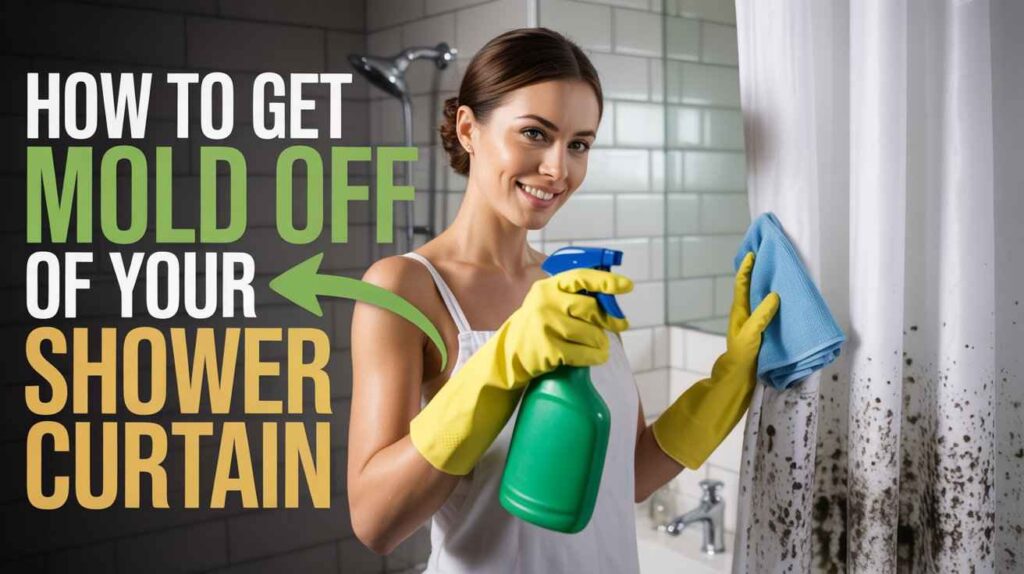
If you’re wondering how to get mould off of a shower curtain, the most effective solution is to use natural cleaners like vinegar or baking soda for light mould and a diluted bleach solution for tougher stains. Proper washing, thorough drying, and good ventilation are essential to remove mould completely and stop it from coming back.
Mould on shower curtains is a common issue in many U.S. homes due to humidity and daily moisture exposure. Left untreated, it can lead to unpleasant odours and hygiene concerns. That’s why it’s important to follow safe, proven cleaning methods using both household products and reliable techniques.
In this guide, you’ll learn expert-backed methods, practical tools, and preventive habits to remove mould effectively and keep your shower curtain clean, fresh, and long-lasting.
How to get mould off of a shower curtain
To get mould off a shower curtain, spray or soak it with white vinegar or a mixture of baking soda and water. For stubborn mould, use a diluted bleach solution (for plastic curtains) or machine wash fabric curtains with hot water and detergent. Always rinse thoroughly and hang to dry in a well-ventilated area or direct sunlight to prevent mould from returning.
Quick Steps to Remove Mould and Prevent It
Follow these practical steps to remove mould from your shower curtain and stop it from returning. These methods work for both fabric and plastic curtains and use simple household items.
- Spray white vinegar or diluted bleach on mould spots
Apply white vinegar directly to the affected areas. For heavy mould, mix 1 part bleach with 3 parts water. Let it sit for 10–15 minutes so it can kill mould spores at the root. - Scrub gently or machine wash (based on curtain type)
Use a soft brush or sponge to scrub visible black spots. Fabric curtains can be machine washed with warm water and mild detergent. Add a cup of vinegar to the wash cycle for extra mould removal. - Rinse thoroughly to remove residue.
Leftover cleaning solution can damage the material and attract dirt. Rinse the curtain properly with clean water. - Dry the curtain completely in sunlight or airflow
Hang the curtain in direct sunlight or a well-ventilated space. Sunlight naturally kills remaining mould spores and removes moisture that causes regrowth. - Use tea tree or lavender oil as a natural protector
Mix a few drops with water in a spray bottle and lightly mist the curtain after drying. These oils have natural antifungal properties and keep the curtain smelling fresh. - Keep the curtain extended after every shower
Do not bunch it up. Spreading it out helps it dry faster and prevents moisture build-up in folds. - Do a quick weekly mould inspection
Check corners, edges, and folds where mould usually starts. If you see tiny spots, wipe them immediately with vinegar before they spread.
Result: With proper cleaning, complete drying, and regular inspection, you can keep your shower curtain mould-free for a long time without harsh chemicals.
Understanding Mould on Shower Curtains
Mould on shower curtains is common due to moisture, poor ventilation, and leftover soap or shampoo residue. Understanding why it appears and how to identify it helps in cleaning and preventing future growth.

Causes of Mould:
- Warm, damp bathroom environments.
- Wet curtains left unfolded or bunched up.
- Soap, shampoo, or body wash residue.
- Poor ventilation that traps humidity.
Mould vs Mildew:
- Mould: Green or black spots, musty odour, more harmful.
- Mildew: Lighter colour, less harmful, easier to clean.
- Identifying correctly ensures you use the right cleaning method.
Signs of Stubborn Mould:
- Persistent black or dark spots.
- Musty odour that lingers even after cleaning.
- Growth in curtain folds, edges, or corners.
- Early detection and thorough cleaning prevent recurrence.
Tip: Regularly dry your curtain, improve bathroom ventilation, and check corners and folds weekly to keep mold under control.
Effective Cleaning Methods for Shower Curtains
Removing mould effectively requires using the right method for your curtain material and the type of stain. Here’s a detailed guide with natural and safe solutions:
1. Cleaning with Vinegar
White vinegar is a natural mould remover suitable for both plastic and light fabric curtains.
- Pour undiluted vinegar into a spray bottle or basin.
- Apply directly to affected areas and let it sit for 15–20 minutes.
- Scrub gently with a soft brush.
Tip: Vinegar not only removes mould but also neutralises odours.
2. Using Bleach Safely
Bleach is effective for stubborn mould but should be used with care.
- Combine one portion bleach with four portions water.
- Apply only to plastic curtains or heavily stained fabric areas.
- Avoid soaking delicate fabrics.
- Rinse thoroughly to prevent discolouration.
3. Baking Soda & DIY Solutions
Baking soda boosts mould removal and deodorises.
- Sprinkle on damp areas and scrub with a sponge.
- DIY paste: Mix baking soda, water, and a few drops of essential oil for a natural mould-fighting solution.
- Works well with vinegar or warm water for stubborn spots.
4. Machine Wash vs Hand Wash
Curtain type determines cleaning method:
- Fabric curtains: Machine wash warm with mild detergent; add vinegar for extra protection.
- Plastic or delicate curtains: Hand wash with soap and water, focusing on folds and edges.
- Always air dry thoroughly to prevent mould regrowth.
5. Quick Hacks Competitors Miss
Some simple methods are often overlooked:
- Hydrogen peroxide: Apply to mould spots, leave for 10–15 minutes, then rinse. Kills spores naturally.
- Sunlight & essential oils: Spray shower curtains with lavender or tea tree oil and place in full sun after cleaning to stop mold return.
Result: By using these targeted cleaning methods, your shower curtain can stay mold-free without harsh chemicals. Combine natural solutions, proper washing, and preventive care for long-lasting results.mould-free
Cleaning Products & Tools
Choosing the right products and tools can make removing mould from your shower curtain faster, safer, and more effective. Both chemical cleaners and natural alternatives have their advantages depending on the curtain material and severity of mould.
Mould Sprays for Quick Cleaning
Commercial sprays like Tilex, CLR, and Oxiclean are highly effective at removing stubborn mould and mildew. These products work well for plastic and durable fabric curtains, killing spores quickly and preventing regrowth. Be sure to read and adhere to the product instructions to use it safely.
Natural Alternatives
If you prefer non-toxic solutions, vinegar, baking soda, and hydrogen peroxide are excellent at eliminating mould naturally. Vinegar breaks down mould spores, baking soda helps scrub and deodorise, and hydrogen peroxide kills stubborn mould without harsh fumes.
Chemical vs Natural Cleaners: Pros & Cons
| Cleaner Type | Pros | Cons | Safety Tips |
|---|---|---|---|
| Chemical Sprays | Fast, strong mold removal | Strong fumes, harsh on fabrics | Wear gloves, ventilate area |
| Vinegar & Baking Soda | Non-toxic, eco-friendly, deodorizes | May require more scrubbing | Avoid contact with eyes, rinse well |
| Hydrogen Peroxide | Kills mold spores effectively, no fumes | Can bleach some fabrics | Test small area first, rinse thoroughly |
Using the right combination of products and tools ensures effective mold removal while keeping your shower curtain safe and long-lasting.
Preventing Mould on Shower Curtains 🏠
To prevent mould on a shower curtain, keep it clean, dry, and well-ventilated after every use. Simple daily habits like rinsing, proper airflow, and choosing the right material can stop mould from forming and keep your bathroom fresh long-term.
Daily & Weekly Maintenance Habits
After each shower, rinse off soap residue and fully extend the curtain to help it dry quickly. Use a squeegee or shake off excess water to reduce moisture buildup. On a weekly basis, wipe down damp areas and check folds where mould often starts.mould
Bathroom Ventilation & Fan Use
Proper airflow is essential to control humidity. Turn on the exhaust fan during and after showers, or open a window to allow moisture to escape. Lower humidity levels make it hardermould mold spores to grow and spread.
Fabric vs Plastic Curtain Tips
Fabric curtains are breathable but require regular washing, while plastic curtains resist water but can trap moisture in folds. Choose high-quality, mildew-resistant materials and maintain them properly to extend lifespan and premould mold buildup.
Bonus Prevention Tips
Use anti-fungal liners or sprays to add an extra layer of protection. You can also lightly mist the curtain with natural solutions like vinegar or essential oils to keep mold from returning.
Conclusion
Keeping your bathroom clean starts with knowing how to get mould off of shower curtains using effective methods like vinegar, baking soda, hydrogen peroxide, or safe mould-removal sprays, along with the right tools for thorough cleaning. Just as important, simple habits like rinsing, proper drying, and good ventilation help prevent mould from returning, while choosing a mould-resistant curtain makes long-term maintenance easier. 👉 Check out our mould-resistant shower curtains available in the USA to simplify cleaning and reduce future mould buildup.
1. How do I wash mould off a fabric shower curtain?
Wash it in warm water with detergent and one cup of vinegar. Air dry completely to prevent mould from returning.
2. Can I wash mould off a plastic shower curtain?
Yes, clean it with warm soapy water or machine wash on a gentle cycle with vinegar or a small amount of bleach, then air dry.
3. How often should I wash a shower curtain to avoid mould?
Wash your shower curtain every 2–4 weeks and keep it dry after each use to prevent mould buildup.
4. Will vinegar remove mould from the shower curtain?
Yes, vinegar naturally kills mould and helps prevent it from coming back when used regularly.
5. Does bleach kill mould on shower curtains?
Yes, bleach kills mold effectively, especially on plastic curtains, but use it carefully to avoid fabric damage.mould
Disclosure
This post may contain affiliate links. If you purchase through these links, we may earn a small commission at no extra cost to you.

I’m Attaur Rahman, founder of DecorReviewHub. I test and review curtains and home decor products to help homeowners make the right choice for every room. All my guides are based on real use and honest comparisons.