
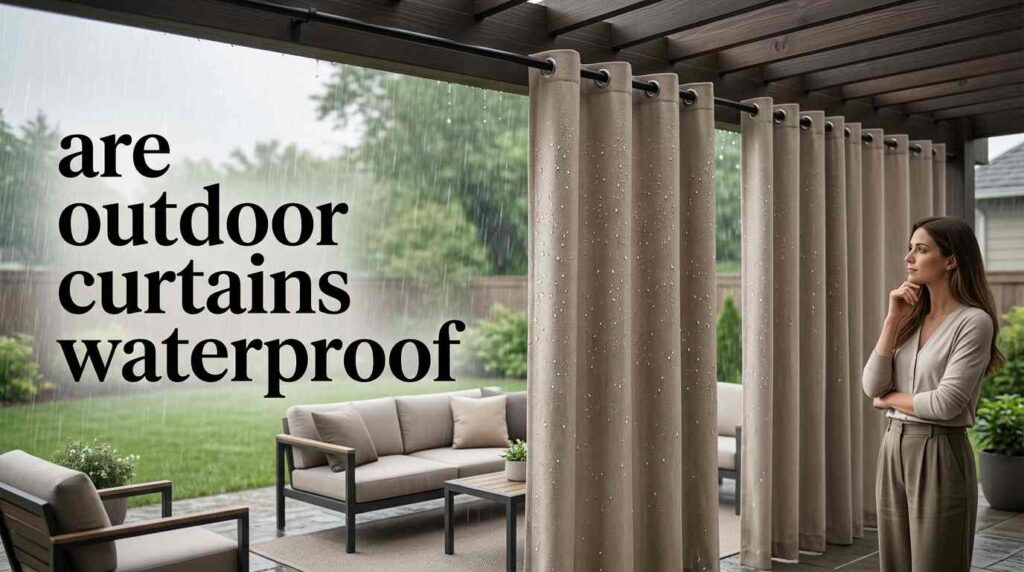
If you’ve ever wondered if outdoor curtains are waterproof, you’re not alone—it’s one of the most common questions homeowners ask before decorating their patio, pergola, or outdoor living space. The short answer is that most outdoor curtains made from polyester, acrylic fabric, or vinyl are actually water-resistant rather than fully waterproof, meaning they can handle light rain, splashes, and everyday moisture but aren’t designed to completely block rain during heavy storms. In this guide, we’ll break down the real difference between waterproof and water-resistant fabrics, explore which materials like Sunbrella and DWR-coated options perform best in the rain, and share simple tips to boost your curtains’ water repellency, prevent mold and mildew, and keep your outdoor space looking great in any weather.
Are Outdoor Curtains Waterproof?
Most outdoor curtains are water-resistant, not fully waterproof. They can handle light rain and splashes, but heavy rain will eventually soak through the fabric.
Outdoor curtains are made to survive outside your home, so they use tough materials like polyester and acrylic fabric. These fabrics get a special water-repellent coating during manufacturing, which helps water bead up and roll off instead of soaking in. This is called being hydrophobic, meaning the fabric pushes water away from itself.
But here’s the thing — being water-resistant is different from being 100% waterproof. A truly waterproof product, like a rain jacket with an IPX rating, stops water completely. Most outdoor curtain fabric doesn’t reach that level of protection. Brands like Sunbrella make some of the toughest outdoor fabrics on the market, and even they call their products water-resistant, not waterproof.
So what does this mean for your patio decor? Your curtains will handle morning dew, light drizzle, and quick rain showers just fine. They dry fast too, thanks to their breathable weave. But during a heavy storm, water can slowly push through the fabric fibres over time.
Think of your outdoor curtains like an all-weather jacket — built tough, but not indestructible. If you want the best protection, look for curtains with a PVC coating or DWR treatment (Durable Water Repellent). These add an extra moisture barrier that boosts water resistance significantly.
Waterproof vs. Water-Resistant: What’s the Real Difference?
Waterproof means water cannot pass through at all, while water-resistant means water is slowed down but can still get through over time. Outdoor curtains fall into the second category.
The difference comes down to absorption rate and fabric density. A waterproof fabric, like the vinyl used in shower curtains, has zero absorption — water simply cannot enter the material. A water-resistant fabric, like polyester or acrylic, has tightly woven fibres that slow down moisture penetration but don’t block it completely. Over time, especially during long rain, water will find its way through.
This is where water repellency comes in. Manufacturers add a DWR coating (Durable Water Repellent) to outdoor curtains, which increases surface tension on the fabric. This makes water form beads and roll off, similar to water on a freshly waxed car. It’s a smart way to boost protection without making the fabric heavy or stiff.
So, are outdoor curtains weatherproof? Not exactly. Weatherproofing covers more than just rain — it includes resistance to UV rays, wind, and temperature changes too. Outdoor curtains handle sun and wind well, but rain protection is limited.
Are outdoor curtains rainproof? No, not in a true sense. A rainproof product, like a tarp, blocks 100% of water. Outdoor curtains only slow it down.
The good news? Most curtains still offer solid breathability, letting air pass through while keeping decent rain resistance for everyday weather.
What Makes an Outdoor Curtain Fabric Water-Resistant?

The fabric type and its coating decide how water-resistant an outdoor curtain really is. Polyester, acrylic, and vinyl each handle rain differently, and treatments like DWR coating boost their performance further.
Common Fabric Types
Polyester is the most common outdoor curtain fabric because it’s affordable and dries quickly. It has a tight weave with a solid thread count, which helps block light rain. Acrylic fabric, used by brands like Sunbrella, offers better fade resistance and holds up longer against sun and moisture together. It’s often considered the best fabric for waterproof outdoor curtains due to its balance of durability and looks.
Vinyl outdoor curtains are the toughest option. Vinyl is a non-woven material, unlike polyester and acrylic, which makes it naturally more water-resistant since there are no fibres for water to seep between. However, vinyl is heavier and less breathable, so it’s usually used for extreme weather areas or clear panels.
Coatings & Treatments
Even strong fabrics need extra help, which is where coated outdoor curtain fabric comes in. A DWR coating (durable water repellent) is sprayed onto the fabric surface, creating a layer that pushes water away instead of letting it soak in. This is one of the most effective treatments for water-repellent outdoor fabric.
PVC lamination is another option, where a thin plastic layer is bonded to the fabric. This creates near-waterproof performance, similar to vinyl, while keeping the fabric flexible. Some manufacturers use a thermoplastic coating, which adds both water resistance and better tear resistance.
Small details matter too — quality fabric grommets (the metal rings for hanging) prevent water from pooling at the top and causing damage. Together, fabric type and coating decide how well your curtains handle outdoor curtain fabric for rain.
Are Patio Curtains Waterproof Too?
No, patio curtains follow the same rule as regular outdoor curtains—they’re water-resistant, not fully waterproof. The material and coating matter more than the location where you hang them.
Whether you’re using pergola curtains, gazebo curtains, or simple sun porch panels, the fabric behaves the same way. Are outdoor patio curtains waterproof? It depends on what they’re made of, not where they’re installed. A polyester or acrylic fabric curtain on your patio will react to rain the same way it would on a balcony or deck.
Patio curtains are mainly designed for privacy screens and shade, adding style to your outdoor living space while blocking wind and sun. Many homeowners install them on curtain rods or tracks so they can slide the curtains open or closed easily, similar to indoor curtains.
Since patios are often partially covered—think of a roof or pergola structure above—the curtains get some natural protection from direct rainfall. This makes them handle rain slightly better than curtains hung in a fully open area.
For the best results in patio decor, choose curtains with a DWR coating or go with a heavier acrylic fabric like Sunbrella for longer-lasting water resistance.
Is It Safe to Leave Outdoor Curtains Outside When It Rains?
Yes, outdoor curtains can stay outside during light rain, but they aren’t designed to block rain completely during heavy downpours or storms.
Can outdoor curtains get wet? Absolutely—that’s normal and expected. The fabric, whether it’s polyester or acrylic, is built to handle regular rain exposure without getting damaged. A quick shower won’t hurt the material or cause long-term issues.
But do outdoor curtains keep rain out completely? Not really. During wind-driven rain, water can angle sideways and hit the curtain directly, increasing splashback onto your patio floor or furniture. The curtain drape angle also plays a role—curtains hanging straight down block less rain than ones angled slightly outward.
Do outdoor curtains protect from rain? Yes, to a decent extent. They work well as a weather barrier for light drizzle and splashing, which is why they’re popular for patios and porches. However, during heavy storms, water can eventually push through the fabric weave.
For proper outdoor installation, hang curtains a few inches above the ground. This improves drainage and prevents water from pooling at the bottom of the hem. After rain stops, drying time depends on the fabric—polyester dries faster than vinyl outdoor curtains due to better breathability.
So yes, leaving curtains outside is fine, but check them after major storms for excess moisture buildup near the grommets.
How Do Outdoor Curtains Perform in Heavy Rain and Storms?

Outdoor curtains struggle in heavy rain and storms because wind load combined with moisture penetration pushes water through polyester and acrylic fabric faster, increasing the risk of storm damage.
Wind & Moisture Behavior
During outdoor curtains in heavy rain, wind load becomes the biggest enemy of polyester fabric and acrylic fabric alike. Strong gusts push the curtain panels sideways, forcing rain directly into the fabric weave at angles the DWR coating wasn’t designed to block.
Outdoor curtains’ moisture resistance drops fast once wind-driven rain hits vinyl outdoor curtains or Sunbrella fabric from the side instead of falling straight down. Materials with higher tensile strength, like vinyl and acrylic, resist tearing better than basic polyester when wind load pulls the fabric grommets tight.
Outdoor curtains during storms also suffer from water pooling near the curtain rods and bottom hems. This extra weight stresses the grommets and stitching, which is why outdoor curtains should be taken down during storms. It matters most for hurricane-force winds or severe thunderstorms—removing Sunbrella or polyester panels protects both the fabric and the curtain track.
If your outdoor curtains keep moving in strong winds, learn how to keep outdoor curtains from blowing in the wind with these simple and effective solutions.
UV and Long-Term Weather Resistance
Outdoor curtain UV resistance determines how well acrylic fabric and polyester hold up under constant sun exposure. UV degradation breaks down the DWR coating on vinyl curtains over time, weakening their water repellency.
Colorfastness separates premium Sunbrella fabric from cheaper polyester blends—Sunbrella resists fading for years, while basic polyester fades within a single summer season under direct UV rays.
Without strong UV resistance, both acrylic and vinyl fabrics lose their thermoplastic coating faster, causing the fabric fibers to absorb water instead of repelling it like fresh DWR-treated polyester.
So, how long outdoor curtains last outside depends on both storm exposure and UV exposure together. A quality Sunbrella fabric lifespan averages 3-5 years, while standard polyester or acrylic curtains may only last 2-3 years under harsh coastal weather or desert sun exposure.
Mold and Mildew: The Real Risk With Wet Curtains
Wet outdoor curtains create the perfect environment for mold spores and fungal growth, especially when polyester or acrylic fabric stays damp for long periods without proper outdoor curtains’ mildew resistance.
Why Wet Curtains Attract Mold and Mildew
Mold spores thrive wherever humidity stays trapped inside fabric fibers. When vinyl curtains or Sunbrella fabric dry slowly after rain, moisture trapping becomes the biggest trigger for fungal growth along the seams and folds.
Outdoor curtain mold resistance depends heavily on the type of coating applied during manufacturing. A proper mildew-resistant treatment stops mold spores from settling into the fabric weave, while an antimicrobial coating actively blocks bacteria and fungus from spreading across polyester panels.
Without this protection, curtains develop a musty odor that clings to acrylic fabric and vinyl alike, signaling active fungal growth beneath the surface.
How to Prevent Mildew on Outdoor Curtains
How to prevent mildew on outdoor curtains starts with proper airflow. Hanging Sunbrella curtains with space between panels reduces humidity buildup compared to curtains pressed tightly against a pergola or gazebo wall. Regular sun exposure also helps kill mold spores naturally, since UV rays disrupt fungal growth on polyester fibers.
Choosing curtains with built-in mildew-resistant treatment, like many Sunbrella products, saves you from constant cleaning and extends overall fabric lifespan significantly.
How to Make Outdoor Curtains More Waterproof

Applying a waterproofing spray or silicone sealant to polyester or acrylic fabric boosts water resistance significantly, giving standard outdoor curtains near-vinyl-level protection.
Best Products to Waterproof Outdoor Curtains
How to waterproof outdoor curtains starts with a quality fabric protectant like Scotchgard or a dedicated DWR spray. These products coat fabric fibers with a water-repellent layer, similar to the factory treatment on Sunbrella fabric.
How to make outdoor curtains waterproof at home involves spraying evenly across the curtain panel while it’s clean and dry. A silicone sealant works especially well on vinyl curtains, sealing tiny gaps in the material that let moisture penetration occur near the fabric grommets.
Reapplication matters just as much as the first treatment. Most waterproofing sprays lose effectiveness after 3-6 months of sun exposure and rain, so reapplying keeps polyester or acrylic panels performing like new DWR-coated fabric.
Testing and Sealing for Long-Term Protection
To check your work, try the water beading test—pour a small amount of water on the treated fabric surface. If it beads up like on Sunbrella fabric, the waterproofing spray worked correctly. If it soaks in, the fabric protectant needs another coat.
How to protect outdoor curtains from rain long-term also includes seam sealing. Untreated seams on polyester curtains absorb water fastest, so sealing them with silicone prevents leaks at the weakest points, keeping curtains dry even during moderate storms.
How to Dry and Clean Outdoor Curtains After Rain
The fastest way to dry outdoor curtains after rain is the hang-dry method, while spot cleaning with mild detergent keeps polyester and acrylic fabric looking fresh between washes.
Drying Outdoor Curtains the Right Way
How to dry outdoor curtains after rain starts with proper air drying. Simply leave Sunbrella panels or polyester curtains hanging on the curtain rod, allowing natural airflow to remove moisture without direct heat damage.
Avoid using a dryer on vinyl curtains, since high heat can warp the thermoplastic coating and reduce water repellency over time. Instead, let acrylic fabric air dry in a shaded spot to protect the DWR coating from UV degradation.
Cleaning Wet or Stained Curtains
How to clean wet outdoor curtains depends on the fabric type. Most polyester panels are machine washable on a gentle cycle, while Sunbrella fabric typically needs hand washing with mild detergent to preserve its colorfastness.
For tough marks, spot cleaning works best on acrylic curtains—a soft brush with mild detergent handles dirt without damaging the fabric weave. Stain removal on vinyl curtains is simple too, since a damp cloth wipes away most residue instantly.
Regular curtain maintenance extends fabric lifespan significantly. Cleaning Sunbrella or polyester curtains every few weeks prevents dirt buildup that weakens the antimicrobial coating over time.
Outdoor Curtains vs. Other Rain-Ready Alternatives
Outdoor curtains offer style and airflow control, while outdoor shades and clear vinyl panels provide stronger rain protection but sacrifice breathability and visual appeal.
Curtains vs. Shades and Awnings
Outdoor curtains vs. outdoor shades for rain comes down to priorities. Roll-down shades block rain more effectively than polyester curtains, since they form a tighter seal against wind and water.
Retractable awnings solve a different problem entirely, covering larger areas like a pergola or patio without blocking visibility the way Sunbrella panels sometimes do. Awnings work well alongside curtains rather than replacing them.
Comparing Waterproof Options
Waterproof patio curtains vs. regular curtains highlight the gap between vinyl coating and basic acrylic fabric. Vinyl curtains handle heavy rain far better than standard polyester, though they trade breathability for protection.
Outdoor curtains vs. clear vinyl curtains also affect visibility—clear vinyl panels let you see through completely while blocking wind and rain, unlike solid Sunbrella fabric that blocks your view entirely.
For cost comparison, polyester curtains remain cheapest, vinyl panels cost more upfront, and retractable awnings require the biggest investment but offer the most reliable airflow control and rain protection combined.
Conclusion
So, are outdoor curtains waterproof? Not entirely—most outdoor curtains made from polyester, acrylic fabric, or treated with DWR coating are water-resistant rather than 100% waterproof, meaning they handle light rain, splashes, and daily outdoor curtain moisture resistance needs but aren’t built to fully block rain during heavy storms. For better protection, brands like Sunbrella combined with a waterproofing spray or silicone sealant can boost water resistance significantly, while regular curtain maintenance, proper air drying, and choosing curtains with mildew-resistant treatment help extend fabric lifespan and keep your patio decor looking fresh season after season. Whether you’re using vinyl curtains for maximum protection or acrylic panels for style, understanding the real difference between waterproof and water-resistant helps you choose the right curtains for your outdoor living space.
FAQs
1. Do outdoor curtains keep rain out completely?
No, outdoor curtains made from polyester or acrylic fabric only slow down rain—they don’t block rain completely like vinyl panels or a true waterproof material would.
2. Can outdoor curtains be left outside in the rain?
Yes, outdoor curtains can handle light rain and rain exposure safely, but during heavy storms, water can push through the fabric weave, so checking them after storms is a good habit.
3. What is the best fabric for waterproof outdoor curtains?
Vinyl curtains offer the strongest water resistance, while Sunbrella fabric with a DWR coating provides the best mix of durability, UV resistance, and style for most homeowners.
4. How do I make my outdoor curtains more waterproof?
Apply a waterproofing spray or silicone sealant to polyester or acrylic panels, and reapply every few months to maintain strong water repellency after sun and rain exposure.
5. Do outdoor curtains get moldy if they stay wet?
Yes, damp outdoor curtains can develop mold spores and a musty odor if moisture gets trapped in the fabric fibers, so proper air drying and mildew-resistant treatment help prevent this.

I’m Attaur Rahman, founder of DecorReviewHub. I test and review curtains and home decor products to help homeowners make the right choice for every room. All my guides are based on real use and honest comparisons.