
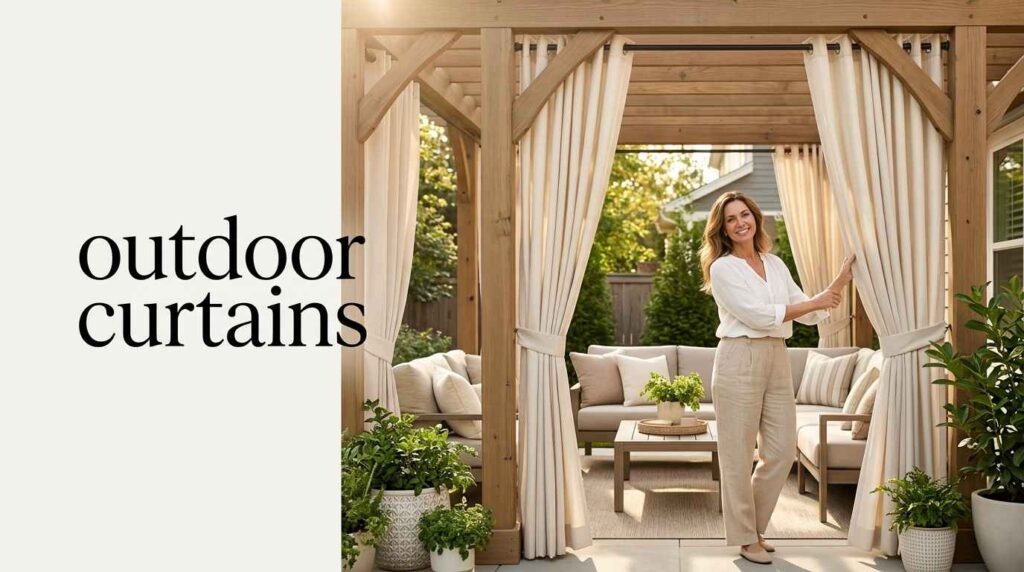
A backyard patio with bare furniture and an open view into the neighbor’s yard feels unfinished—and that’s exactly the gap outdoor curtains fill. More than a decorative accent, outdoor curtains turn an exposed deck, pergola, or porch into a private, shaded retreat without the cost of a permanent structure like a screen wall or awning.
Homeowners hang patio curtains, also called outdoor drapes, for four main reasons: blocking sightlines from neighbors, cutting harsh afternoon sun, reducing wind on an open balcony, and adding a finished, resort-style look to an otherwise plain outdoor space. Fabrics like polyester, olefin, and Sunbrella each handle these jobs differently, and the right choice depends on the structure, climate, and level of privacy needed.
This guide walks through everything that matters before buying: which fabric holds up best outdoors, how to size and hang panels on a gazebo or pergola, the real difference between waterproof and water-resistant, and specific product picks across budget, premium, and no-drill categories—so choosing the right outdoor curtains takes minutes, not hours of research.
What Are Outdoor Curtains?
Outdoor curtains are fabric panels hung on a patio, porch, pergola, gazebo, deck, or balcony to add privacy, shade, and wind protection. Unlike indoor curtains, which use cotton, linen, or silk, outdoor curtains use weather-resistant fabrics like polyester, olefin, acrylic, and Sunbrella that resist rain, UV rays, and mildew.
The core difference lies in fabric, hardware, and purpose. Indoor curtains pair lightweight cotton blends with standard curtain rods for light control and decor. Outdoor curtains pair solution-dyed acrylic or polyester with rust-proof grommets, stainless steel hooks, or weighted hems to withstand sun exposure, wind gusts, and moisture.
Homeowners also call these panels exterior curtains, outdoor window curtains, or patio drapes—all describing the same category: fabric built for exterior use.
They attach using three main methods: grommet top, tab top, or rod pocket, connected to a tension rod, curtain rod, or cable wire strung across a pergola beam or gazebo post.
Outdoor curtains serve three core functions:
- Sun protection: Sunbrella and olefin fabrics block UV rays and reduce glare.
- Weather resistance: Polyester and vinyl repel rain and resist mildew in humid climates.
- Shade and cooling: Blackout and light-filtering panels reduce heat on a covered patio or screened porch.
Best Outdoor Curtains for Every Structure
The best outdoor curtains depend on the structure—a patio needs wind-resistant fabric like Sunbrella, a pergola needs a cable wire or curtain track for open sides, and a gazebo needs grommet hardware for quick removal. Here’s how to choose the right outdoor curtain for each space.
Outdoor Curtains for Patio
On a covered patio, medium-weight fabrics like polyester or olefin block wind and hold up under a roof. On an uncovered patio, Sunbrella or solution-dyed acrylic resists direct rain and UV rays. Patio privacy curtains hung on a tension rod also work as patio enclosure curtains, closing off an open-air seating area.
Outdoor Curtains for Porch
Porch curtains hang between support posts using grommet tops or tab tops. On a screened porch, sheer or light-filtering panels add a layer of privacy without blocking existing mesh screens.
Outdoor Curtains for Pergola
Pergola curtains attach to the wooden beams using a cable wire or curtain track, running the perimeter of the structure. Pergola side curtains specifically cover the open sides, turning a pergola into a semi-enclosed cabana.
Outdoor Curtains for Gazebo
Gazebo curtains wrap around the support posts, often using grommet hardware for quick removal. Gazebo privacy curtains work best in heavier fabrics like canvas, which resist wind better than sheer panels.
Outdoor Curtains for Deck
Deck privacy curtains mount on a curtain rod bolted to a railing or overhead beam, shielding the deck from neighboring yards or a busy street view.
Outdoor Curtains for Balcony
Balcony privacy curtains suit apartment living, especially with waterproof polyester or vinyl fabric. A no-drill tension rod makes balcony curtains renter-friendly, avoiding permanent hardware like screws or brackets.
Do Outdoor Curtains Provide Privacy?
Yes, outdoor curtains provide privacy by blocking direct sightlines from neighbors, streets, and nearby yards, making them one of the most effective backyard privacy solutions besides a fence or privacy screen.
Heavier fabrics like canvas, olefin, and solution-dyed acrylic block more visibility than sheer or light-filtering panels, so a fully opaque weave works best for blocking neighbors on a tight lot line. Grommet-top or tab-top panels also close gaps along a curtain rod better than a loose rod pocket, reducing visible sightlines between panels.
For backyard privacy on a patio or deck, hanging curtains at a lower height—closer to eye level—blocks more of a neighbor’s view than curtains hung near a pergola beam or gazebo roofline. Overlapping two panels on a shared curtain track also removes gaps that a single panel leaves open.
Fabric opacity is the biggest factor in how much privacy a curtain delivers, which is why choosing the right material—covered in the next section—matters as much as placement.
Are Outdoor Curtains Weatherproof?

Most outdoor curtains are weather-resistant rather than fully waterproof, meaning fabrics like polyester and olefin repel light rain and resist mildew, but heavy downpours can still soak through the weave over time.
Waterproof vs Water-Resistant — What’s the Difference?
A waterproof fabric, like vinyl or coated polyester, blocks water completely and won’t absorb moisture even in steady rain. A water-resistant fabric, like Sunbrella or solution-dyed acrylic, slows water absorption and dries fast but isn’t sealed against prolonged soaking. For a covered patio, water-resistant fabric is usually enough; for an uncovered deck exposed to storms, a waterproof panel holds up better.
Wind Resistance & How to Keep Curtains from Blowing
Wind-resistant outdoor curtains use a heavier weave, like canvas or olefin, that resists flapping better than sheer fabric. Adding weighted curtains — panels with a sewn-in hem weight or tie-back at the base — keeps fabric from blowing sideways on a windy pergola or gazebo. Anchoring panels with a cable wire instead of a loose curtain rod also reduces movement in gusty conditions.
Not sure how to keep your curtains secure on windy days? Check out our guide on how to keep outdoor curtains from blowing in the wind.
UV & Sun Protection
UV-resistant fabrics like Sunbrella and olefin block sun exposure and prevent fading over a full season, while dark or blackout panels reduce glare and heat buildup on a west-facing patio.
Best Fabrics for Outdoor Curtains
Polyester is the most common outdoor curtain fabric — affordable, quick-drying, and resistant to light rain, though it fades faster than premium options under constant UV exposure. Olefin costs slightly more but resists mildew and holds colour better in humid climates, making it a solid choice for a covered patio or screened-in porch.
Sunbrella, made from solution-dyed acrylic, is the industry benchmark for outdoor fabric — the colour runs through the entire fibre instead of sitting on the surface, so it stays fade-resistant even after years of direct sunlight. Canvas offers a heavier, more rigid weave that blocks wind well but absorbs more moisture than acrylic, so it works best under a roofline rather than fully exposed. Linen, while popular indoors, isn’t built for exterior use — it wrinkles, absorbs water, and breaks down faster when left outside, so it’s rarely a practical choice beyond a covered porch with minimal rain exposure.
The difference between these fabrics comes down to three properties: fade resistance, mildew resistance, and water repellency. A performance fabric like Sunbrella combines all three, while budget options like polyester trade some durability for a lower price.
What is the best fabric for outdoor curtains?
For most patios, decks, and pergolas, Sunbrella or another solution-dyed acrylic fabric is the best overall choice — it resists fading, sheds water, and holds up across multiple seasons better than polyester, canvas, or linen.
Outdoor Curtains for Shade & Light Control
Outdoor blackout curtains block nearly all sunlight, making them the top choice for a west-facing patio or deck that gets harsh afternoon glare. Sheer panels, by contrast, let light pass through while softening direct sun, working well on a covered porch where full shade isn’t the priority.
Light-filtering fabrics sit between these two extremes — they cut brightness and reduce UV exposure without fully darkening the space, which suits a pergola or gazebo used mostly in the daytime. Room-darkening panels, often made from tightly woven polyester or olefin, come close to full blackout performance but still allow slight light bleed along the edges.
When to choose sheer vs blackout
Choose sheer curtains for a shaded porch or covered patio where airflow and light matter more than full coverage. Choose blackout curtains for an uncovered deck or balcony facing direct afternoon sun, especially in hot climates where heat reduction is the main goal.
Fabric weight plays a direct role here — heavier weaves like canvas or Sunbrella block more light naturally, while lightweight linen-blend sheers prioritise breathability over shade. Matching the fabric to the sun exposure on a specific patio or balcony makes the most significant difference in comfort.
How to Hang Outdoor Curtains

To hang outdoor curtains, attach the panel to a curtain rod, tension rod, or cable wire using grommet, tab-top, or rod pocket hardware, then mount it across the open side of a patio, pergola, gazebo, or balcony. For a no-drill setup, a tension rod wedged between two posts works without permanent screws or brackets.
Curtain Rods & Hanging Styles
Grommet-top panels slide directly onto a curtain rod through metal rings, making them the easiest style to open and close on a windy patio. Tab-top curtains use fabric loops instead of grommets, giving a more casual look but slightly less smooth movement along the rod. Rod pocket panels have a sewn-in sleeve that hides the rod completely, working well on a pergola beam or fixed curtain track.
No-Drill / Renter-Friendly Installation
For a rented apartment or balcony, outdoor curtains without drilling rely on a tension rod wedged between two posts or walls, avoiding permanent screws or brackets. This method works especially well on a balcony or covered porch where the structure can’t be altered, making it the standard choice for renter-friendly setups.
Keeping Curtains Secure in Wind
Weighted outdoor curtains use sewn-in hem weights or metal grommets at the base to stop fabric from flapping during strong gusts. Adding tiebacks at the midpoint of each panel also keeps curtains bundled and controlled when not fully closed. On an open gazebo or pergola with no walls, combining a weighted hem with a cable wire track offers the most stable setup, reducing movement better than a standard curtain rod alone.
Outdoor Curtain Sizes & Measuring Guide
Outdoor curtains typically come in three standard length ranges: 84 to 96 inches, fitting a standard patio or porch post height; 96 to 108 inches, suited for a taller pergola beam or raised deck railing; and over 108 inches, used for a gazebo or high balcony ceiling where extra drop length prevents fabric from hovering above the floor.
To measure for outdoor curtains, start with the mounting height—the distance from where the curtain rod or cable wire will sit down to the floor or desired hem point. Add a few inches for puddling if a fuller, floor-length look is preferred, or subtract for a cleaner above-ground finish on a windy deck.
Next, measure the coverage area—the total width between two posts on a pergola or gazebo—to determine how many panels are needed. A single panel usually covers 42 to 54 inches, so wider openings need two or more panels on a shared curtain track for full coverage without gaps.
Popular Outdoor Curtain Colors & Styles
White outdoor curtains suit a coastal or farmhouse-style patio, reflecting sunlight and keeping a covered porch feeling bright and airy. Black panels work well on a modern or minimalist deck, adding contrast against light-colored decking or a pergola frame. Gray curtains blend easily with most outdoor furniture, making them a practical choice for a neutral balcony or gazebo setup. Blue panels bring a coastal or nautical feel, especially near a poolside cabana or waterfront deck.
Beyond color, style choices like striped, sheer, or patterned panels can shift a space from casual to formal depending on the surrounding patio furniture and outdoor living setup. For a deeper look at pairing colors and fabrics with specific structures, see our full guide on outdoor curtain styling ideas.
How to Clean & Maintain Outdoor Curtains
To clean outdoor curtains, machine wash polyester or olefin panels on a gentle cold cycle, hand wash Sunbrella to protect the solution-dyed acrylic finish, remove mildew with mild soap and full sun-drying, and store panels dry and sealed during winter to prevent moisture damage.
Cleaning & Washing
Most machine-washable outdoor curtains made from polyester or olefin can go through a gentle cycle with cold water, though Sunbrella panels often clean better by hand to preserve the solution-dyed acrylic finish. Air-drying on a curtain rod or line prevents shrinkage that a dryer’s heat can cause.
Preventing Mildew & Mold
To remove mildew from outdoor curtains, scrub the affected area with a mix of water and mild soap, then rinse thoroughly and let the panel dry fully in direct sun. Fabrics like canvas trap more moisture than vinyl or coated polyester, so canvas panels need faster drying to avoid mold buildup in humid climates. If pet hair is a recurring issue alongside mildew, see our pet hair cleaning guide for combined stain and allergen removal steps.
Preventing Fading
UV-resistant fabrics like Sunbrella resist fading longer, but even solution-dyed panels benefit from occasional rotation to avoid uneven sun exposure on one side. Taking curtains down during peak summer months on an uncovered deck also slows UV breakdown.
Seasonal Storage
For winter, remove curtains from the curtain track or cable wire, wash thoroughly, and store them dry in a sealed container to prevent mildew from developing in cold, damp storage conditions.
Outdoor Curtains vs. Other Privacy Solutions
Outdoor curtains offer more style flexibility than blinds, shades, or privacy screens, since fabrics like Sunbrella and polyester come in colors and patterns that hard blinds don’t match. Compared to blinds, curtains cost less upfront but need more frequent cleaning to prevent mildew. Shades, often made from bamboo or vinyl, offer better wind resistance than lightweight sheer curtains but block airflow more on a covered patio. Privacy screens, typically wood or vinyl panels, provide the most permanent weather resistance but lack the adjustable coverage a curtain rod or cable wire allows.
| Feature | Outdoor Curtains | Blinds | Shades | Privacy Screens |
|---|---|---|---|---|
| Privacy | Adjustable | High | High | Very High |
| Cost | Low–Mid | Mid | Mid | High |
| Weather Resistance | Moderate | High | High | Very High |
| Style Flexibility | High | Low | Low | Low |
For a pergola or gazebo needing adjustable coverage, outdoor curtains remain the most flexible choice.
Top Outdoor Curtain Picks by Category
Based on everything covered above—weather resistance, fabric type, light control, and installation—here are five specific picks that match each priority, from a waterproof patio panel to a no-drill tension rod for renters.
NICETOWN Weighted Blackout Curtains — Waterproof Patio Panels with Reinforced Grommets

The NICETOWN Weighted Outdoor Curtains are the top pick for anyone who wants one panel that handles privacy, sun, and wind without extra hardware. Built from triple-weave polyester, the fabric withstands rain, wind, and direct sun exposure without breaking down season after season. Each panel uses rustproof stainless steel grommets at both the top and bottom, so it slides onto a standard curtain rod while the bottom grommet lets you thread a rope or add weights to anchor the fabric during strong gusts. The blackout weave blocks between 85% and 99% of sunlight and carries a UPF 50+ rating, cutting UV exposure enough to protect outdoor furniture and rugs from fading. It also reduces heat transfer by up to 60%, which keeps a patio or pergola noticeably cooler in direct sun. The panel holds up across a wide temperature range, from -4°F to 140°F, making it usable in most USA climates year-round. The trade-off is color selection at the lowest price point—richer shades like Peacock Teal or Sage Green cost more than the base Biscotti Beige. Still, for someone who wants dependable weatherproofing, real privacy, and wind stability in one panel, this is the most well-rounded pick on the list.
RYB HOME Outdoor Curtains for Patio, Waterproof, Thermal Insulated, 1 Panel, Grommet Top

The RYB HOME Outdoor Curtains are the strongest pick for anyone facing direct rain or harsh sun on an uncovered space. The fabric uses a 230 GSM heavy-duty weave built with triple-weave construction and integrated waterproof technology, so it withstands daily rain and mild wind without soaking through. It blocks 80% to 90% of harsh sunlight and around 90% of UV rays, creating a cooler, shaded environment on a patio or porch during peak summer heat. The thermal insulation in the fabric also blocks outdoor heat infiltration, keeping a deck or gazebo noticeably more comfortable through the hottest part of the day. Each panel hangs with 1.6-inch grommet rings that fit standard curtain rods, and for wider openings, RYB HOME recommends sizing the curtain to 1.5 to 2 times the width of the space for full coverage without gaps. Available in sizes up to 150 inches wide, it fits everything from a small balcony to a large pergola without needing multiple panels stitched together. The one caution from the brand itself: some fading is expected over time with constant sun exposure, so lighter colors and off-season storage help slow the process. For anyone prioritizing genuine waterproofing and heat reduction over decorative extras, this is the most reliable pick in that category.
MIULEE Waterproof Outdoor Sheer Curtains for Patio, Voile Fabric, 2 Panels, Rod Pocket

The MIULEE Sheer Curtains are the top pick for anyone who wants light filtering and airflow instead of full blackout coverage. Made from a voile sheer fabric, the panels have been treated for water resistance, drying quickly after rain instead of holding moisture like heavier weaves. Each panel uses a dual rod pocket at the top, which fits most standard curtain rods and gives a softer, more elegant hang than grommet-top styles. The lightweight fabric doesn’t block wind the way a blackout panel would, but it’s thick enough to soften the view into a porch or patio from a distance, balancing privacy with natural light. It works well across seasons—providing shade and a cooling effect in summer while acting as a light barrier against rain and wind in cooler months on a covered deck. This makes it suited for a gazebo, cabana, or pergola where the goal is ambiance rather than complete seclusion. The trade-off is privacy level: sheer fabric won’t fully block sightlines the way a BONZER-style opaque panel does, so it’s not the right choice for a space facing direct neighbor views. For anyone who wants a soft, airy look with basic water resistance rather than heavy-duty weatherproofing, this is the best pick in the sheer category.
BONZER Waterproof Indoor/Outdoor Curtains for Patio, Thick Privacy, 1 Panel, Grommet Top

The BONZER Waterproof Curtains are the top pick for anyone who wants real privacy and weatherproofing without paying a premium price. Made from 100% polyester and certified by OEKO-TEX STANDARD 100, the fabric stays thick and durable while remaining safe for everyday outdoor use. Each panel uses rust-proof 1.6-inch grommets that allow smooth opening and closing, fitting any standard curtain rod without extra hardware. The completely opaque weave blocks outside views entirely, making it a strong choice for a patio, porch, or balcony that needs full seclusion rather than partial coverage. It’s also built to handle rain and snow, since the waterproof fabric keeps water from soaking through even in wet weather. For added wind stability, the panel pairs well with optional weight bags at the base, though these aren’t included by default. Sizes range from a compact 54-inch panel up to a 150-inch width, so it scales from a small balcony setup to a wide pergola opening. The trade-off is sun-blocking strength—it filters light rather than delivering true blackout performance like heavier NICETOWN-style panels. Still, for anyone who wants dependable privacy and waterproofing at an entry-level price, this remains one of the best-rated picks in its category, backed by strong customer ratings.
ZOCONE Tension Curtain Rod, No Drilling, Adjustable 51-168 Inch, Rust-Proof

The ZOCONE Tension Rod is the top pick for anyone who wants to hang outdoor curtains without drilling into a wall or post. Built from thickened carbon steel, the rod holds up to 45 pounds, making it strong enough for heavier blackout or weighted curtain panels without bending under the load. Installation relies entirely on tension mounting—no drill, screws, or extra tools required—so it fits a renter-friendly setup on a balcony, patio, or apartment window. The adjustable range spans 51 to 168 inches, covering everything from a narrow balcony opening to a wide pergola or gazebo span, and for the longest sizes, an included support bracket prevents sagging at maximum length. A rust-resistant coating and weatherproof build let it withstand strong wind and outdoor elements without fading or corroding, making it suitable for both indoor bathrooms and outdoor patio use. It mounts securely on surfaces like tile, wood, brick, or concrete, giving it flexibility beyond just curtain hanging. The one limitation: not every length within the 51–168 inch range is achievable due to the rod’s segmented design, so checking the assembled dimensions against the actual space matters before buying. For anyone who needs a no-damage, adjustable way to hang curtains on a rented or temporary structure, this rod remains the most practical pick.
Where to Buy Outdoor Curtains
Most outdoor curtains are available through Amazon, Home Depot, or directly from brands like NICETOWN, RYB HOME, and BONZER, with prices ranging from entry-level polyester panels to premium Sunbrella fabric. For the specific picks covered above, check current pricing and balcony, patio, or pergola sizing directly on each product page before ordering.
Final Thoughts
Choosing the right outdoor curtains comes down to matching fabric, hardware, and structure to your specific space—whether that’s a windy patio, a shaded pergola, or a small balcony that needs a no-drill setup. For more detail on any single step, check our full guides on measuring your space, cleaning and maintaining your panels, and comparing curtains against blinds and privacy screens.
FAQs
1. Do outdoor curtains provide privacy?
Yes, outdoor curtains provide privacy by blocking direct sightlines, especially in heavier fabrics like canvas, olefin, or solution-dyed acrylic.
2. Do outdoor curtains block neighbors?
Yes, a fully opaque panel with grommet-top or tab-top hardware closes gaps between panels and blocks visibility from neighboring yards.
3. Are outdoor curtains waterproof?
Most outdoor curtains are water-resistant, not fully waterproof—fabrics like polyester and olefin repel light rain but can soak through in heavy, prolonged storms.
4. What’s the difference between waterproof and water-resistant outdoor curtains?
Waterproof fabric, like vinyl or coated polyester, blocks water completely, while water-resistant fabric, like Sunbrella, slows absorption and dries fast but isn’t fully sealed.
5. How do I keep outdoor curtains from blowing in the wind?
Use weighted curtains with a sewn-in hem, add tie-backs, or anchor panels with a cable wire instead of a loose curtain rod.
6. What is the best fabric for outdoor curtains?
Sunbrella, made from solution-dyed acrylic, is the best overall fabric—it resists fading, sheds water, and holds up across multiple seasons.
7. Do outdoor curtains block the sun or provide shade?
Yes, blackout and UV-resistant fabrics like Sunbrella and olefin block sunlight and reduce heat on a patio or deck.
Affiliate Disclosure
Some links on this page are affiliate links, meaning we may receive a commission if you make a purchase through them, at no additional cost to you. Our product picks are based on research, not payment from brands or manufacturers.

I’m Attaur Rahman, founder of DecorReviewHub. I test and review curtains and home decor products to help homeowners make the right choice for every room. All my guides are based on real use and honest comparisons.