
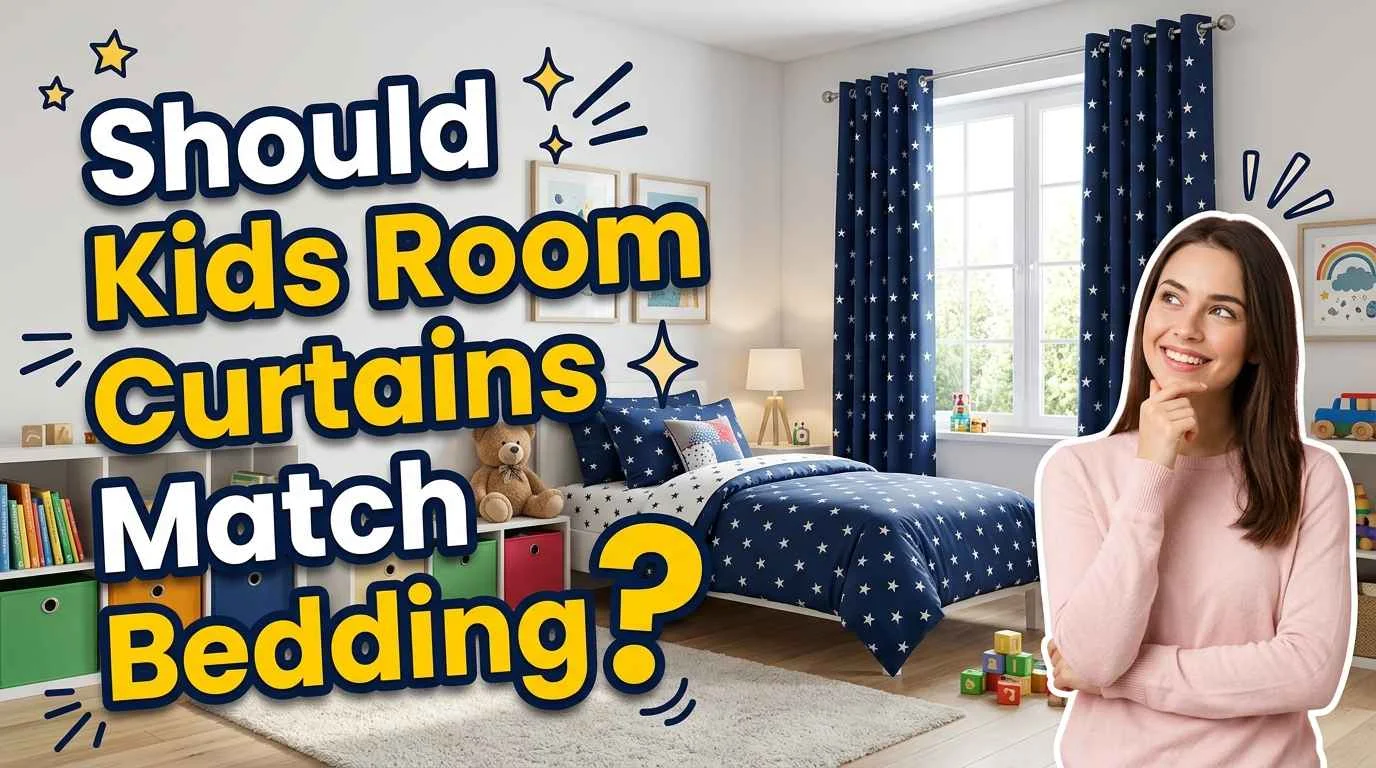
Decorating a kids’ room can feel exciting, until you get to the curtains. You already picked the perfect bedding, and now you’re staring at fabric samples, wondering if the curtains need to match it exactly. This is one of the most common questions parents ask when designing a child’s bedroom, and getting it wrong can make the whole room feel off, no matter how much time and money went into it.
So, should kids’ room curtains match bedding? The short answer is no. Should curtains match bedding exactly? Not really; do curtains have to match bedding at all? Not in the way most people think. Curtains work best when they coordinate with bedding, not copy it piece for piece.
This guide covers everything you need to make that decision easily. You’ll learn how to match curtain color, mix patterns the right way, coordinate curtains for themed kids’ rooms, and choose the best curtain fabric type for comfort, light, and style. By the end, you’ll know exactly how to create a kids’ room that feels balanced, playful, and completely put-together.
Do Curtains Have to Match Bedding?
No, curtains do not have to match bedding exactly. Curtains should coordinate with bedding, not copy it. This means picking colors or patterns that work well together so the room looks finished, not flat or matchy.
Matching vs. Coordinating: What’s the Difference?
Many parents think curtains and bedding must be the exact same color or pattern. This is a common myth. Most interior designers actually avoid an exact match. When curtains and bedding look too identical, the room can feel plain. It may also look like a store-bought matched set, instead of a room with real personality.
The better goal is coordinating. Coordinating means the curtains and bedding share a color palette, a theme, or soft color harmony, without being identical twins.
A Simple Example
If the bedding has blue and white stripes, the curtains can be solid. A solid white or soft blue curtain can create visual balance while still feeling connected to the bed. This keeps the space fresh and gentle on the eyes.
Why Coordination Works Better
This design rule works for both kids’ bedrooms and adult rooms. Bedroom curtains and bedding work best as a team, not as copies of each other. Good coordination adds color balance, brings in nice accent colors, and gives the whole space a calm, put-together feel.
So, should bedroom curtains match bedding? Not exactly—but they should always feel connected.
Matching vs. Coordinating — Why Designers Recommend Coordination
Designers recommend coordination over exact matching because it creates better color harmony and visual balance in a room. Exact-match sets often look flat, boring, and outdated, while coordinated pieces feel fresh, layered, and full of personality.
Why Exact-Match Sets Look Outdated
A few years ago, matching curtain-and-bedding sets were very popular. Today, this style feels old-fashioned. When every fabric in the room is the exact same print or color, the space loses depth. There is nothing for the eye to explore. Good bedroom aesthetics come from small differences, not exact copies.
The Power of Color Harmony
Color harmony means using colors that naturally look good together, even if they are not identical. This could mean using complementary colors, which sit opposite each other on the color wheel, or softer tones from the same color family. Either way, the room feels balanced instead of forced.
Visual Balance and Accent Colors
Visual balance happens when no single item overpowers the room. Accent colors play a big role here. A curtain in an accent shade can pick up one small color from the bedding, like a stripe or a pattern detail, and bring it into a bigger part of the room. This creates a connected look without needing a perfect match.
The Interior Decorating Takeaway
In modern interior decorating, coordination is the smarter choice. It gives kids’ rooms a livelier, more thoughtful design while still keeping everything visually connected.
How to Match Curtain Color with Bedding

The easiest way to match curtain color with bedding is to pick one main color from the bedding and either repeat it in a softer shade or pair it with a neutral color. This creates smooth curtain color combinations without an exact copy.
What Color Curtains Go With Blue Bedding
Blue bedding pairs well with white, soft gray, or a lighter shade of blue. These choices keep the room calm. For more energy, a mustard or coral curtain adds a nice contrasting color touch.
What Curtains Go With Pink Bedding
Pink bedding looks great with white, cream, or soft gray curtains. For a bolder look, sage green or navy curtains create a fun complementary color pairing.
Neutral Curtains for Kids’ Rooms (White & Gray Options)
White curtains with colorful bedding are one of the safest choices. Gray curtains with white bedding also work well. Neutrals let the bedding stand out as the room’s main focus.
Pastel and Colorful Curtains for a Kids’ Room
Pastel curtains for kids’ rooms bring a soft, gentle feel. For more playful spaces, colorful curtains for children’s bedroom designs add energy and fun without feeling too busy.
Navy and Bold Curtain Color Ideas
Navy- and blue-curtained bedroom ideas work well with bright or pastel bedding. Navy brings a rich, grounded feel to the space, and when paired thoughtfully, it stays bold without overwhelming the room’s balance.
Matching Patterns—Curtains and Bedding
Mixing patterns works best when one piece stays bold and the other stays simple. Patterned curtains with patterned bedding can work in small doses, but solid curtains with patterned bedding is the safer, easier choice for most kids’ rooms.
Patterned Curtains with Patterned Bedding (When It Works)
Two patterns can work together, but only with care. The trick is using patterns of different sizes. For example, small striped curtains in a bedroom style can pair with a larger floral bedding print. If both patterns are the same size or too similar, the room can look messy and overwhelming.
Solid Curtains with Patterned Bedding (Safer Option)
For an easy, no-stress choice, solid curtains are the way to go. Floral bedding with solid curtains creates a clean look. The solid color calms down a busy print, letting the bedding stand out as the room’s main feature. This option also gives more freedom for future bedroom decorating changes.
How to Mix Prints Without Overwhelming the Room
Mixing bedroom patterns does not have to be hard. Start with one main print, like the bedding, and treat everything else as neutral color support. Keep wall colors and rugs simple. Stick to two or three colors total across the room.
Matching curtain patterns exactly is not needed. What matters most is visual balance and a calm overall color palette, so the patterns feel connected instead of clashing.
Matching Themed Curtains with Themed Bedding

For themed kids’ rooms, matching the curtain theme with the bedding theme usually works best. Unlike colors or patterns, themed décor looks more complete when curtains and bedding share the same idea, like dinosaurs, space, or princesses.
Themed rooms are different from regular bedrooms. Kids feel more excited when their room tells one simple, playful story. When the curtains and bedding share one theme, the whole room feels exciting and complete.
Dinosaur, Space, and Jungle-Themed Rooms
- Dinosaur curtains with dinosaur bedding create a strong, playful theme kids love.
- Space-themed bedroom curtains work great with star, planet, or rocket bedding sets.
- A jungle bedroom theme feels more real when curtains show animals or leaf prints matching the bedding.
Princess and Superhero Bedroom Ideas
- Princess curtains with princess bedding bring a soft, magical feel to a girl’s room.
- Superhero curtains with bedding add bold colors and fun characters kids enjoy
- These themes work best with matching, not just coordinating, since the theme is the main focus.
Ocean, Safari, and Construction Themes
- Ocean-themed bedroom ideas often use blue curtains with wave- or sea-creature bedding.
- Safari-themed pair of animal-print curtains with matching jungle bedroom-themed bedding.
- Construction-themed bedroom designs use truck or tool prints on both curtains and bedding.
For themed rooms, a full matching set often looks better than mixed colors, since the goal is a fun, connected story, not subtle design balance.
Choosing the Right Type of Curtains for a Kids’ Room
The best curtains for kids’ rooms depend on the room’s needs. Blackout curtains help with sleep, sheer curtains allow soft light, and thermal curtains control room temperature. Many parents also use layered curtains for the best of both worlds.
Blackout Curtains for Kids’ Rooms
Blackout curtains for kids’ room spaces block outside light almost completely. This helps kids sleep better, especially during nap time or bright summer evenings. Blackout fabric also adds some privacy and can reduce outside noise.
Sheer and Thermal Curtains — Pros and Cons
Sheer curtains for kids’ room designs let in soft natural light while keeping some privacy. They look light and airy but do not block light for naps.
Thermal curtains for kids’ rooms
Thermal curtains for kids’ rooms are great for keeping the room warm in winter and cool in summer. They help save energy, though they are usually heavier and less airy than sheer options.
Layered Curtains for More Design Flexibility
Layered curtains combine a sheer panel with a blackout or thermal panel. This gives full control over light and temperature. Parents can open the sheer layer during the day for soft light, then close the blackout layer at bedtime.
Choosing the right window treatment ideas depends on the child’s needs, the room’s sunlight, and personal style. Many kids’ rooms benefit most from a layered setup for flexibility all year round.
Coordinating the Whole Room — Curtains, Bedding, Walls & Furniture

A well-designed kids’ room looks at more than just curtains and bedding. Wall colors, furniture, and rugs should also fit the same bedroom color palette. This full-room approach creates truly coordinated décor, not just a matched bed.
Building a Full Bedroom Color Palette
Start with three main colors: one main color, one neutral, and one accent. The bedding and curtains can use these colors in different amounts. Wall colors should stay light or neutral so they don’t compete with the bedding’s patterns or theme.
Matching Furniture and Accessories
Furniture does not need to match the curtains directly. Wood tones, white furniture, or painted pieces all work with most color palettes. Small items like rugs, lamps, and pillows are the easiest way to repeat an accent color from the bedding without overdoing it.
The Bigger Picture of Bedroom Styling
Good bedroom styling connects every piece in the room, not just curtains and bedding. When walls, furniture, and fabrics share a simple color plan, the whole space feels calm and put-together. This is what real matching bedroom décor means: a full room that works as one, not just two matching items.
Common Mistakes to Avoid When Matching Curtains and Bedding
The most common bedroom decorating mistakes include picking too many colors, matching everything exactly, and ignoring the room’s natural light. Avoiding these mistakes makes choosing curtain colors and choosing bedding colors much easier.
- Using too many colors: Stick to three main colors max, or the room feels busy and messy.
- Making the curtains and bedding an identical set can leave the room looking dull and old-fashioned.
- Ignoring natural light: Dark curtains can make a small room feel darker and smaller.
- Skipping a neutral base: Without a neutral color like white or gray, bold colors can clash.
- Mixing too many patterns: Two bold patterns together often overwhelm the whole room.
- Forgetting the theme: In themed rooms, random colors can break the fun, connected look.
- Not testing fabric samples: Colors can look different in real light versus in a photo or store.
Avoiding these simple mistakes makes it much easier to create a coordinated, balanced kids’ room.
Conclusion
So, should kids’ room curtains match bedding? Not exactly. The best kids’ rooms use coordination, not an exact match. Picking colors, patterns, or themes that connect well together creates a room that feels balanced, fun, and put-together, without looking flat or copied. Whether it’s a soft color pairing, a playful pattern mix, or a full themed look, the goal is always the same: a space that feels calm, connected, and made for your child to enjoy.
FAQs
1. Should curtains match bedding?
No, curtains do not need to match bedding exactly. They should coordinate using similar colors or a shared color palette for a balanced look.
2. Do curtains have to match the comforter?
No. Curtains can use a different color or pattern than the comforter, as long as they share one connecting color for visual balance.
3. Should curtains match the wall color or bedding?
Curtains should coordinate with both. Pick a color that connects the wall color and bedding so the whole room feels linked together.
4. Can you mix curtain and bedding patterns?
Yes, but keep one pattern bold and the other simple. Mixing two bold patterns can make the room feel too busy.
5. Should kids’ room curtains be darker or lighter than bedding?
Either works. Lighter curtains create a soft, open feel, while darker curtains add contrast and help block more light.

I’m Attaur Rahman, founder of DecorReviewHub. I test and review curtains and home decor products to help homeowners make the right choice for every room. All my guides are based on real use and honest comparisons.